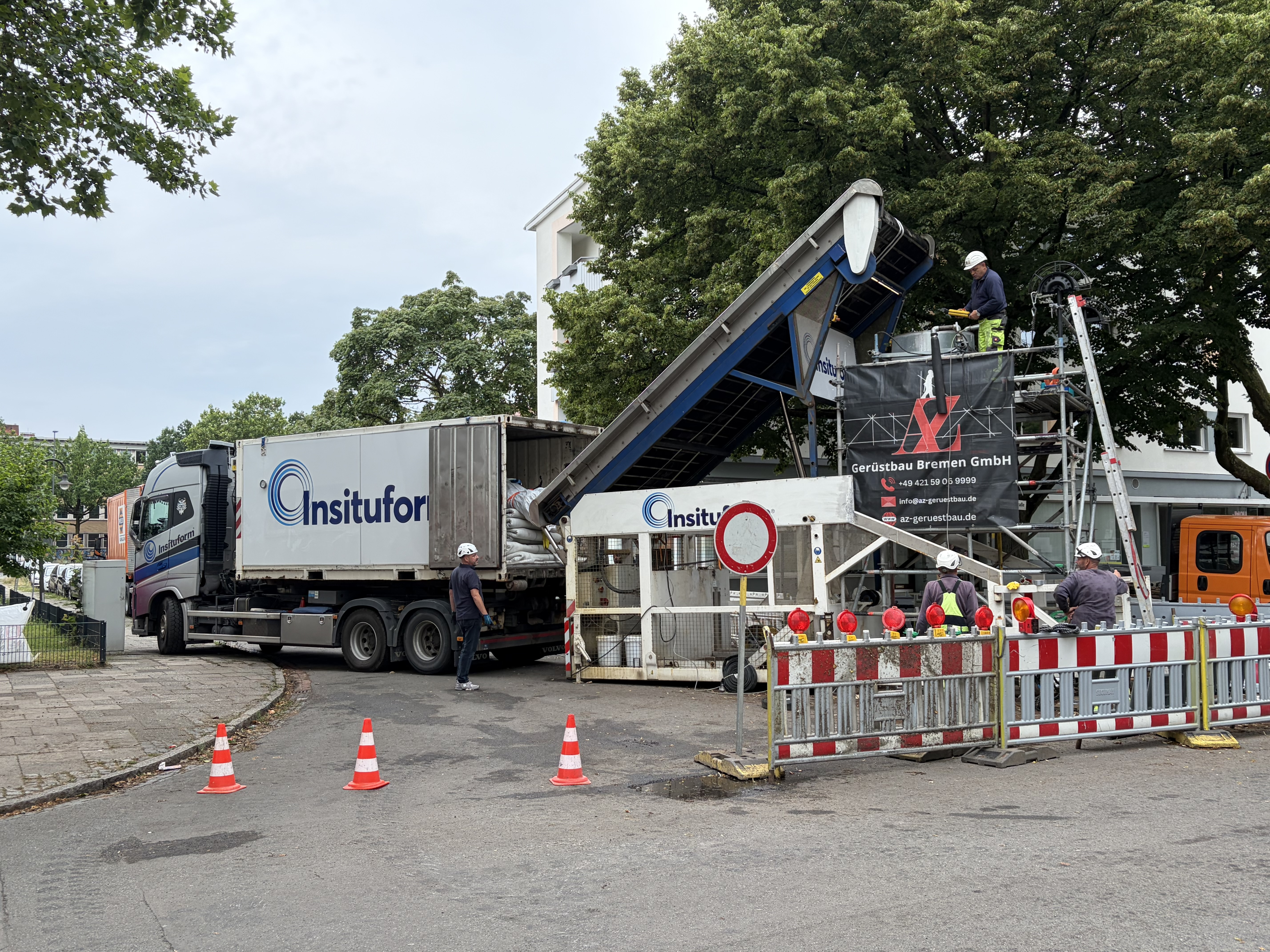
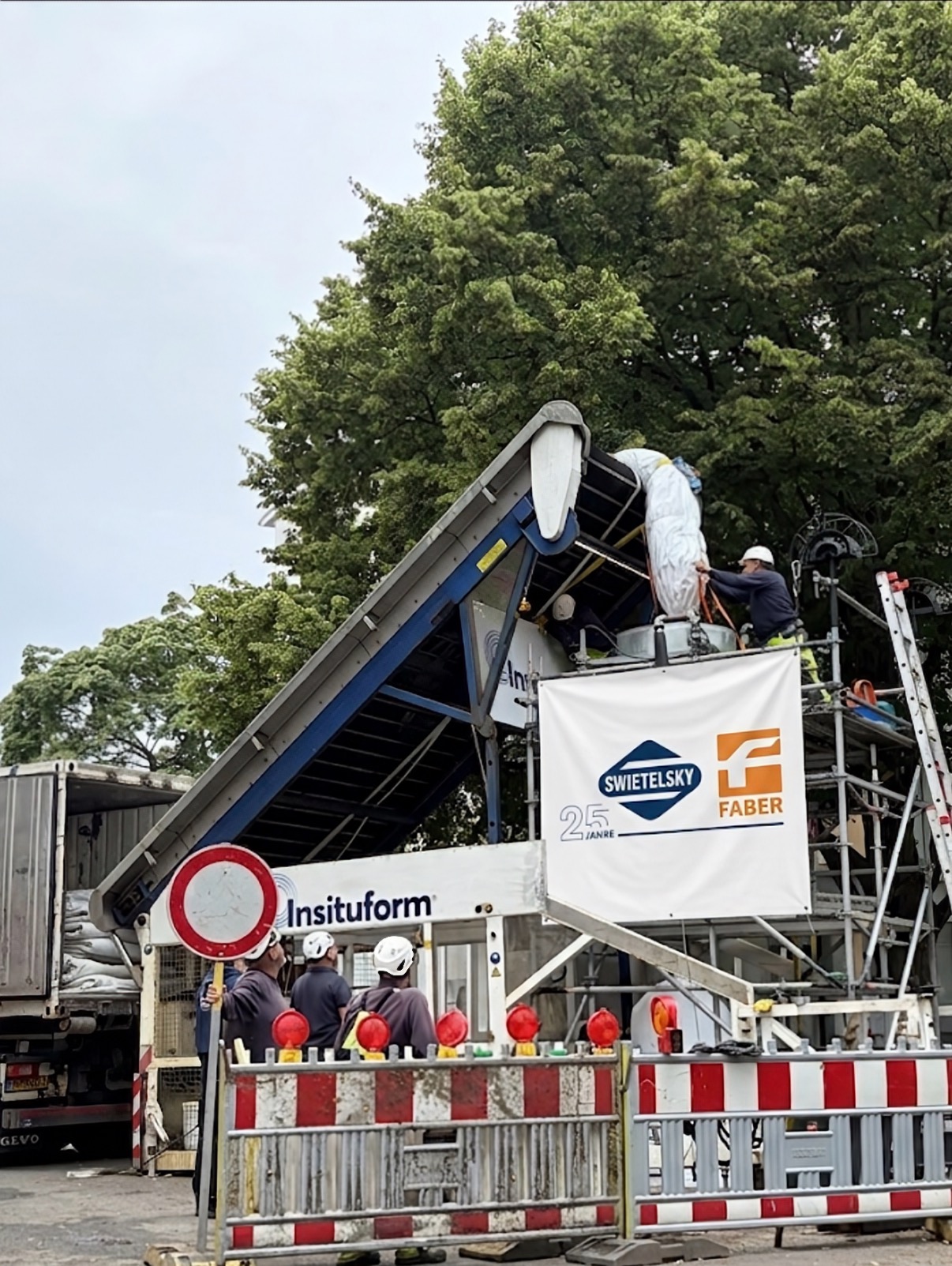
An exemplary construction project by Swietelsky-Faber GmbH in Bremen illustrates the usefulness of a technology-open approach. For a 620 m long combined sewer, a UV-curing cured-in-place pipe lining system made of thermoset composite material was tendered and used. In another section, a heat-curing cured-in-place pipe lining system was planned and installed for good reason.
GFK-UV-Liner – high service capability for large dimensions
The pipe lining system used is based on a thermosetting composite made of glass fibers, resin system, and defined carrier or reinforcing materials. Factory production and impregnation enable clearly defined product properties already in the "M" state (Manufactured), that is, in the state of the factory-produced product. Through the controlled UV curing process, the liner is transferred to the "I" state (Installed), that is, to the installed and fully cured final state with reproducible material characteristics.
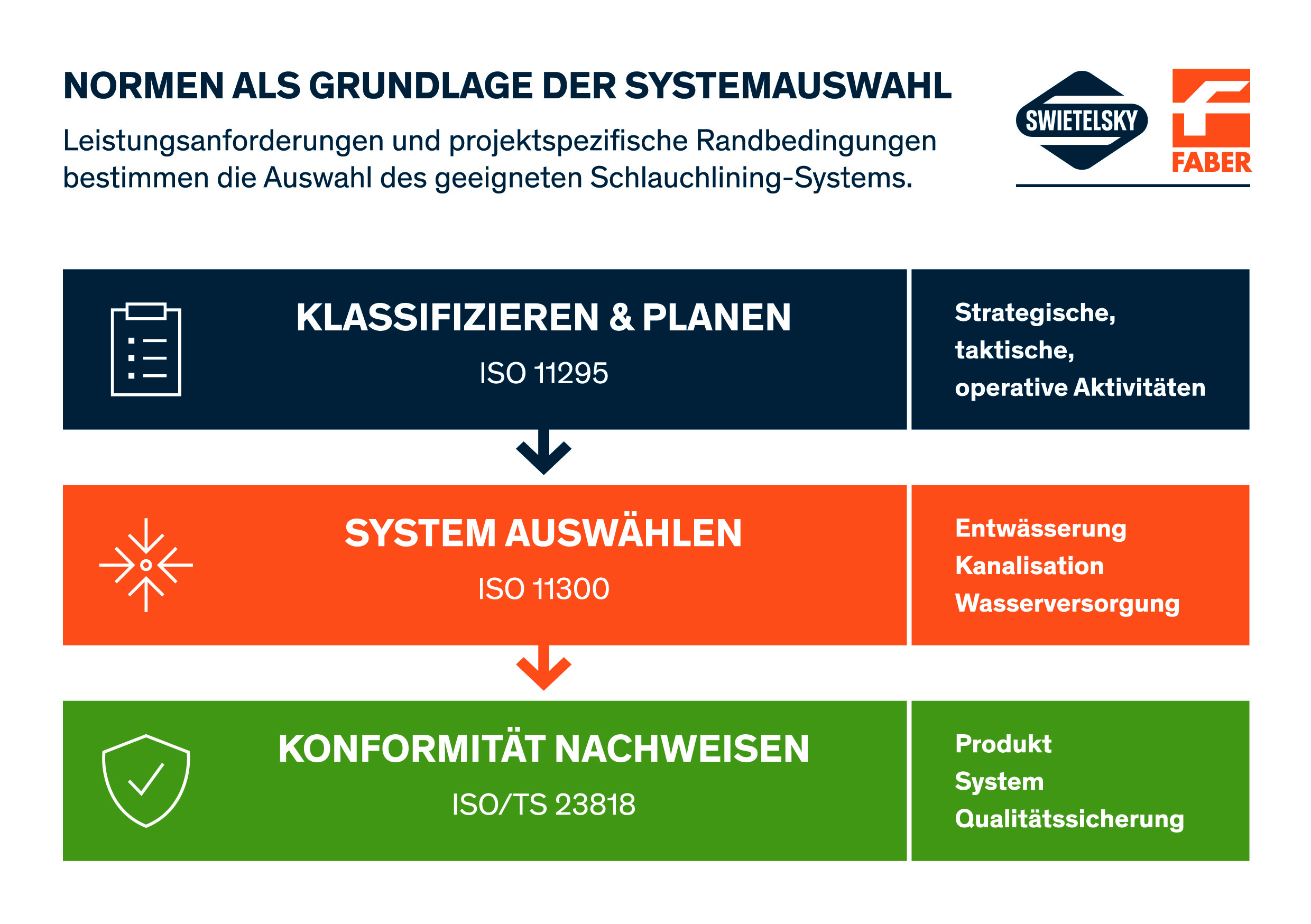
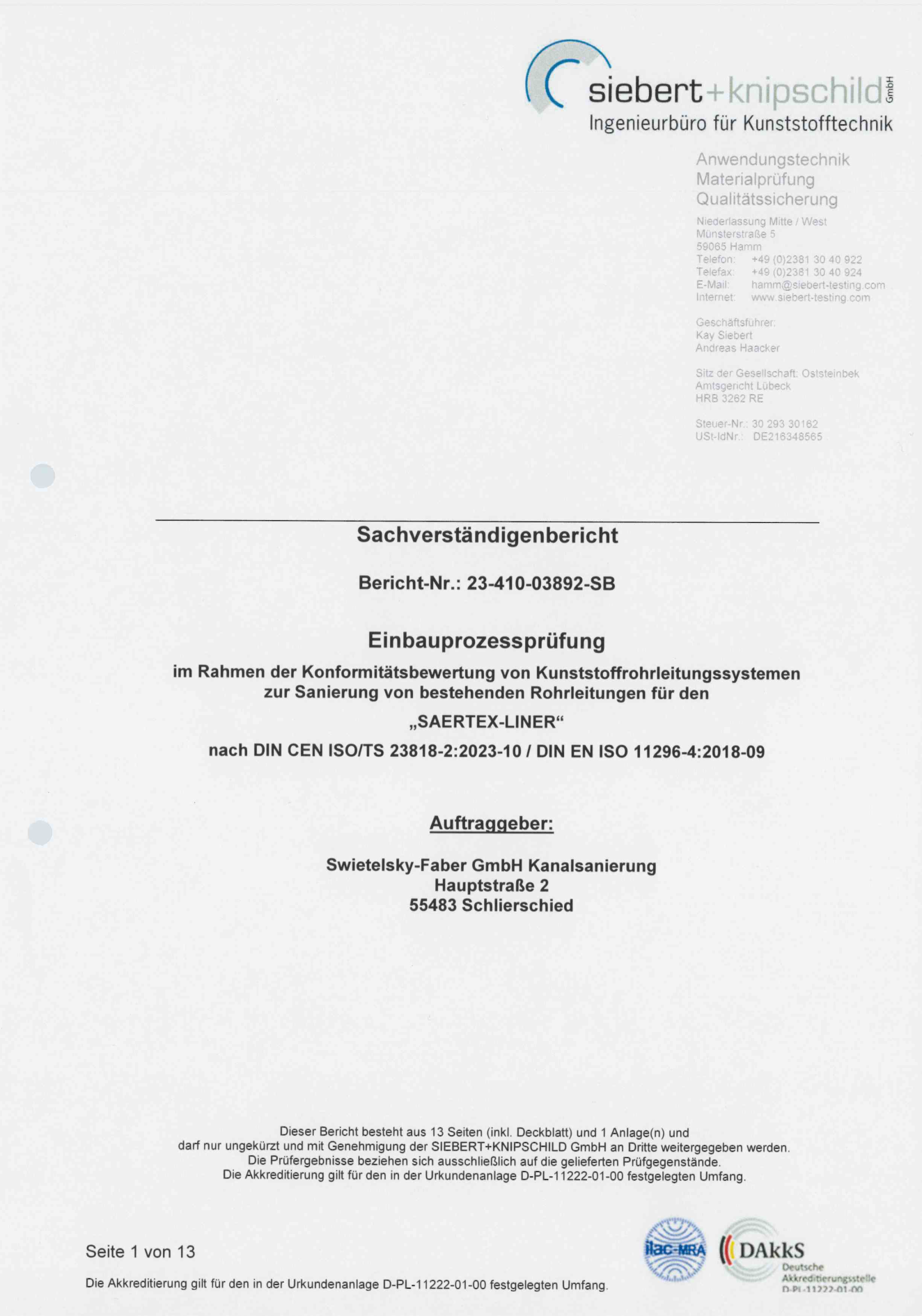
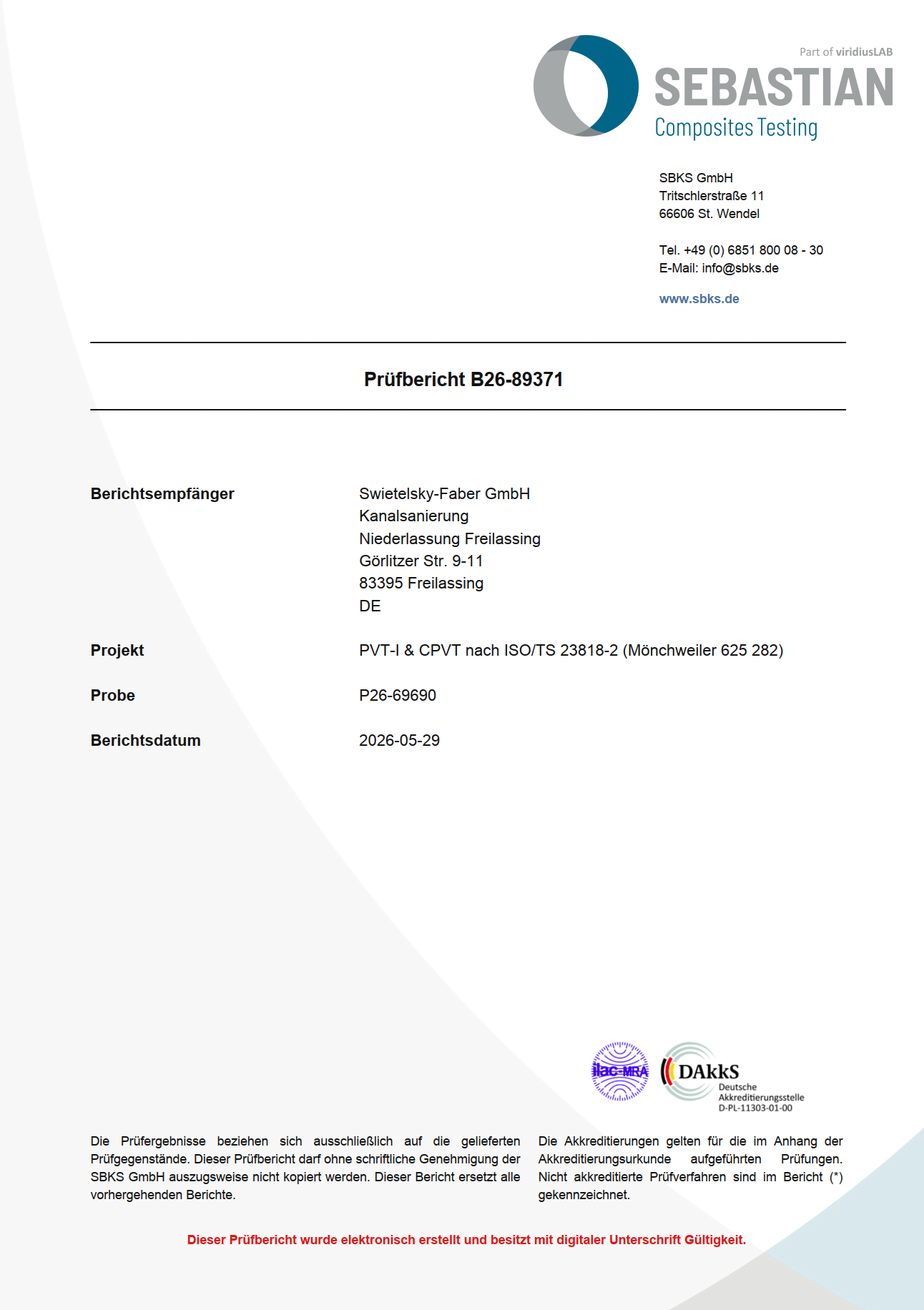
In addition to the mechanical properties, quality assurance, monitoring of the installation parameters, and verification of the product properties are essential components of a renovation system with long-term performance. These include in particular the assessment of the composite thickness, the wall structure, the initial ring stiffness, the short-term flexural modulus, and the long-term characteristic values that are decisive for the service life. At present, the quality properties and conformity of a CIPP liner with the internationally applicable standards can be verified in accordance with DIN EN ISO/TS 23818 both in production (M condition) and during/after installation (I condition). A manufacturer can also have the definition and compliance of its production processes audited or certified by external bodies. Thus, comprehensive quality assurance processes are available. by external bodies audited or certified. Thus, comprehensive quality assurance processes are available.
Synthetic fiber liner with hot water curing – flexible for complex geometries
In the further course of the project, a so-called hot water liner with a nominal diameter change from DN 840 to DN 1000 was also installed. In this case, the synthetic fiber liner, weighing around 6.2 tonnes and with a wall thickness of 21 mm, was a welcome alternative to the UV-curing liner due to the change in cross-section, the overall complex pipe geometry, and other on-site installation conditions that made installation more difficult.
As is well known, heat-curing pipe liners involve significantly higher energy, time, personnel, and material expenditure. However, due to their flexibility and the further process performance, these liners offer decisive advantages in individual cases. The Insituform process, established for decades, also enables the long-term rehabilitation of existing pipeline infrastructures under demanding boundary conditions. In particular, the well-controllable inversion technique of the lining tube offers a safe and material-friendly execution method.
In direct comparison, hot-water curing can prove to be more complex and more costly. Nevertheless, due to the points mentioned above, it is regularly used at Swietelsky-Faber. In the lining of pressure pipelines, the hot-curing variant here is a clear preferred method of execution, although UV-curing or combined solutions are also available in this area of application.
The right technology for every task
The Bremen project also illustrates that different cured-in-place pipe systems do not compete with one another, but rather complement each other according to their respective areas of application. While UV-cured GRP liners are used especially for large profiles and high structural requirements, hot-water-cured synthetic fibre liners offer advantages for special geometric requirements or complex pipeline routes.
Economic project requirements are often at the center of the choice of process. However, the technical aspects must not be neglected. Decisive factors here are such as pipe dimensions, profile shape, structural requirements, accessibility, construction sequence, and the local boundary conditions. In addition, the process parameters relevant according to DIN EN ISO 11300-2, such as calibration times, set-up pressures, temperature progressions, tensile forces, sampling, leak testing, and documentation of the installation, are to be taken into account.
For sound planning, in my view, the entire technical family of DIN EN ISO 11295 should be examined for the specific application on site. With artificial intelligence, project variants for a renovation plan can now be generated every second. However, the engineering selection of the right process technology depends on numerous adjustment variables, by taking into account which planning today can still clearly stand out from an artificially generated plan.
Conclusion
Without detracting in any way from the market leadership of the pipe liner, such an approach may, in individual cases, even reveal wound pipe lining or single pipe lining as a significantly more suitable method variant. In the case of wound pipe lining alone, we find overall savings potential of up to 30% of the execution sum due to the reduced effort required for dewatering, site setup, and material technology.
This is unfortunately not always in the interests of planners, because, as a rule, a planner's fee is determined on the basis of the eligible costs. If these eligible costs decrease, then the fee unfortunately also decreases. A course of action worth considering, because the optimised selection of procedures by a planning office increases the expertise and value of the planning and, in the end, it protects the budgets of public clients.
The decisive factor is a product-neutral selection of a suitable system for the specific task. Such a technology-neutral approach makes it possible to select the appropriate method for each rehabilitation task and to implement the mammoth task of maintaining our underground infrastructure even more economically and sustainably.
International standardization also makes clear that the variants of the hose lining systems should not be characterized only by the curing process used. Much more decisive in this regard is the general interplay of resin matrix, carrier materials, inner and outer films, classifiable equipment technology, the mechanical properties, the wall structure, the bendability, the tightness, and traceable process documentation.
German Cured-in-Place Pipe Day 2026
The German Cured-in-Place Pipe Day offers the opportunity to present and exchange information about current developments, materials, and methods in trenchless pipe rehabilitation. The focus is particularly on the different possible applications and technical requirements of modern cured-in-place lining systems.
The Bremen project illustrates that different cured-in-place pipe lining methods offer specific advantages depending on the area of application. The selection of the appropriate system – regardless of whether UV, hot water, or steam curing is used – is always based on the technical requirements and the specific framework conditions of the respective project.