The transformation process toward a climate-neutral and sustainable society has already been initiated at the legislative level in many countries around the world. The corresponding measures and laws of the European Union are based on the international agreements of the Paris Agreement of 12/12/2015.
Political consensus and new requirements
Climate adaptation and the avoidance of exceeding the planet's regenerative capacity now require rapid, consistent action in many sectors and areas of life. In this context, there is at least political consensus in the European Union regarding the need for action, which is now reflected in various agreements, regulations, and laws. Naturally, this trend does not stop at the sewer rehabilitation industry. The following therefore outlines some of the effects on our day-to-day business.
Sustainability reporting and the Supply Chain Due Diligence Act (LkSG)
Worldwide, rules and standards for corporate sustainability reporting have already been established. It is very interesting to observe that, even today, due to the first attempts to implement the Supply Chain Act, the legal requirements are having real effects on our day-to-day business. Some industrial clients are already requiring, when commissioning construction projects for the repair of underground infrastructure, compliance with the sustainability aspects in accordance with the Supply Chain Act. Concretely, meeting these requirements places an immense burden on the executing companies and their suppliers.
Requirements of the EU Directive on Sustainability Reporting
(Corporate Sustainability Reporting Directive, CSRD)
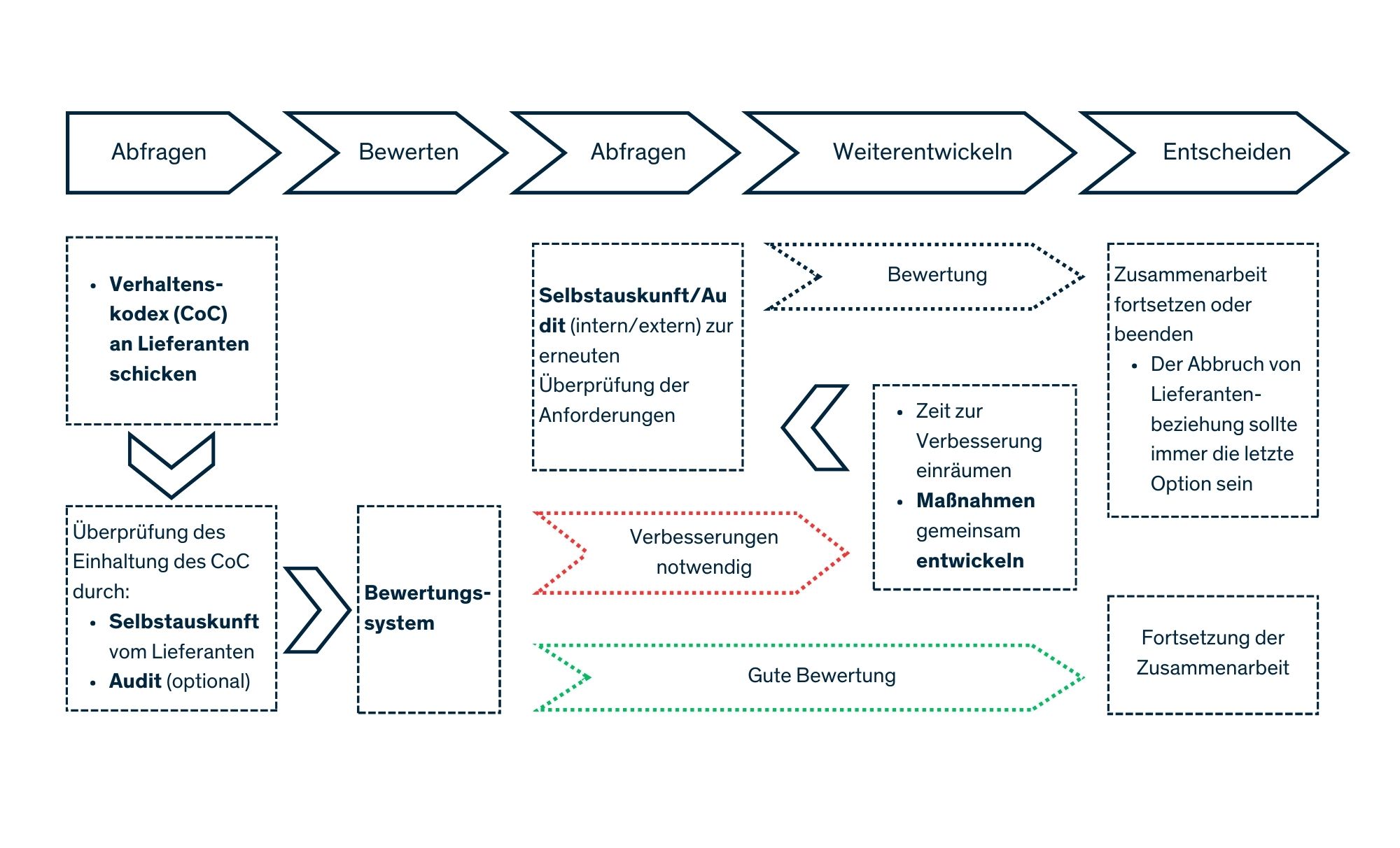
At present, within the EU, in the context of the established regulatory developments, standardized sustainability reporting obligations have initially been imposed on large companies. Currently, the obligation to report on sustainability in the management report of companies is governed by EU Directive 2022/2464, the so-called CSRD. (Figure 2)
With some foresight, it quickly becomes clear that the standardization of transparent, comparable, and verifiable reporting in companies' annual financial statements will dramatically improve the sustainability performance of businesses, and that climate targets can only be achieved through broad corporate commitment. Soon, the management reports of small and medium-sized enterprises (SMEs) will also be supplemented by audited sustainability reporting.
Sanctions and implementation
The legislator has now confirmed in the draft bill that the sanctions for misconduct regarding the CSRD are identical to those for the companies' management report. Accordingly, in the event of a failure to disclose or incorrect representations, severe fines and even prison sentences are imposed. The early establishment of processes for data collection and reporting is therefore now essential. Given the enormous effort involved and in view of the criteria also required by the EU Taxonomy Regulation, this will be a challenging task for all companies.
Sustainability in focus
We are prepared for this, because Swietelsky-Faber GmbH has already integrated the criteria of sustainability and social responsibility into its business processes some time ago. The company’s management is convinced of the effectiveness of the measures and firmly assumes that these measures will have a significant impact on its own supply chain. In short, anyone who cannot keep up with regard to the LkSG and the CSRD will fall behind. In addition, the early implementation of sustainability criteria in the company will also create competitive advantages in recruiting employees and in the awarding of contracts.
Supply Chain Due Diligence Act and Its Challenges
With regard to the Supply Chain Due Diligence Act, Swietelsky-Faber first recorded the status quo of its suppliers and found that 98 percent of the products installed and construction equipment used come from long-standing suppliers in Europe. But that is not all: In the future, with the even more intensive collection of sustainability aspects regarding the supply and value chain, the following areas will be covered: environmental protection, social responsibility and dealing with employees, respect for human rights, combating corruption and bribery, as well as diversity in the management team. The actual implementation is achieved through the strict integration of the sustainability reporting standards (ESRS) into the company’s internal ISO management systems and at the same time into the external supply chain.
Current challenges and the future
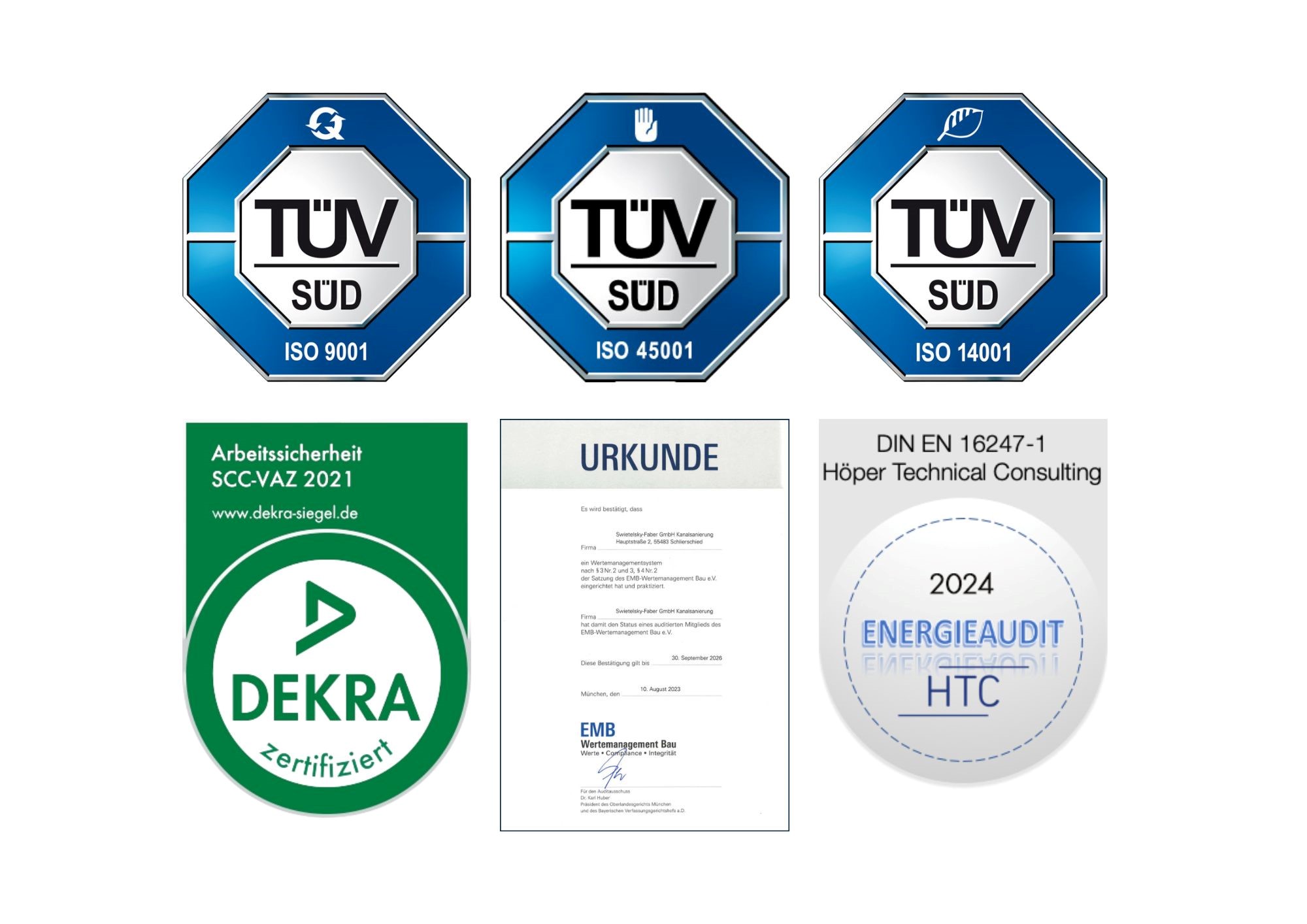
As the sustainability report will in future be reviewed by external audit firms, our clients can rely on the certified compliance with the European Sustainability Reporting Standards (ESRS) within our supply chain. (Bild4) Greenwashing, such as rainbow-colored glossy brochures and fake marketing claims, will leave a rather negative impression.
However, it is sobering to note that so far it has been almost unsuccessful to obtain meaningful and verified sustainability aspects from the actors along the value chain in underground infrastructure maintenance. However, it is foreseeable that compliance with the new European Sustainability Reporting Standards (ESRS) will be consistently extended to our company’s supply chain. Personnel resources will be provided for this purpose, so that very soon material and equipment suppliers as well as subcontractors will have to provide detailed information about their ESRS status.
Legislative influences on sustainability practices
In addition, the German legislature has introduced procurement criteria with the Act Against Restraints of Competition (GWB), which require social and ecological bid aspects to be taken into account. However, in the most recently completed financial year, only 4ppm (parts per million) of our clients included sustainability aspects as an additional evaluation criterion in their procurement processes. Although we are registering clear impulses from our industrial clients and their planning offices, awareness of sustainability reporting, including data collection, is still not present among the circles within our traditional supply chain, nor on the part of our operational competition. Existing sustainability assessments of companies via rating agencies (EcoVadis) are less than commonplace. From an innumerable pool of liner suppliers, only two liner suppliers currently have an EcoVadis certificate.
Real evaluations of the data collections and the real impact on our day-to-day business will therefore still require a little patience. However, we are also aware of our purchasing power in relation to our supply chains, so we remain active in this regard.
Implementation of sustainable technologies
To achieve the internal sustainability targets, many measures are still required. But in the reporting period 2023/24 alone, two further process technologies for lining wastewater channels were brought into the company, which on the one hand completely dispense with the use of fossil raw materials and on the other hand, through the substitution of cement-based materials, show a drastically reduced CO2 footprint. (cf. BI issue no. 3, page 92-93 and current BI issue no. 4, page 5)
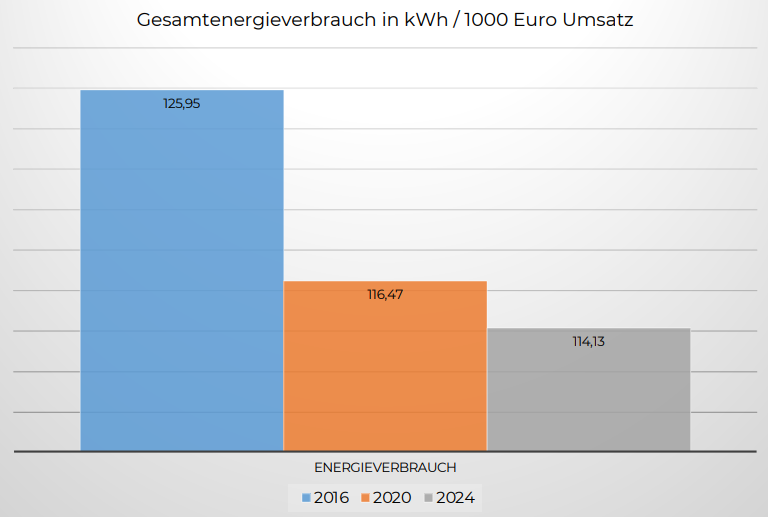
However, at present our clients still lack the courage to commission these partly still unfamiliar technologies, which are generally more expensive than less sustainable building materials. The company is also proud that, despite enormous sales growth of 94% (2016/2024), the most recent external energy audit demonstrated significant successes through the energy efficiency measures implemented so far. Thus, the use of fossil fuels in relation to annual revenue (kWh diesel/€) could be reduced by 9.4%.
Entrepreneurial Courage
The sustainability focus of a company entails various risks, as it is associated with costs and staffing effort. However, it also offers the opportunity to expand a company’s competitiveness in the long term, because sustainability and economics are not in conflict. Courage is required to establish it along the entire value chain.
It is pleasing to note that sustainability aspects, alongside the classic principles of public procurement law, have already found approval among some planners and builders through the definition of suitability and award criteria.
Unfortunately, in our mature displacement competition, the ignorant and non-tariff operating black sheep still too often receive the contract through dumping prices.
Swietelsky-Faber GmbH
Dipl.-Ing. Jörg Brunecker
Managing Director
The Directive (EU) 2022/2464 on Corporate Sustainability Reporting (PDF)