In principle, geopolymer materials were described as two-component systems containing a reactive silicon and aluminium oxide content as well as a basic activation solution made from alkali hydroxides. As with classical cement, the solid content consists of natural minerals. The concrete-like strength of the inorganic polymer is then created by mixing the ground solid mixture with the so-called activation solution.
An innovation from Vortex
Geopolymers have already appeared on the market in the 1970s. However, the breakthrough in the classic construction sector has not yet been achieved due to the price disadvantage compared with cement and the two-component processing. Among other things, Vortex’s innovation lies in the fact that they were able to bypass the two-component variant by adding pulverised aluminosilicate to create a single-component product that is water-soluble on the construction site.
This means that the GeoKrete geopolymer can now simply be mixed with water and processed. Unlike conventional cements, which bind additives through hydration, GeoKrete simply uses water as a catalyst to trigger a chemical reaction. This reaction results in very high early and long-term strength, exceptional bonding properties, and ideal conditions for precise mixing, pumping, and spraying on the construction site.
The working principle of geopolymerisation
In contrast to polymer concrete, where only synthetic resins are added to cement products as binders, the working principle of geopolymers is very different.
The term geopolymerisation refers to the chemical reaction of geopolymeric materials, and the reaction mechanism initially involves the nucleophilic attack of hydroxide ions on the partially positively charged aluminium compounds and silicon crystals of the material. This leads to the breaking of the silicic acid and aluminium oxide chains.
Oligomer structures form simultaneously, which polymerise into a three-dimensional chain framework. In the process, the hydroxide ions undergo repeated chain splitting.
Due to their structure, kaolinite and metakaolin dissolve layer by layer, releasing adsorbed water, which noticeably reduces the viscosity of the geopolymer before it has hardened.
Cement is still considered the most commonly used building material worldwide, but geopolymers can quickly take this position from it for special applications. They also have technical advantages: they are more heat-resistant than concrete — its bound water builds up steam pressure in the event of a fire, which leads to cracks or spalling. And they are more resistant to chemicals because they contain no lime, which dissolves when it comes into contact with acids and aggressive substances. After just one day, geopolymers develop compressive strengths similar to those of high-strength concrete. They can be demoulded quickly and are suitable for the mass production of precast parts.
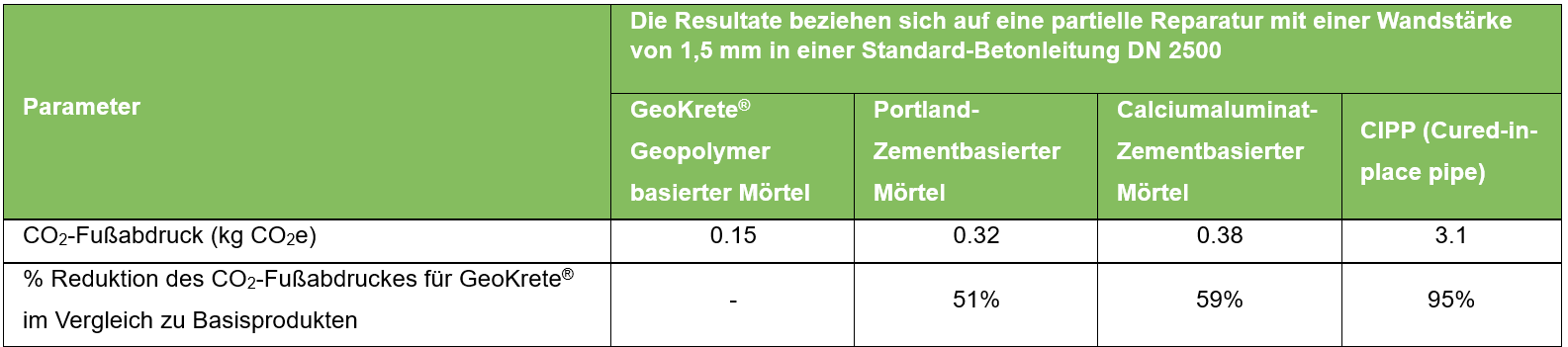
At present, various manufacturers are experimenting with chemically resistant sewage pipes made of geopolymers. They are still more expensive than cement or concrete pipes… however, sustainability and durability are very good arguments for using geopolymer pipes.
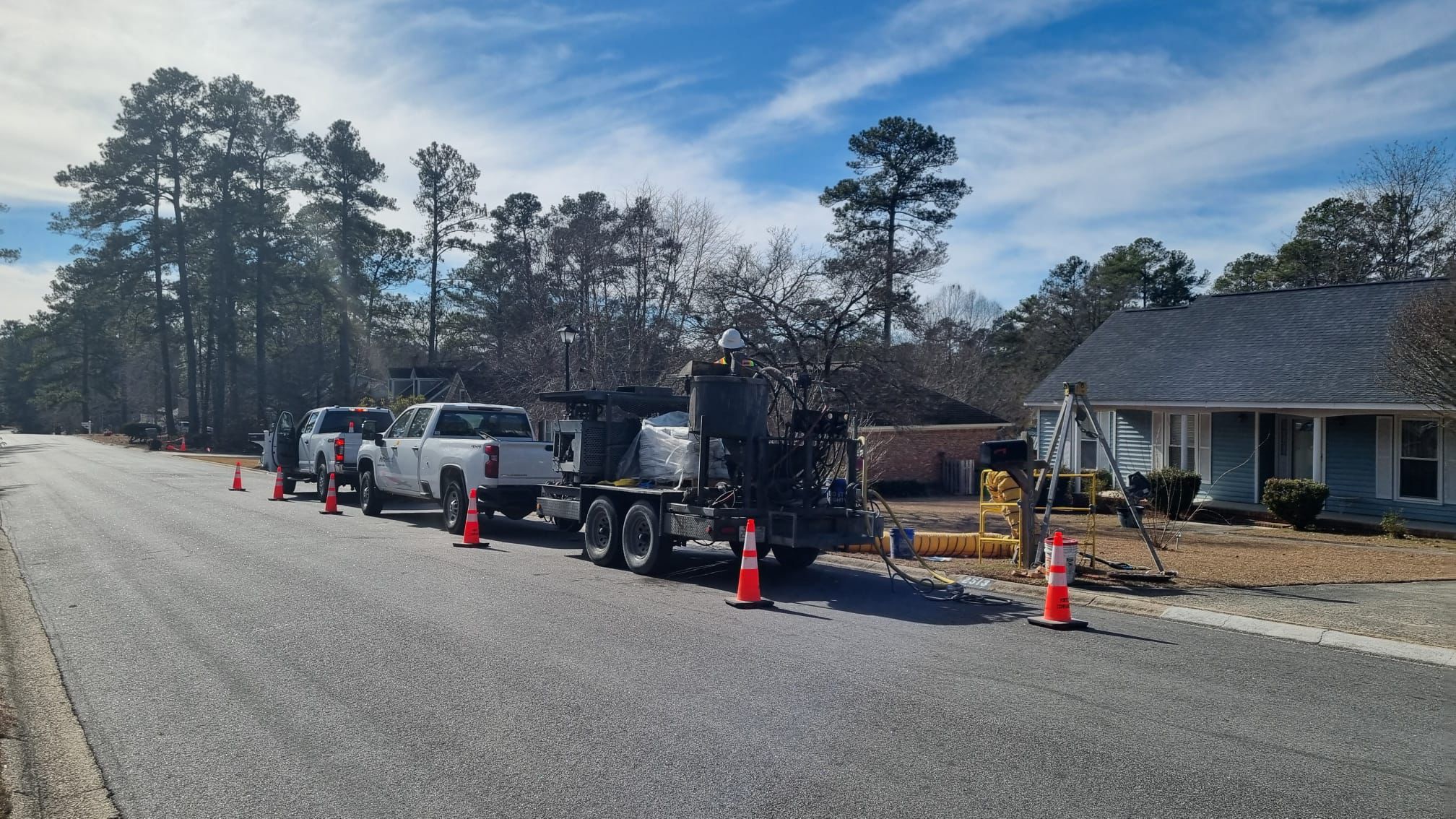
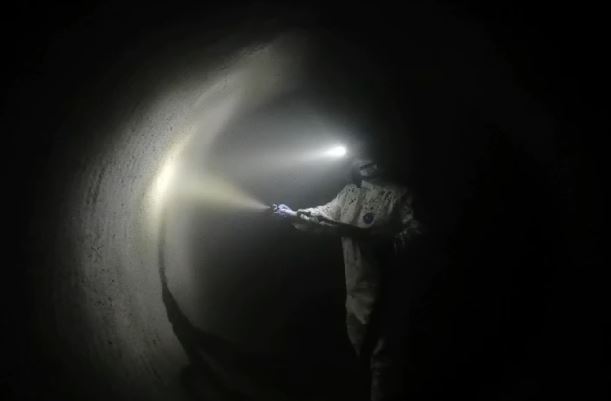
For trenchless sewer rehabilitation, the employees of the Swietelsky-Faber GmbH Kanalsanierung are convinced that geopolymers are ideally suited for use in shaft rehabilitation, the lining of accessible and non-accessible channels, and special structures of any kind. For this reason, the Swietelsky-Faber GmbH Kanalsanierung initially offers GeoKrete from Vortex exclusively in the German-speaking region. Initial projects are already in planning, and we will be pleased to report on them.


 und nachher (rechts)..jpg)