This is how pipe lining works in pressurized pipelines
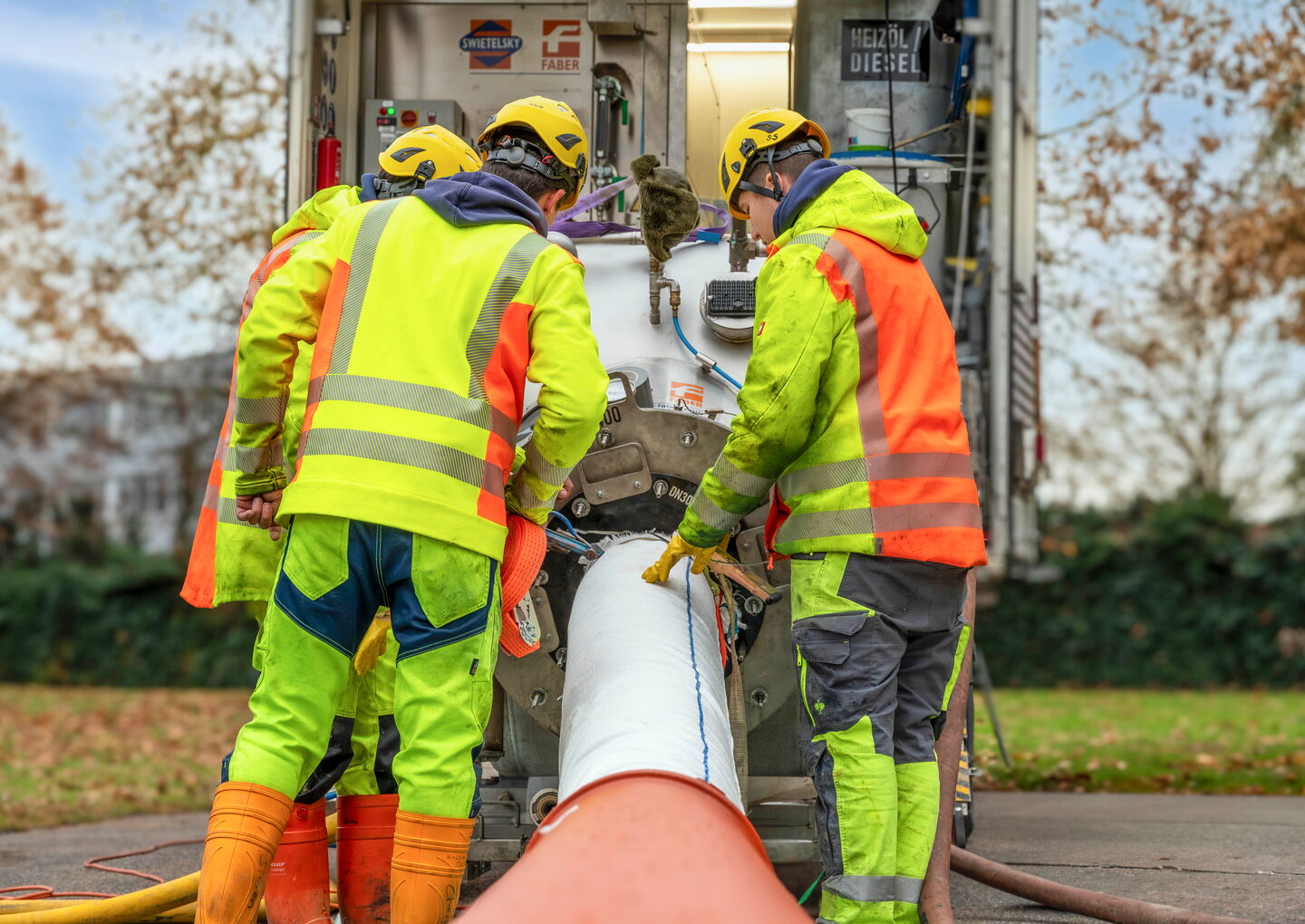
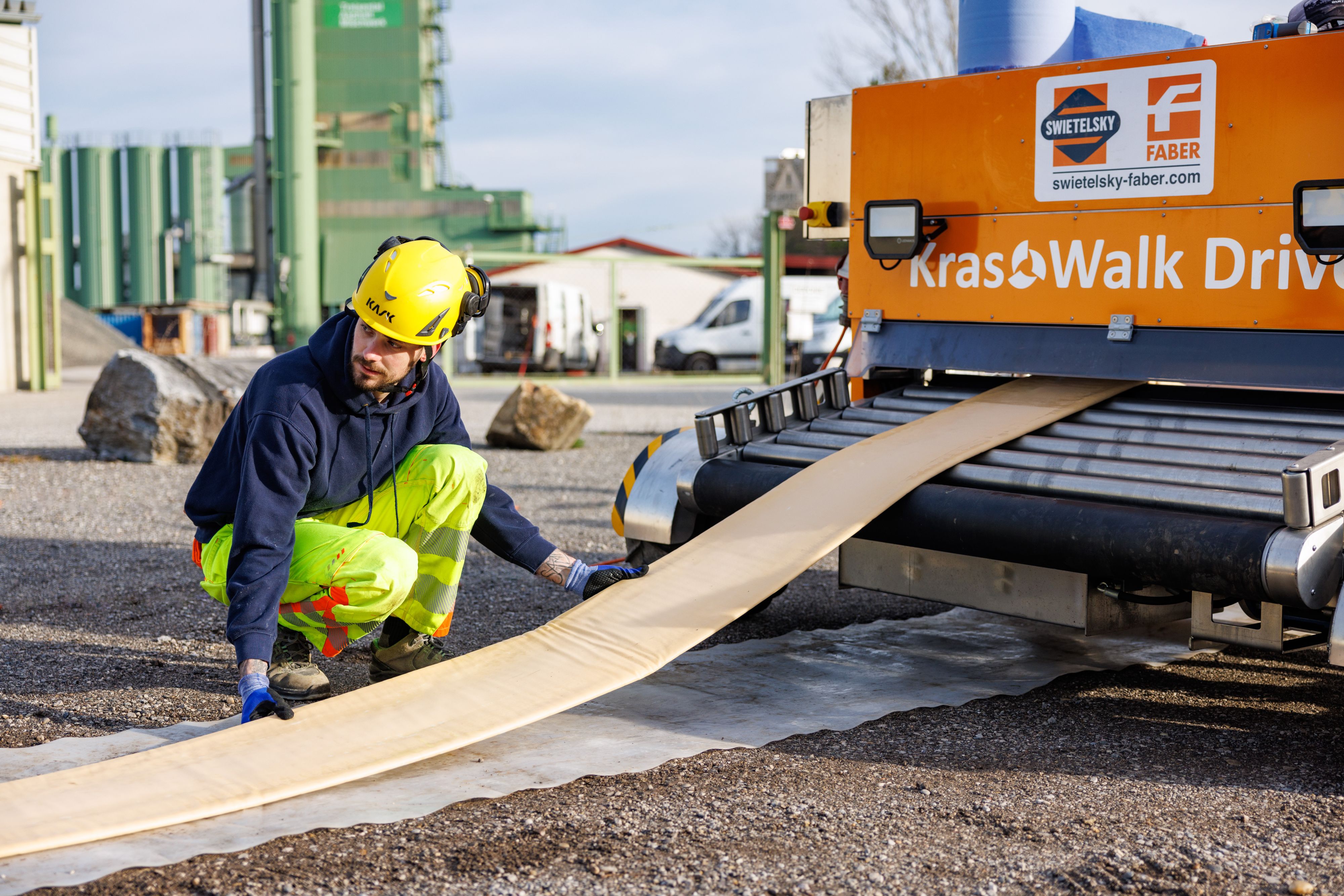
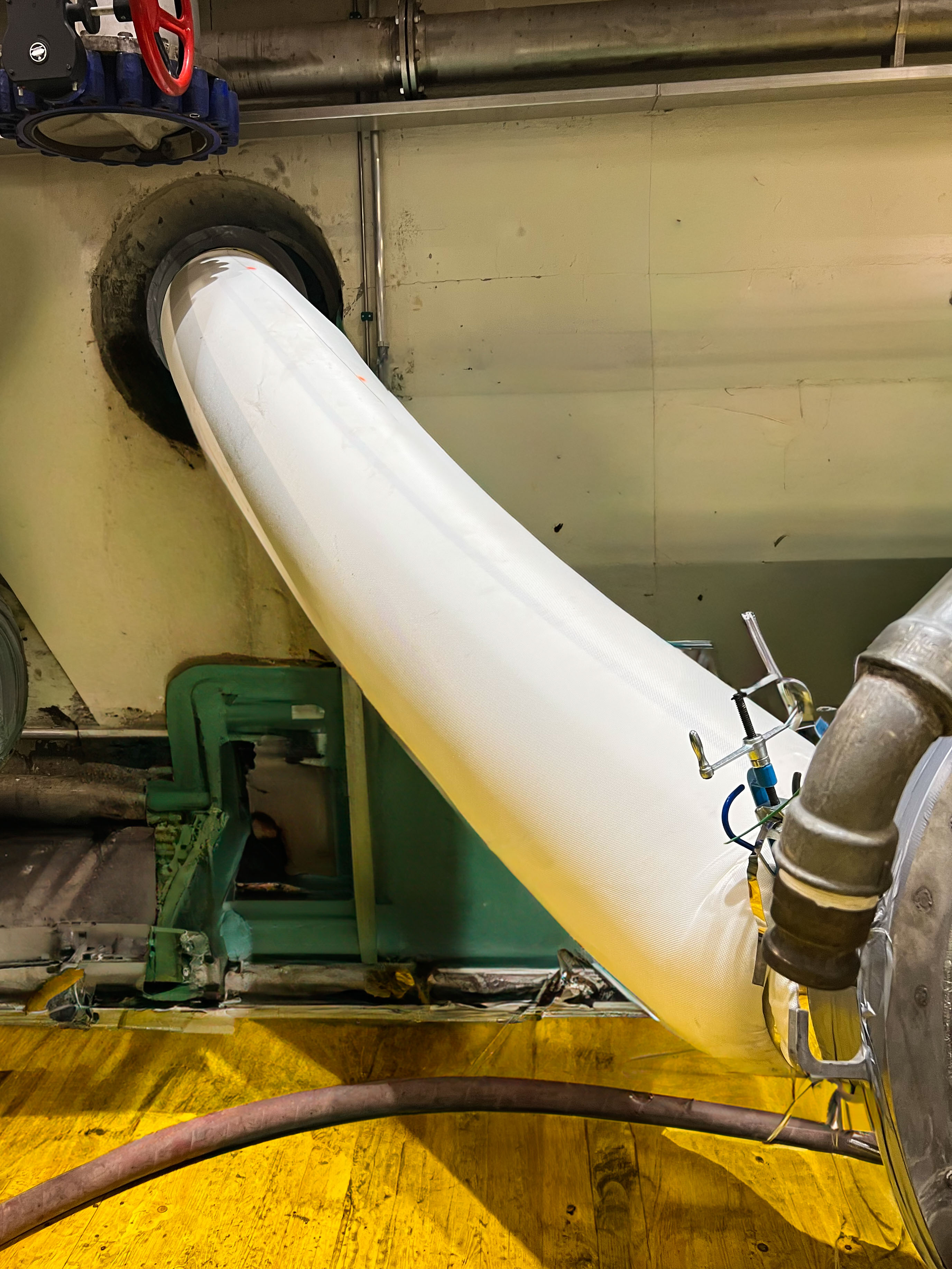
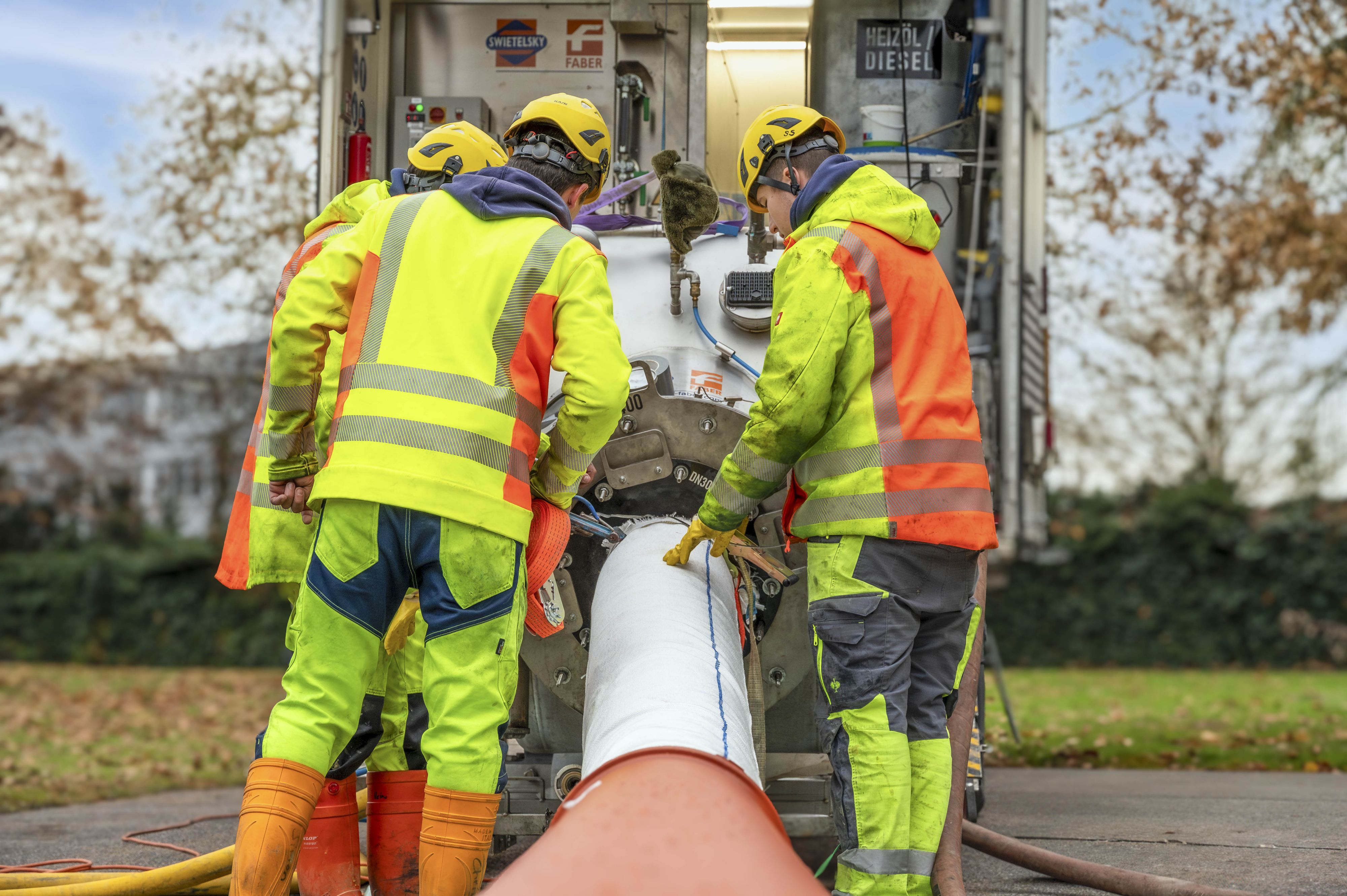
A flexible, resin-impregnated liner is inserted into the existing pressure pipe by pulling it in or by inversion.
The liner is then pressed against the inside wall of the pipe under pressure and cured. This creates a new, permanently tight and structurally load-bearing pipe inside the old pipe.
The process enables the economical and sustainable rehabilitation of pressure pipelines without extensive excavation. Interventions in ongoing operations, the surface, and the existing infrastructure are thereby reduced to a minimum.
Technical service data
- Pressure resistance: project-dependent, statically calculated
- Temperature resistance: dependent on the resin system
- Elbow passability: depending on the process, up to 90° bend angle
- Design: according to structural calculation and applicable regulations
- Curing: UV, hot water, or steam
- Classification: Class A, B, C according to ISO 11300
- Drinking water: exclusively DVGW-/KTW-compliant and approved systems

.jpg)
.jpg)
.jpg)