Hose lining for the rehabilitation of pressure pipelines

Trenchless rehabilitation of pressure pipe systems

When pressure pipelines need to be rehabilitated, open renewal is often associated with high effort, long shutdowns, and interventions in existing infrastructure. With the hose lining process, SWIETELSKY-FABER rehabilitates existing pressure pipelines trenchlessly, in a controlled manner, and with long-term load-bearing capacity.

For which pipelines is the process suitable?

Nominal diameter range

DN 100 – DN 2000 (depending on the project)

Existing pipe materials

Steel, cast iron, ductile iron pipe, plastic

Pipe geometry

Round, egg-shaped, and special profiles

Condition of the existing pipe

Suitable for cracks, leaks, corrosion, and material fatigue

Pressure classes

PN 1 - PN 16 (depending on the project)

Areas of application

  • Wastewater pressure pipelines

  • Drinking water pipelines

  • Power plant pipelines

  • District heating pipelines

  • Cooling water pipelines

  • Fire water pipelines

  • Industrial and media pipelines
    (process water, gas, oil, chemicals...)

This is how pipe lining works in pressurized pipelines

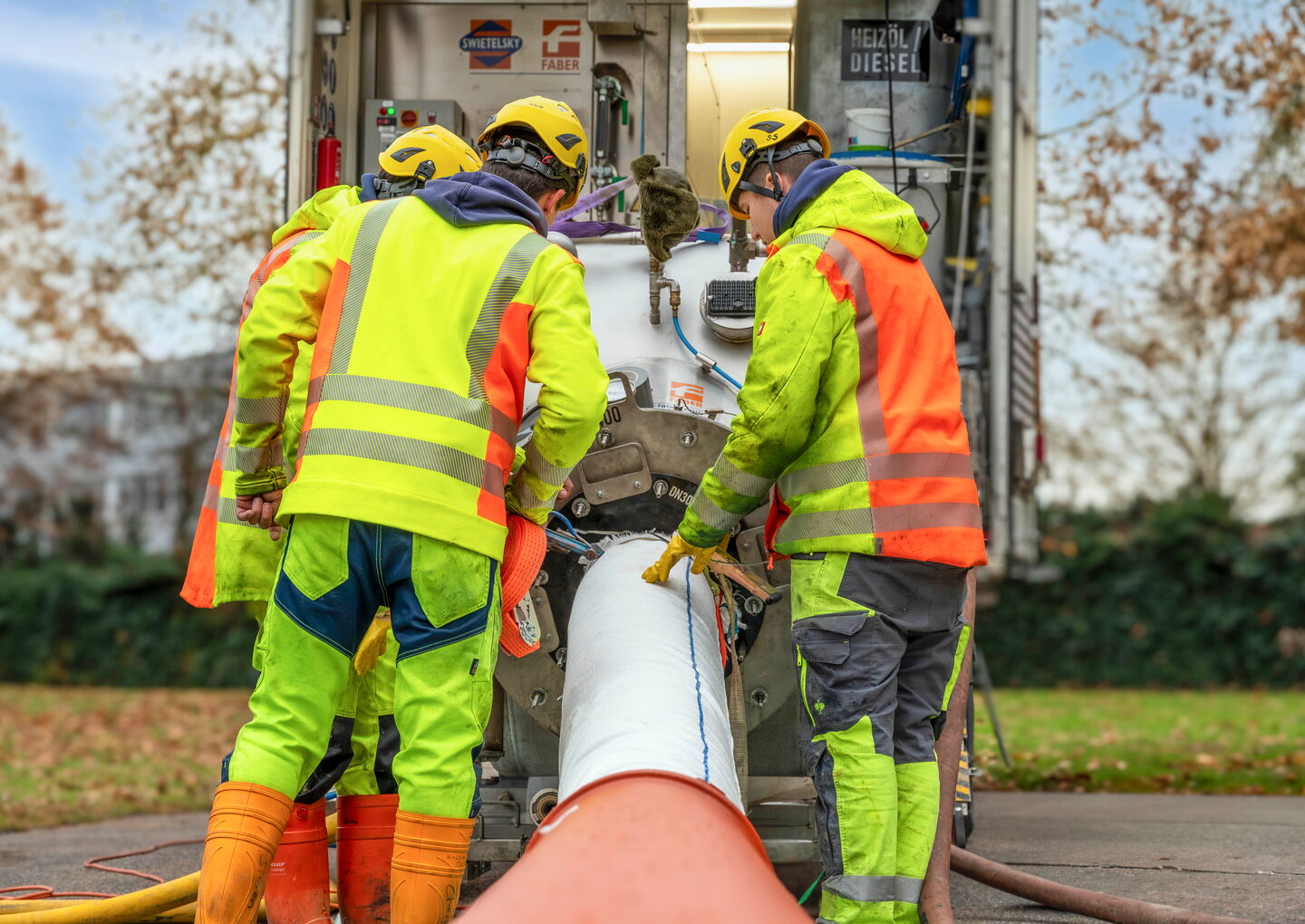
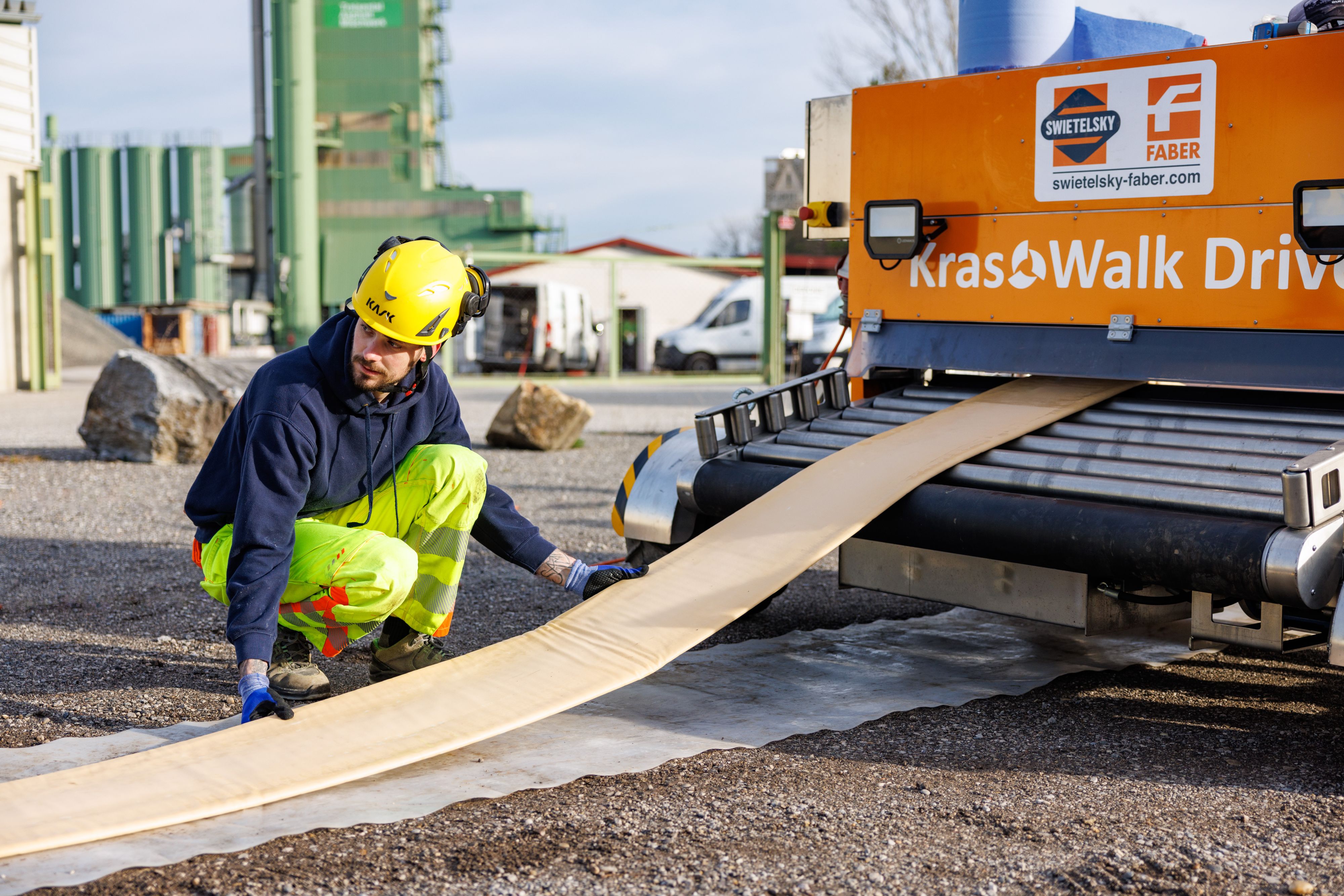
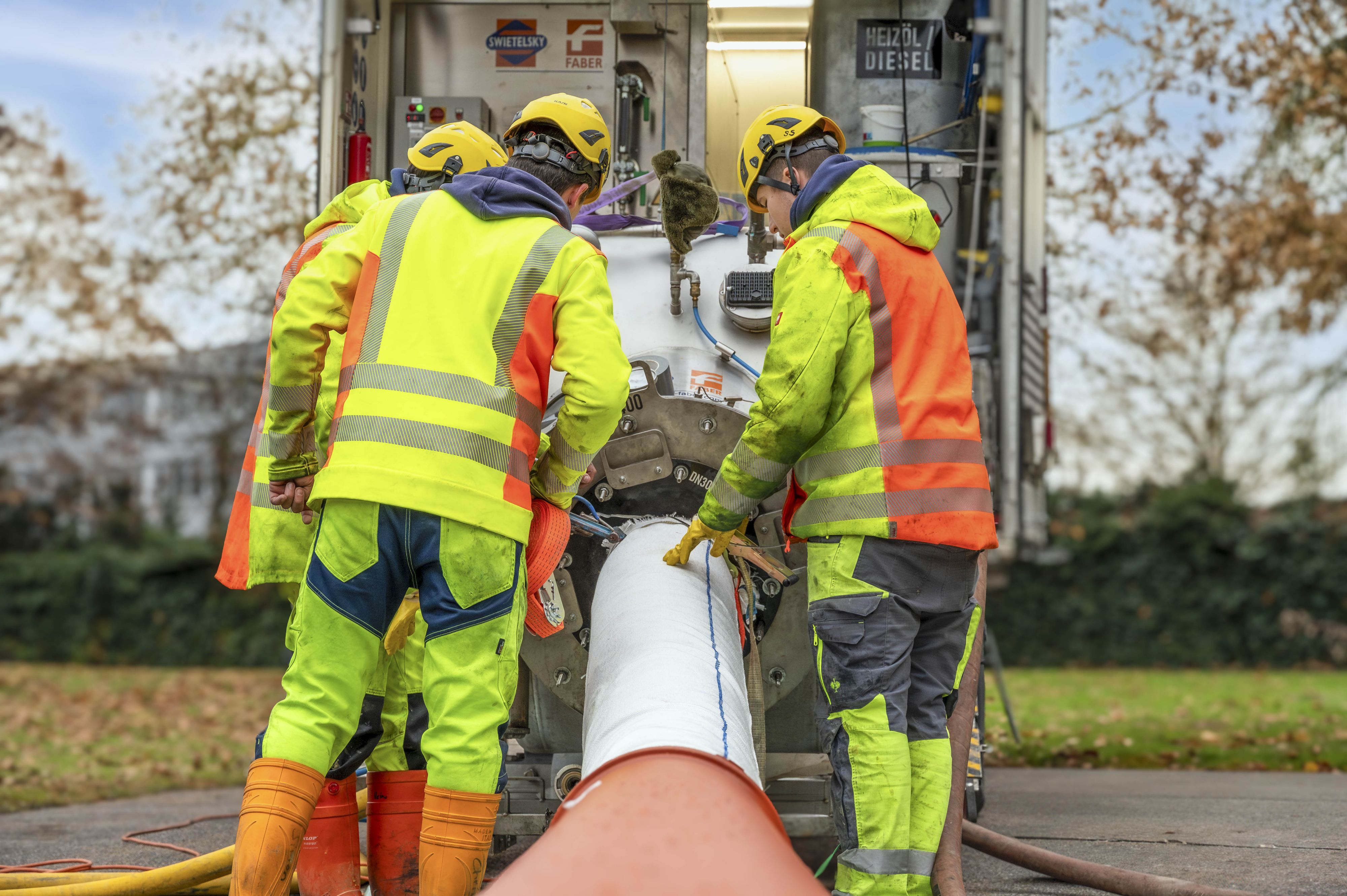
A flexible, resin-impregnated liner is inserted into the existing pressure pipe by pulling it in or by inversion.

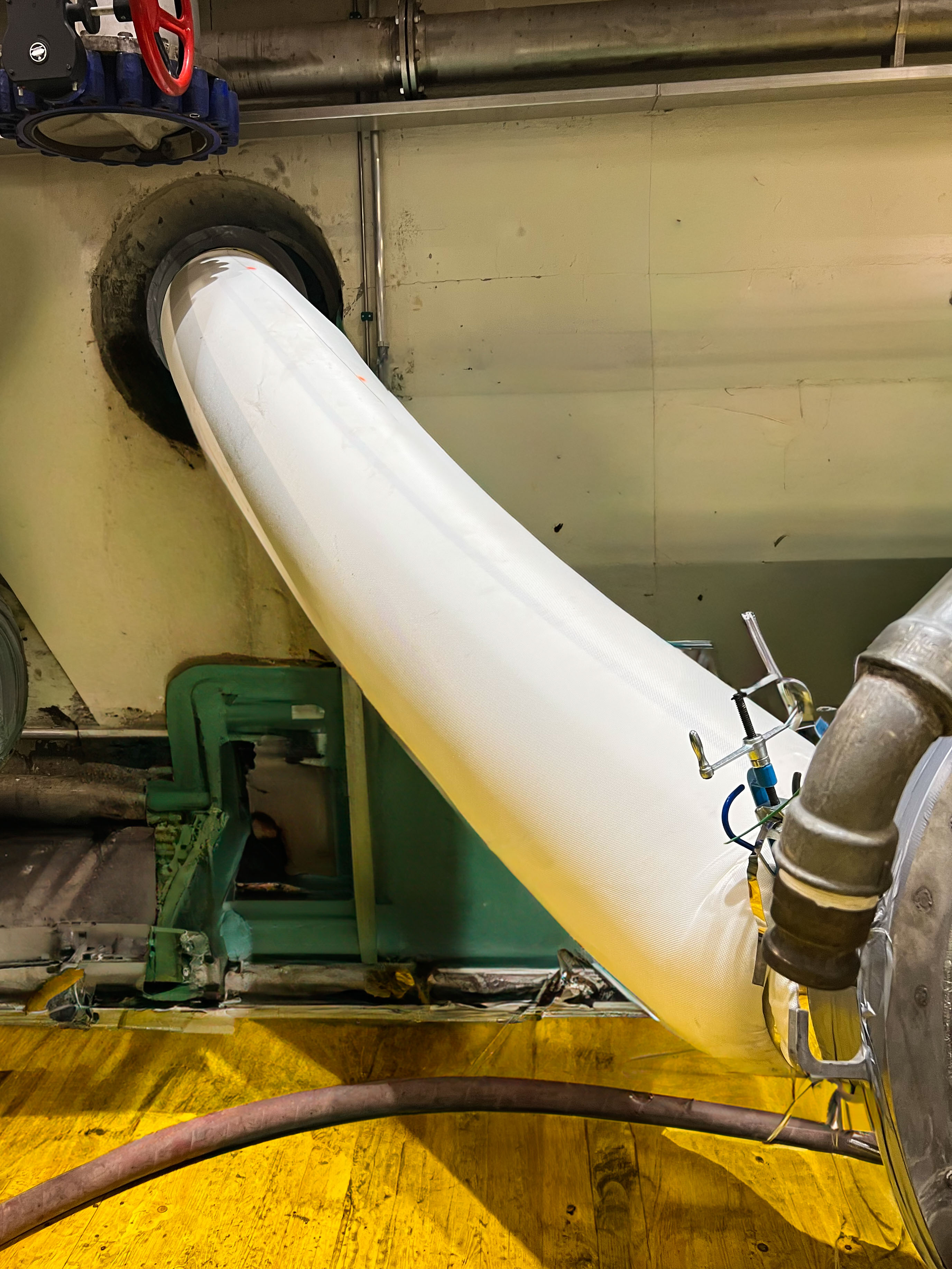
The liner is then pressed against the inside wall of the pipe under pressure and cured. This creates a new, permanently tight and structurally load-bearing pipe inside the old pipe.

The process enables the economical and sustainable rehabilitation of pressure pipelines without extensive excavation. Interventions in ongoing operations, the surface, and the existing infrastructure are thereby reduced to a minimum.

Technical service data

  • Pressure resistance: project-dependent, statically calculated

  • Temperature resistance: dependent on the resin system

  • Elbow passability: depending on the process, up to 90° bend angle
  • Design: according to structural calculation and applicable regulations

  • Curing: UV, hot water, or steam

  • Classification: Class A, B, C according to ISO 11300

  • Drinking water: exclusively DVGW-/KTW-compliant and approved systems

Hose lining for pressure pipelines in practice

Frequently Asked Questions

Everything else you need to know about the technology

Which dimensions can be rehabilitated with pipe lining?

Depending on the project, hose lining can be used for pressure pipelines from DN 100 to DN 2000

For which existing pipe materials is the process suitable?

The process is suitable for steel, cast iron, ductile iron pipe, and plastic

For which pipe geometries can the process be used?

The process can be used for round profiles and, depending on the project, for egg-shaped and special profiles

For which types of damage is pipe lining suitable?

The process is suitable for cracks, leaks, corrosion, or material fatigue in the existing pipeline

Which curing processes are used?

Depending on the system, curing takes place with UV light, hot water, or steam

How pressure-resistant is the rehabilitated pipe?

The pressure resistance is calculated statically depending on the project and adapted to the respective pipeline situation

Pipeline situation adapted Which resin systems are used?

The resin system used is selected depending on the medium, temperature, load, and project requirements

How is the technical design carried out?

The design is carried out according to static calculation and applicable regulations

Which quality classes are possible?

Depending on the requirement, classifications of classes A, B, or C according to ISO 11300 are used

What applies to drinking water pipelines?

For drinking water pipelines, only approved systems conforming to DVGW and KTW are used

What does the specific execution depend on?

The execution depends on dimensions, old pipe material, type of damage, medium, pressure load, temperature, accessibility, and operating requirements

Ready to tackle something big? So are we!