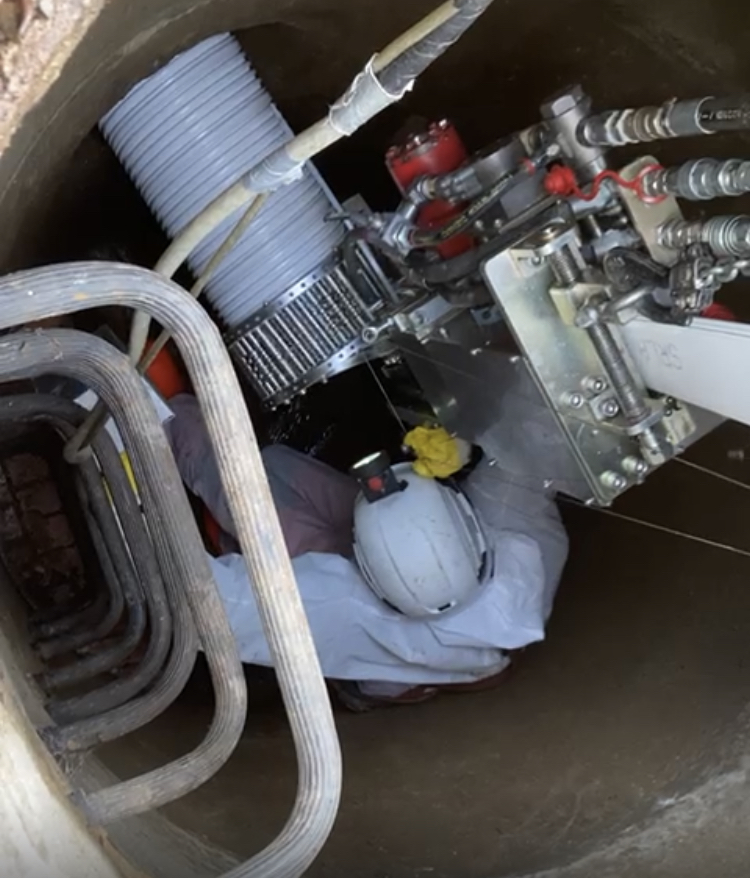
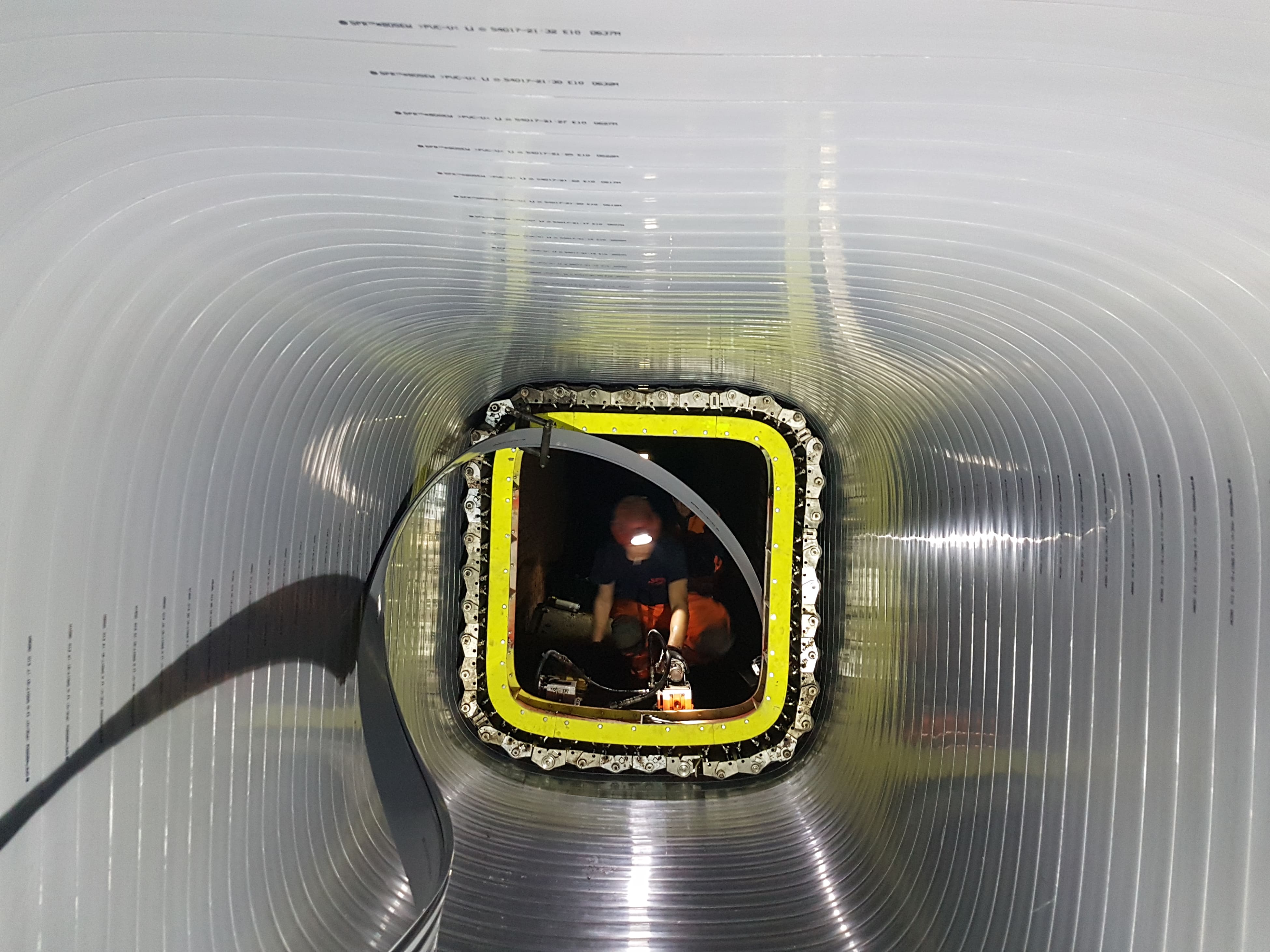
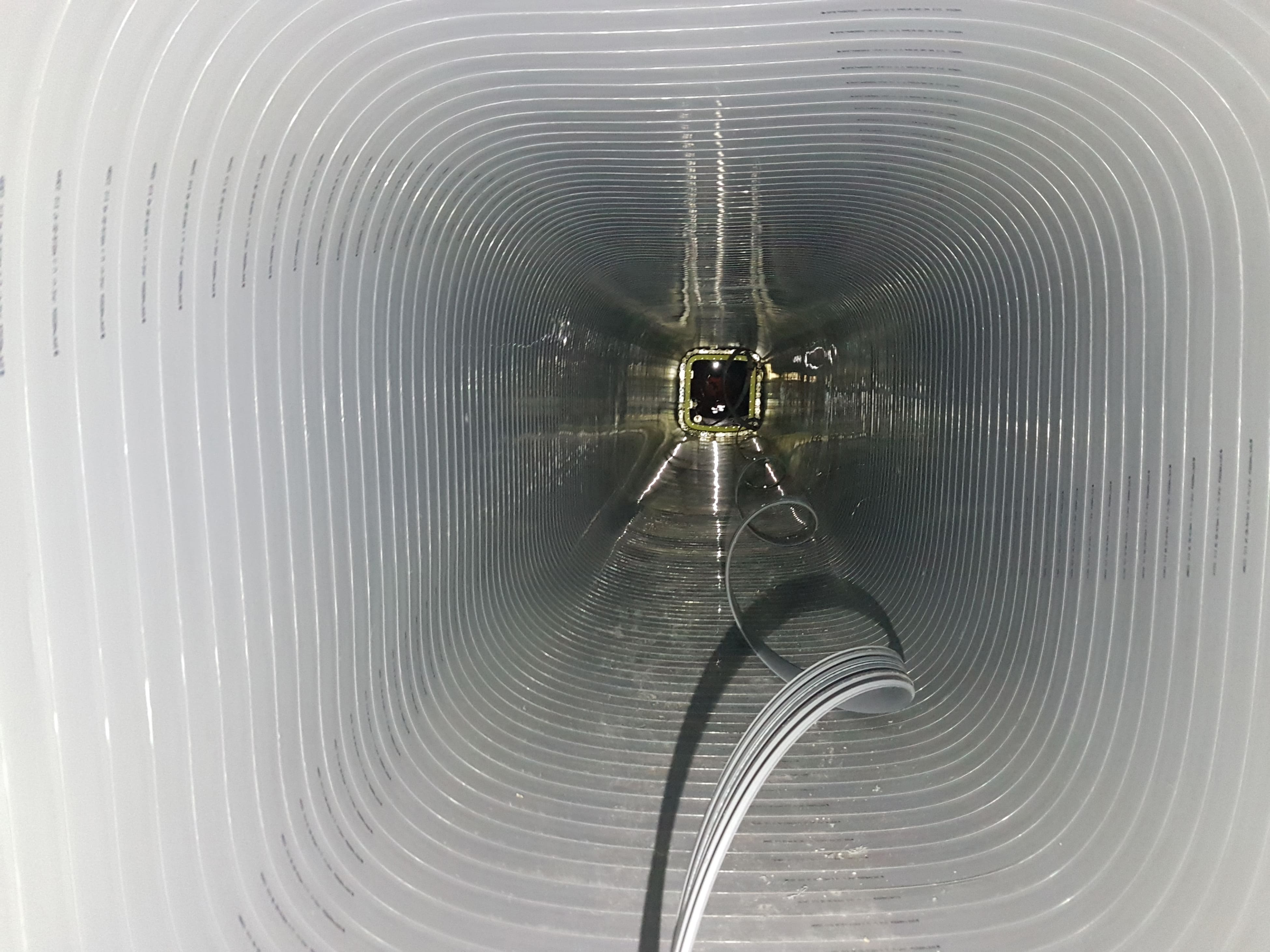
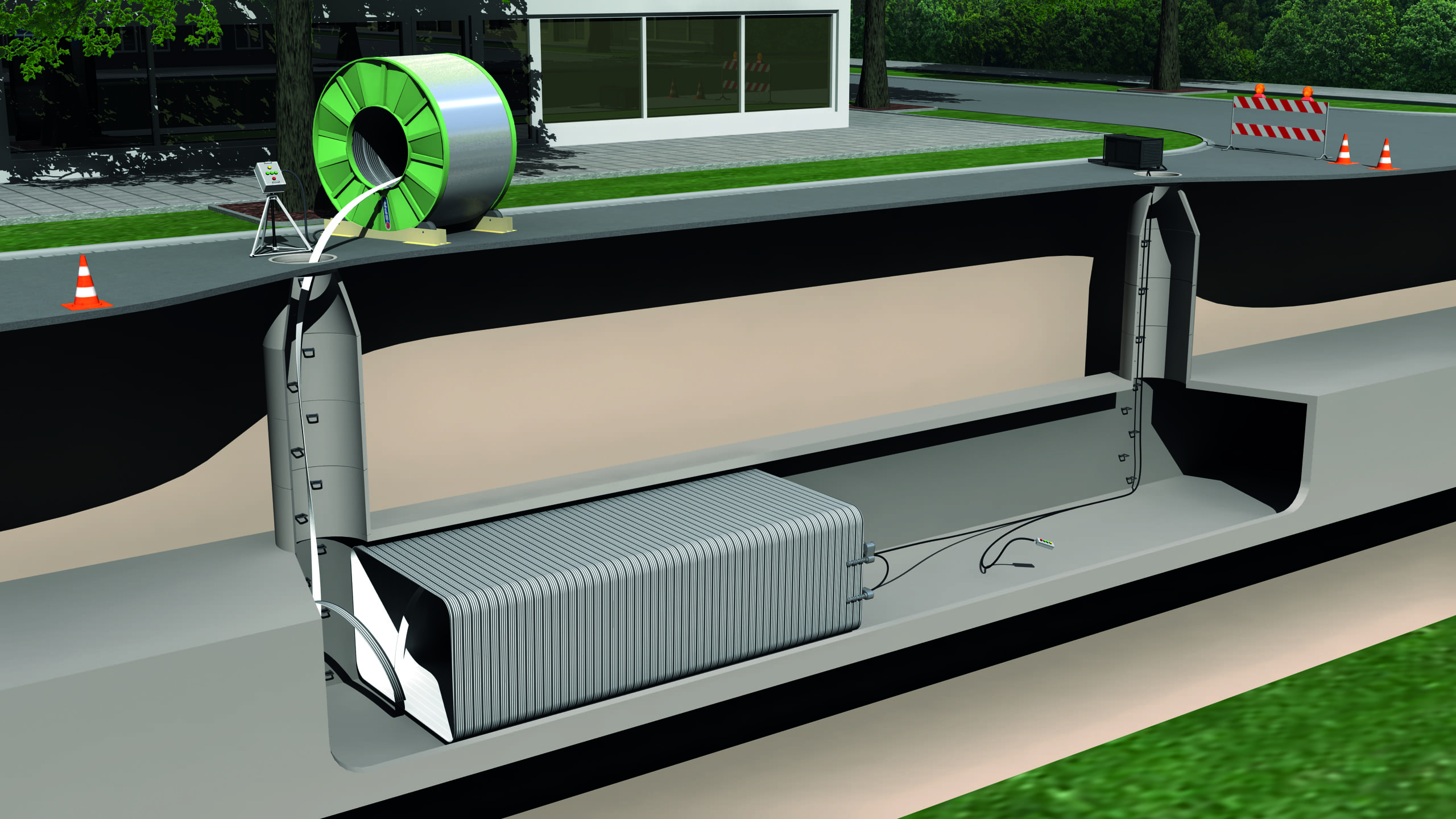
How the winding pipe technology works
Factory-made PVC or HDPE profile strips are mechanically wound directly in the old pipe to form a new pipe body. The edges of the profile strips interlock and create a homogeneous, durable pipe system – fast, economical, and trenchless.
Depending on the system, this results in:
- a force-fit bond directly on the old pipe or
- an annular gap that is subsequently filled (grouted)
The profiles are joined:
- for PVC-U by mechanical locking with sealing or adhesive elements
- for PE by extrusion welding
The winding machines are used either stationary in the shaft, depending on the process, or travel through the pipeline during the winding process.
The winding pipe systems at a glance
SPR™ TM
- Nominal diameters DN 800 – DN 5500
- For large and special profiles with mortar filling
- Steel-reinforced PVC-U profiles
- The annular space is filled with statically load-bearing grouting material
- High-quality concrete pipe with internal plastic lining
- Various profiles for different rehabilitation requirements
- Bends up to 5D possible.
SPR™ EX
- Nominal diameters DN 150 - DN 1050
- Self-supporting close-fit liner
- Close-fit process - winding pipe liner lies snugly against the old pipe
- Designed for the highest loads and tightness, e.g. in landfills or seismic zones
SPR™ PE
- Nominal diameters DN 900 - DN 3000
- Self-supporting rehabilitation system
- Restores or improves hydraulic capacity, service life, and corrosion resistance
SPR RO – how the winding pipe process works
The short animation shows how channels are rehabilitated trenchlessly using the SPR RO winding pipe process.
▶ Watch animation on YouTube