Blomberg
Pipe rehabilitation
Channel Rehabilitation in Neuss in Advance of the LAGA
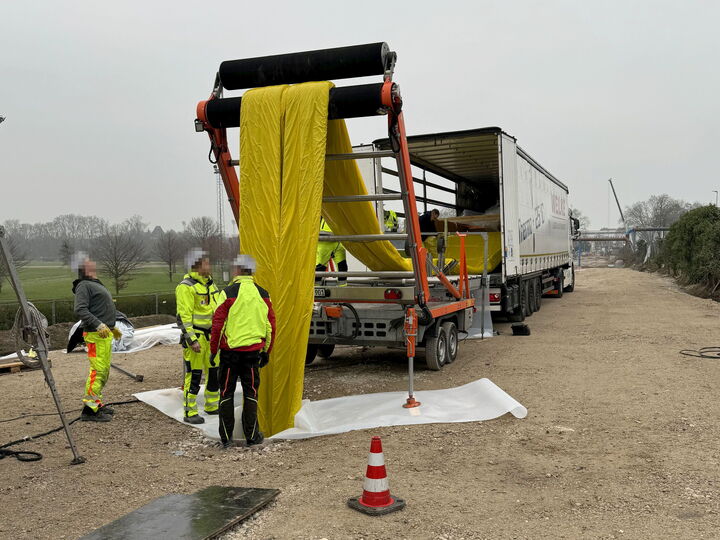
Large liner, large dewatering, great time pressure – in Neuss, within the framework of an overall measure, various runs with the nominal diameters DN 1200 and DN 1500 were rehabilitated – and quickly, with upcoming deadlines in view. Nothing was left to chance.
(Source: BI Medien)
In 2026, everything is to be ready for the State Garden Show (LAGA). By then, a new 38-hectare citizens' park is to be created on the former racetrack site not far from the center of Neuss. As part of this, InfraStruktur Neuss AöR relocated a wastewater sewer located on this site into Hammer Landstraße, whereby the run DN 1600 was renewed as a dragon profile – in part beneath railway tracks using pipe jacking. In addition, another wastewater sewer in Hammer Landstraße was rehabilitated using the cured-in-place pipe lining method. After the construction and rehabilitation work, a cycle superhighway is to be built over the wastewater sewer.
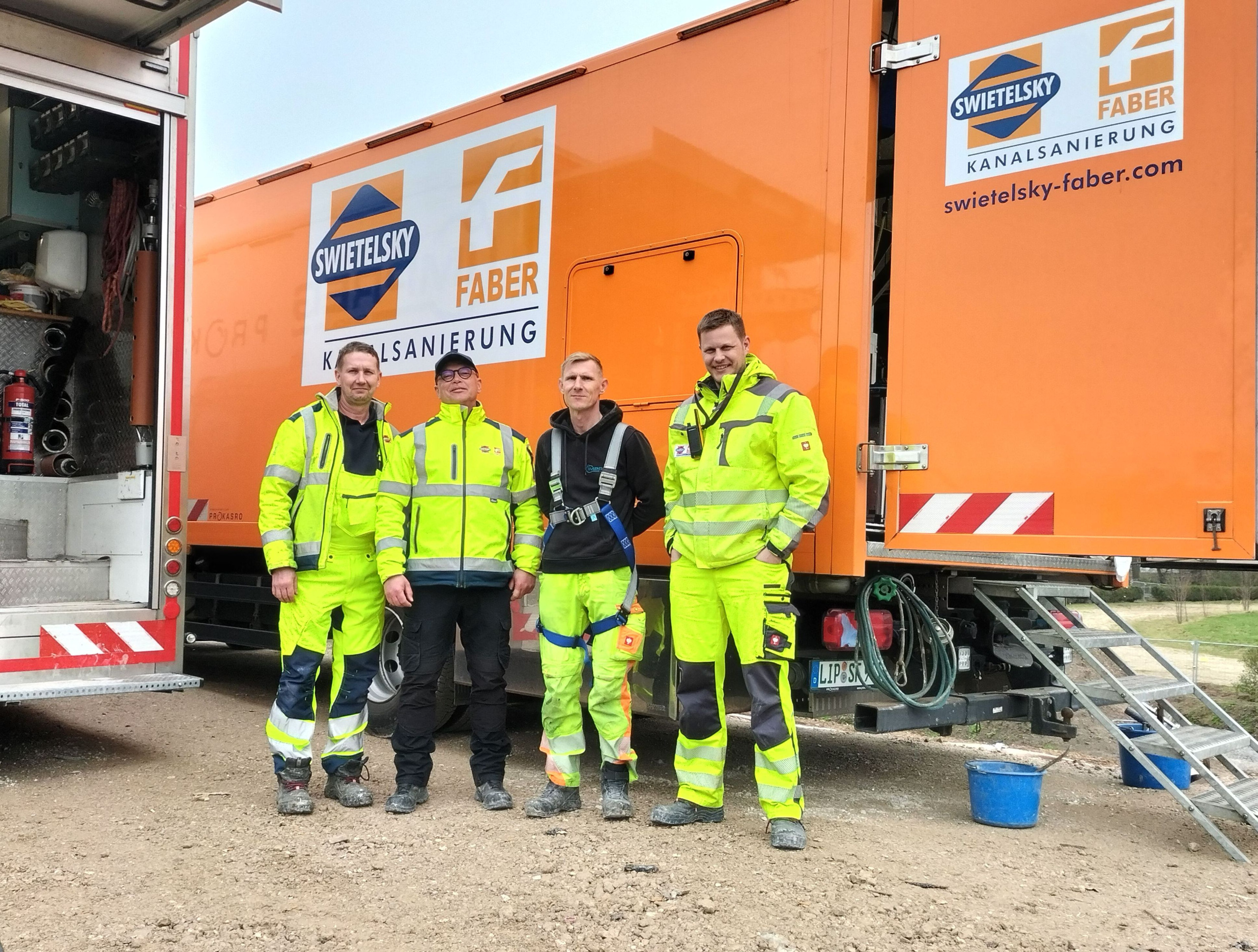
The overall construction project had been put out to public tender; the company August Dohrmann GmbH was awarded the contract and commissioned Swietelsky-Faber GmbH Kanalsanierung as a subcontractor with the trenchless rehabilitation.
Rehabilitation Under Time Pressure
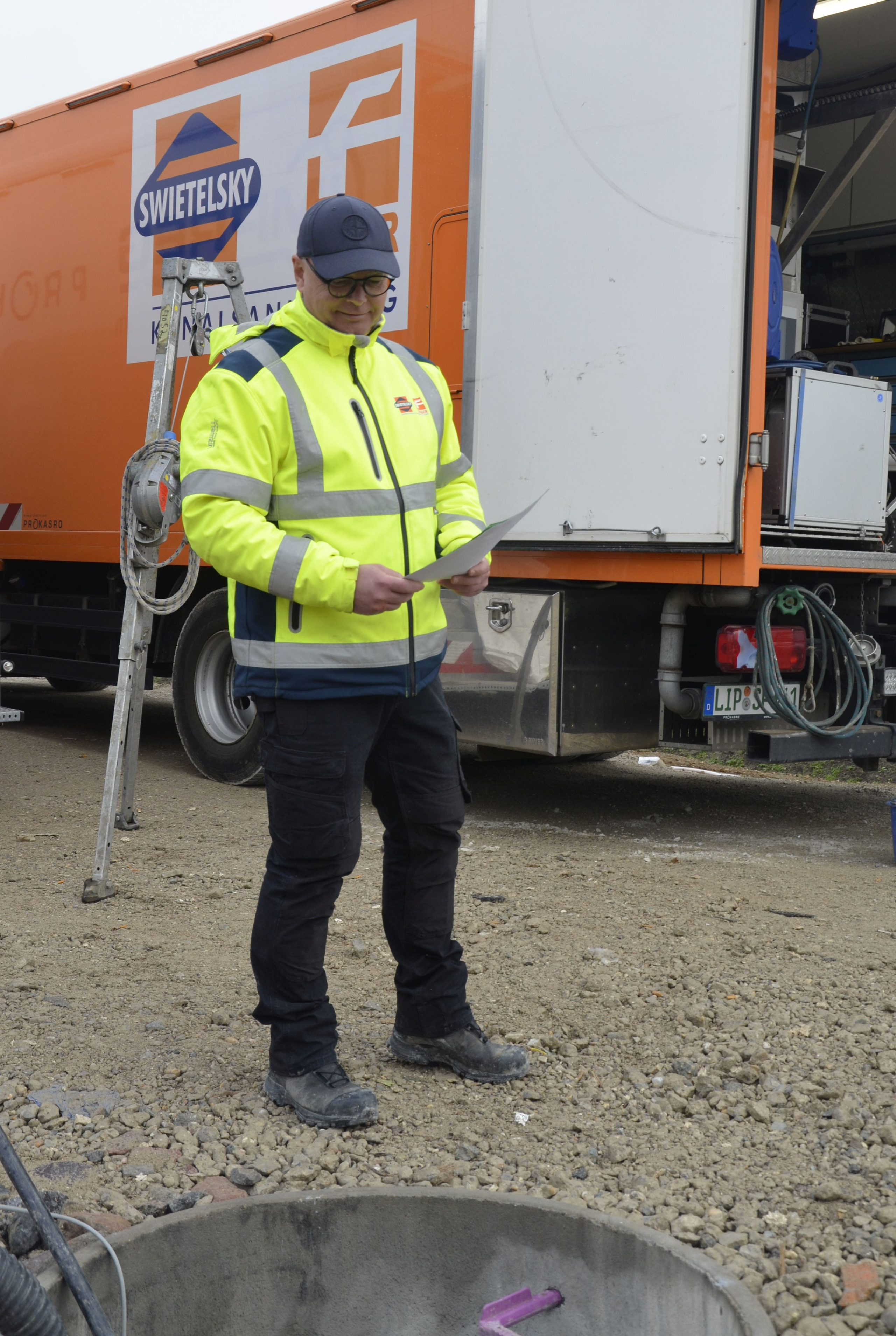
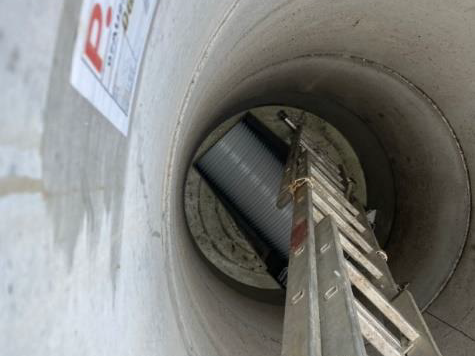
“The concrete pipes to be rehabilitated had been given an internal coating by the manufacturer, which had already detached in some places and was hanging down in tatters in parts,” explains site manager Oliver Ruch, Swietelsky-Faber, describing the damage found in the old sewer. The epoxy coating therefore had to be removed from the sewer in advance using high-pressure water jetting.
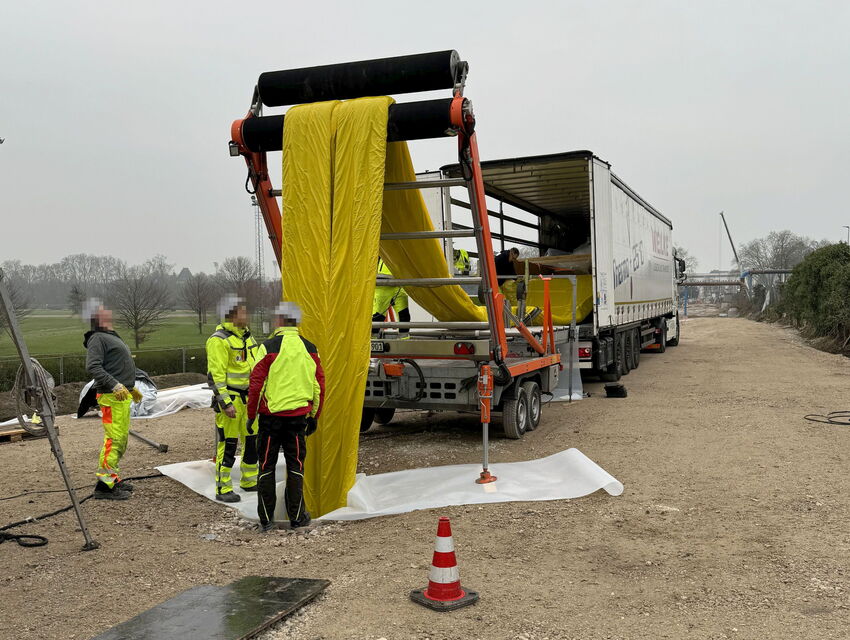
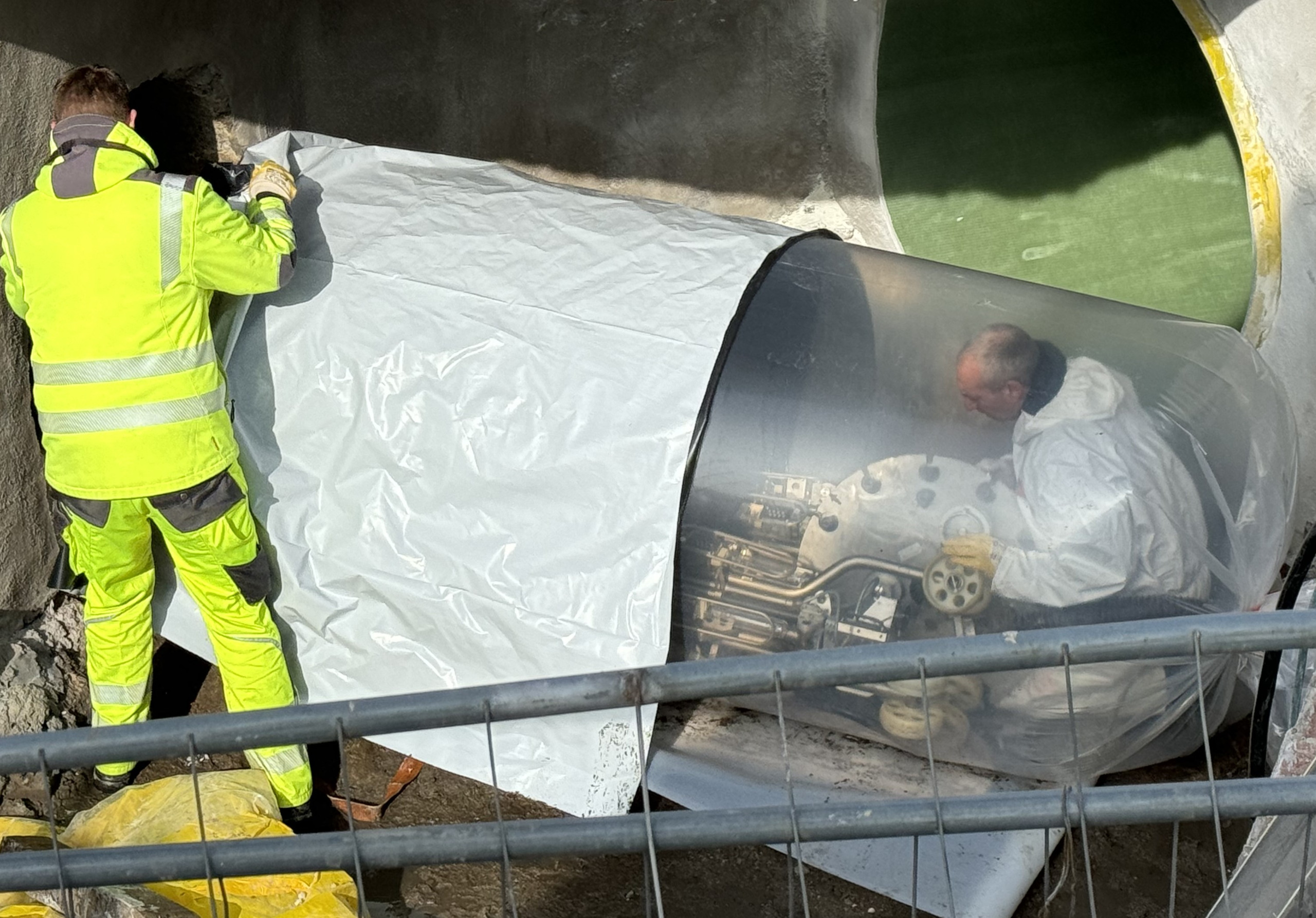
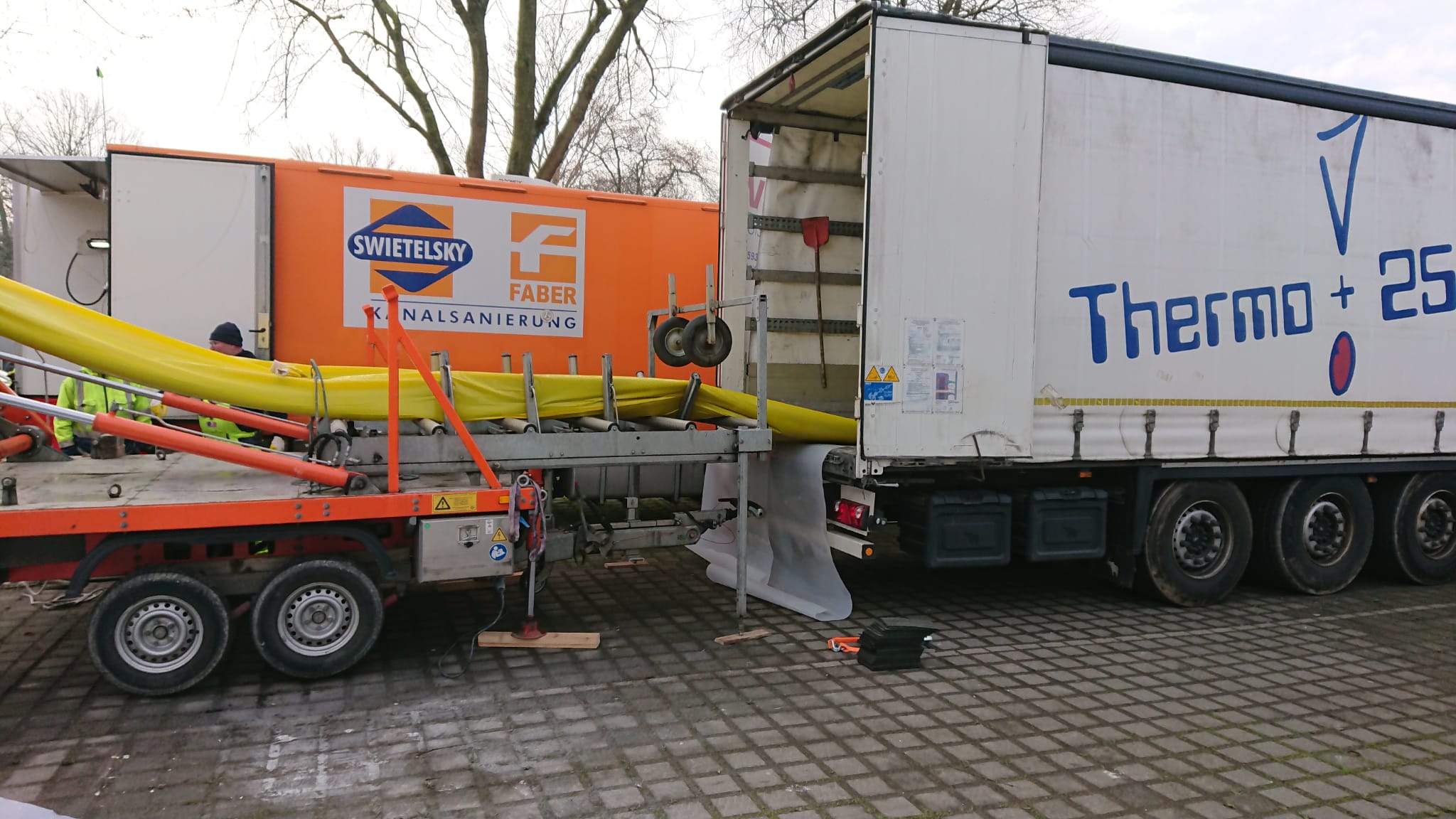
“Due to the size of the sewer and the local conditions, cured-in-place pipe lining was the obvious rehabilitation method,” says René Wagner, InfraStruktur Neuss AöR. Four Impreg-Liner GL16s were installed: 1 x DN 1160 over 38 meters as well as 3 x DN 1500 over 56, 103 and 107.5 meters, with wall thicknesses of 11 or 13.7 millimeters. The longest liner had a net weight of 13 tons.
The rehabilitation time was ambitious – only 10 weeks were available. The new construction was also under time pressure. The entire construction project was to be completed in time for the Neuss marksmen's festival in August, which was also achieved. Various trades are now currently taking up work for the construction of the new citizens' park, which will still take some time.
Traffic Management and Dewatering
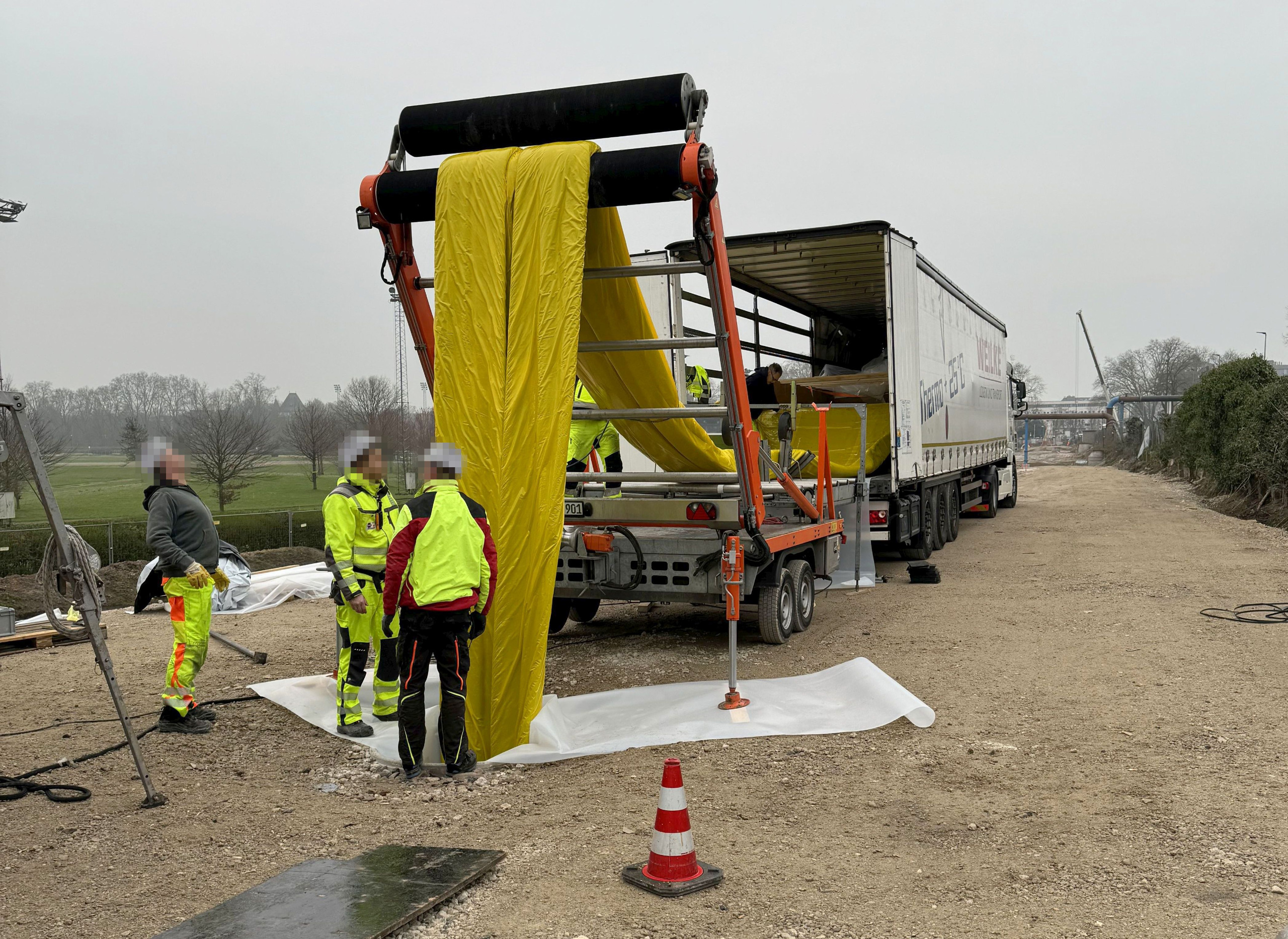
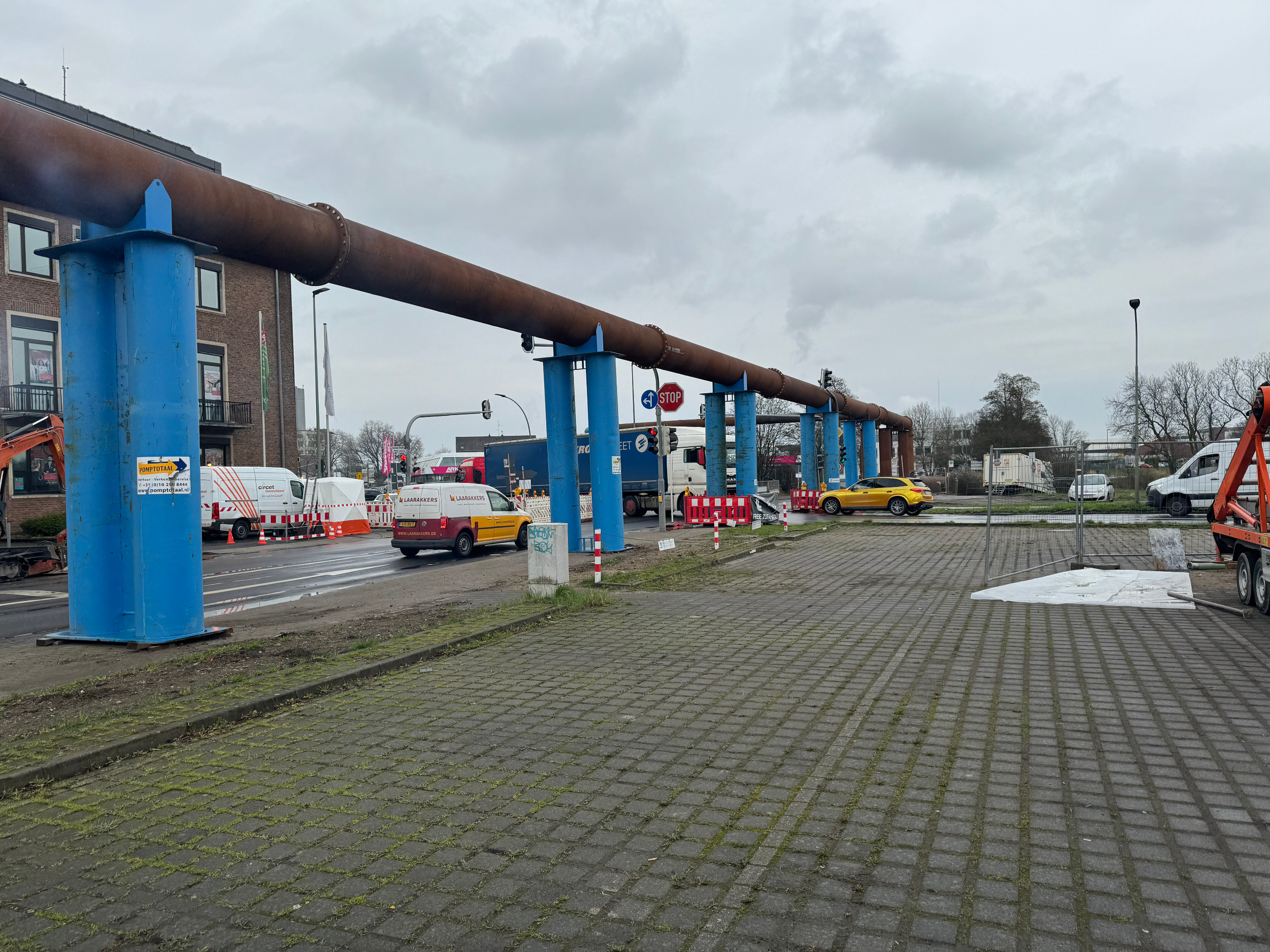
For this construction project, the city of Neuss had precautionarily set up extensive dewatering with a capacity of up to 2,200 liters per second. “This was intended to prevent the city center, which drains through the sewer concerned and is only about 400 meters away, from being flooded in the event of heavy rain,” Wagner explains.
Because of the substantial dewatering, but also due to extensive civil engineering work, Hammer Landstraße was partially closed to traffic. “Precisely because it is a main traffic artery in Neuss, communication with the local companies in advance was very important,” Wagner continues.
VE Resin Best Suited
Due to the aggressive industrial wastewater, vinyl ester resin was used as the reaction resin for the liner in this project, which is long-term resistant to the chemical and thermal stresses of the new drainage system. Christian Pfaff from Impreg explains: “In order to accelerate the reaction of the VE resin, which is somewhat less reactive than UP resin, we added peroxide as a thermal hardener. In this respect, the shortened maximum storage time of 30 days from the impregnation date must be observed.” VE resin was also used for the manholes to be rehabilitated as part of the lining with GFRP panels.
UV Curing with Full Power and Control
For curing, Swietelsky-Faber brought plenty of power to the construction site: a UV system from Prokasro with 36,000 watts. Accordingly, progress in Neuss was rapid. According to Oliver Ruch, they were able to travel at about one meter per minute.
More projects
-
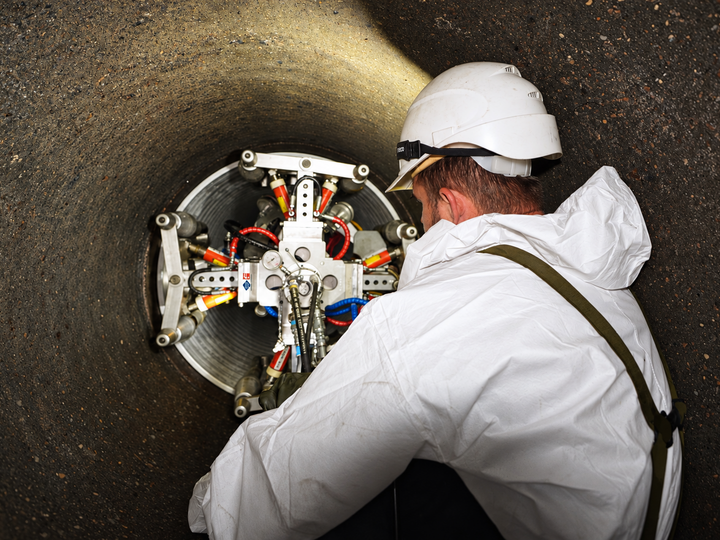
Leipzig / Stuttgart
-
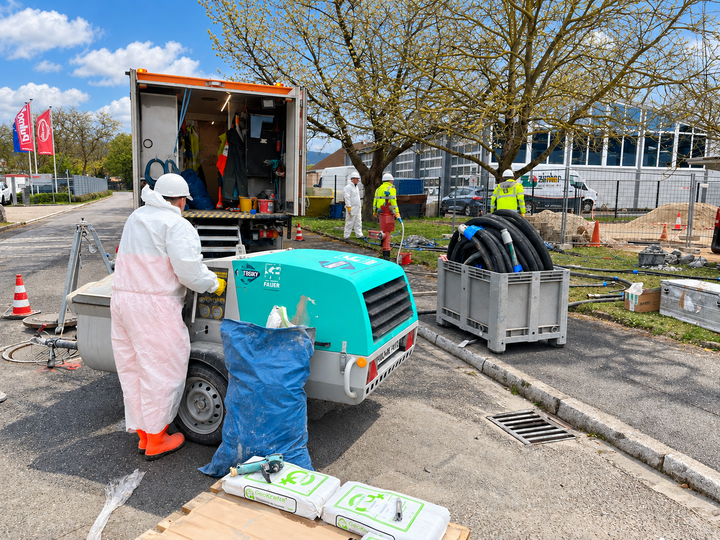
Mülheim: Sustainable large-profile rehabilitation with GeoKrete®
Freilassing
-
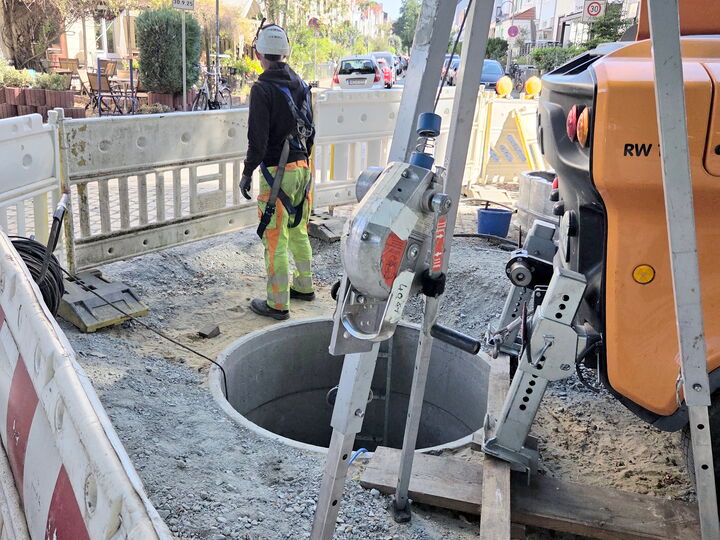
Bremen: Combined sewer in egg-profile renovated with UV liner
Blomberg / Hamburg / Hamburg Head Office
-
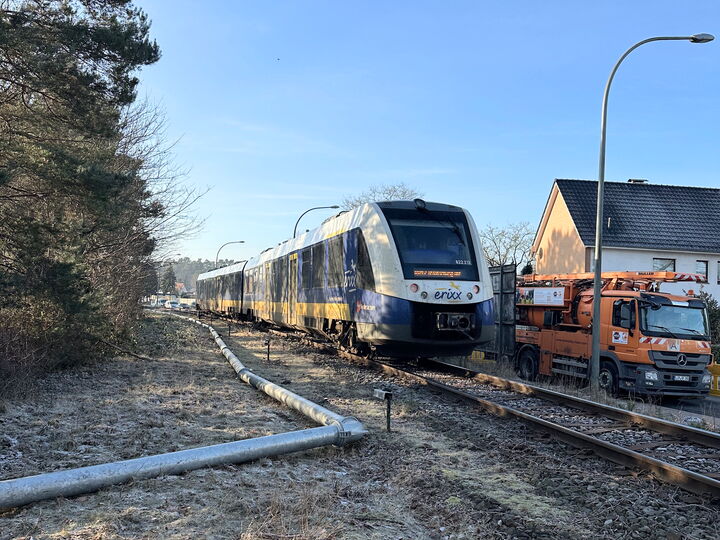
Gifhorn: Premiere in the railway environment of Deutsche Bahn
Blomberg
-
Bodenheim: Close-fit method secures drinking water transport pipeline
Alzey / Hörsching
-
Staßfurt: Sustainable coating of a brine tank
Nuremberg
-
Oberaudorf: Concrete rehabilitation of the Röthenbach stream culvert
Freilassing
-
Tegernsee Brewery: Trenchless manhole rehabilitation with polyurea
Freilassing / Nuremberg
-
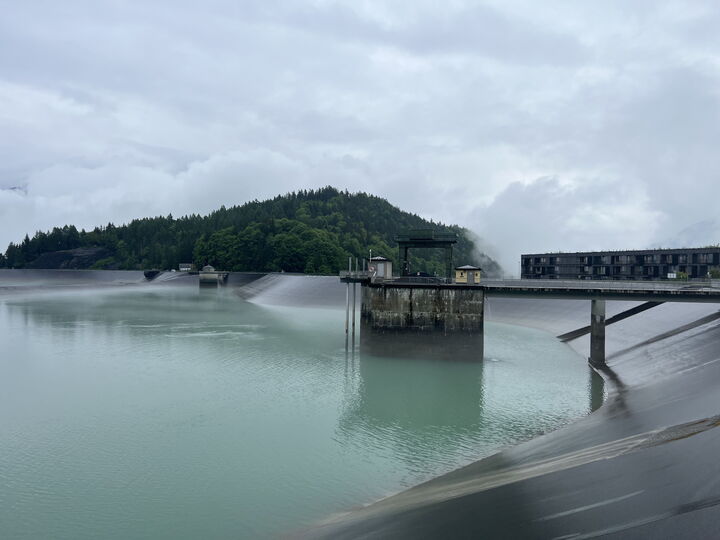
Power plant pipelines: Tailor-made solutions
Hörsching
-
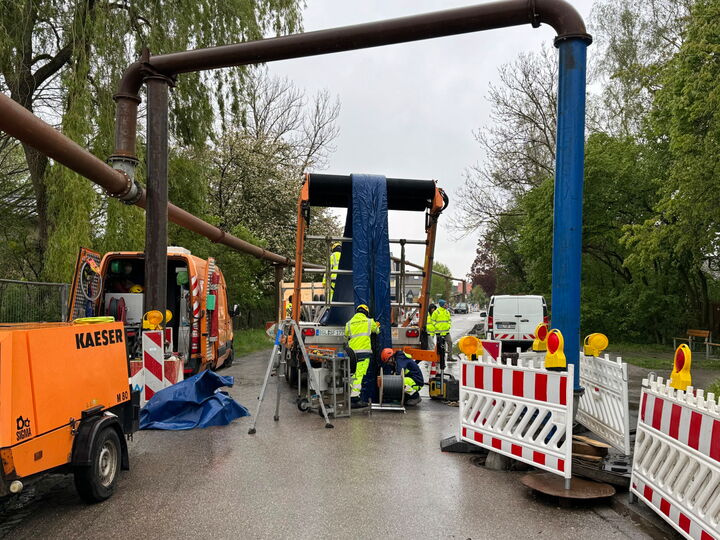
Germering: Sustainable pipe rehabilitation reduces energy demand in wastewater treatment plants
Freilassing
-
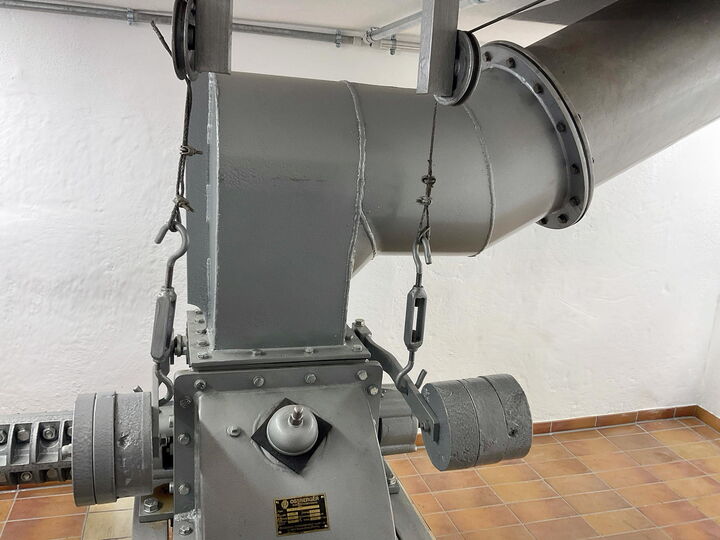
Herrenmühle Aulendorf: Pressure pipeline sustainably rehabilitated
Hörsching / Landsberg
-
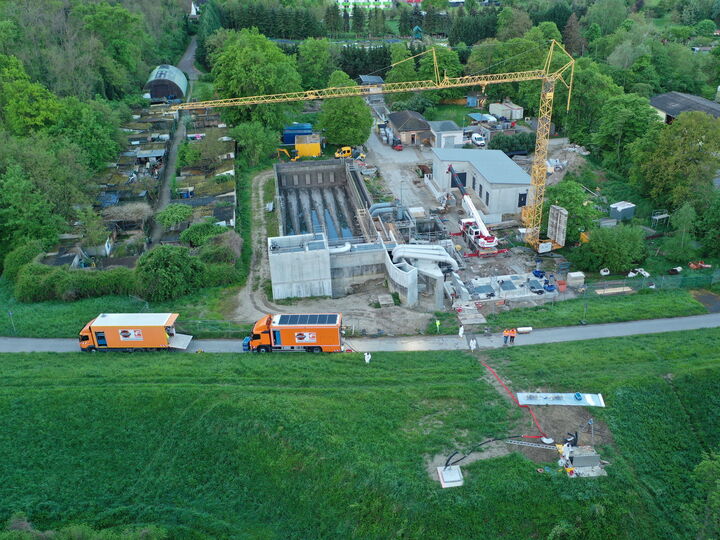
Altrip: Trenchless rehabilitation secures flood protection at the pumping station
Alzey
-
Flensburg: Wound pipe technology in use beneath a former landfill
Hamburg / Leipzig
-
Wermelskirchen: Liner pipe technology shows strengths in combined rehabilitation
Alzey / Leipzig
-
RHV Mittleres Rodltal: Mouth profile rehabilitated with UV pipe liner
Hörsching
-
Neuss: Sewer rehabilitation in large dimensions DN 1200–1500
Blomberg
-
Freyburg relies on SPR-EX wound pipe technology
Hamburg / Leipzig