Freilassing
Pipe inspection & testing technology
Author: Dipl.-Ing. (FH) Johann Tiefenthaler, construction manager of Swietelsky-Faber GmbH, GB South
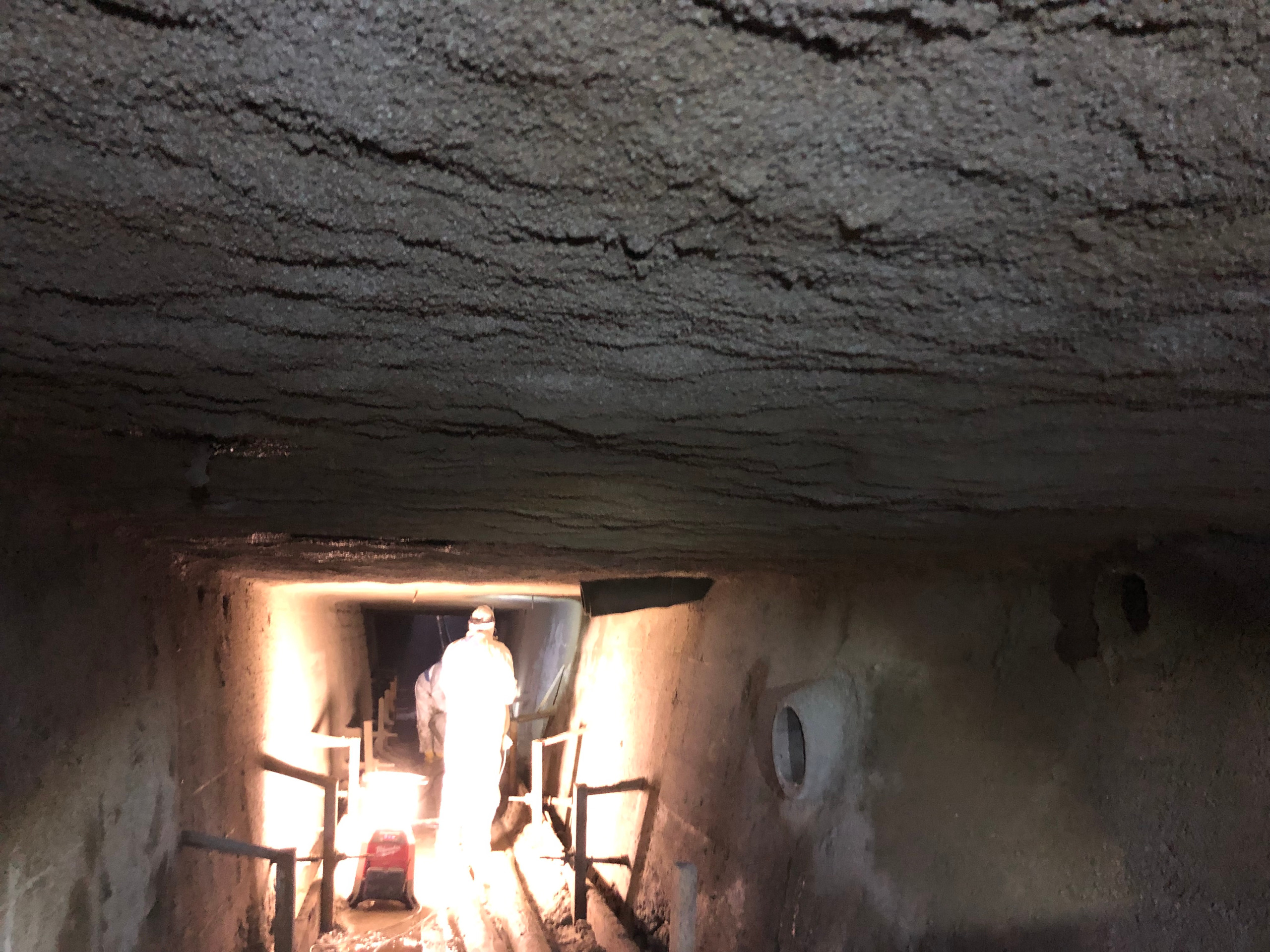
The sustainable rehabilitation of hydraulic and wastewater infrastructure elements by means of high-quality repair methods forms a central competence for many companies in pipe rehabilitation. Swietelsky-Faber GmbH, previously primarily known for the installation of UV light-cured GRP cured-in-place pipe liners, impressively documents its development in the field of classic structural rehabilitation through a demanding concrete rehabilitation measure on a watercourse culvert in the municipality of Oberaudorf. As part of an initial construction phase, a fully enclosed section of the Röthenbach was rehabilitated over a length of 130 metres within a period of seven weeks.
Initial situation and condition assessment
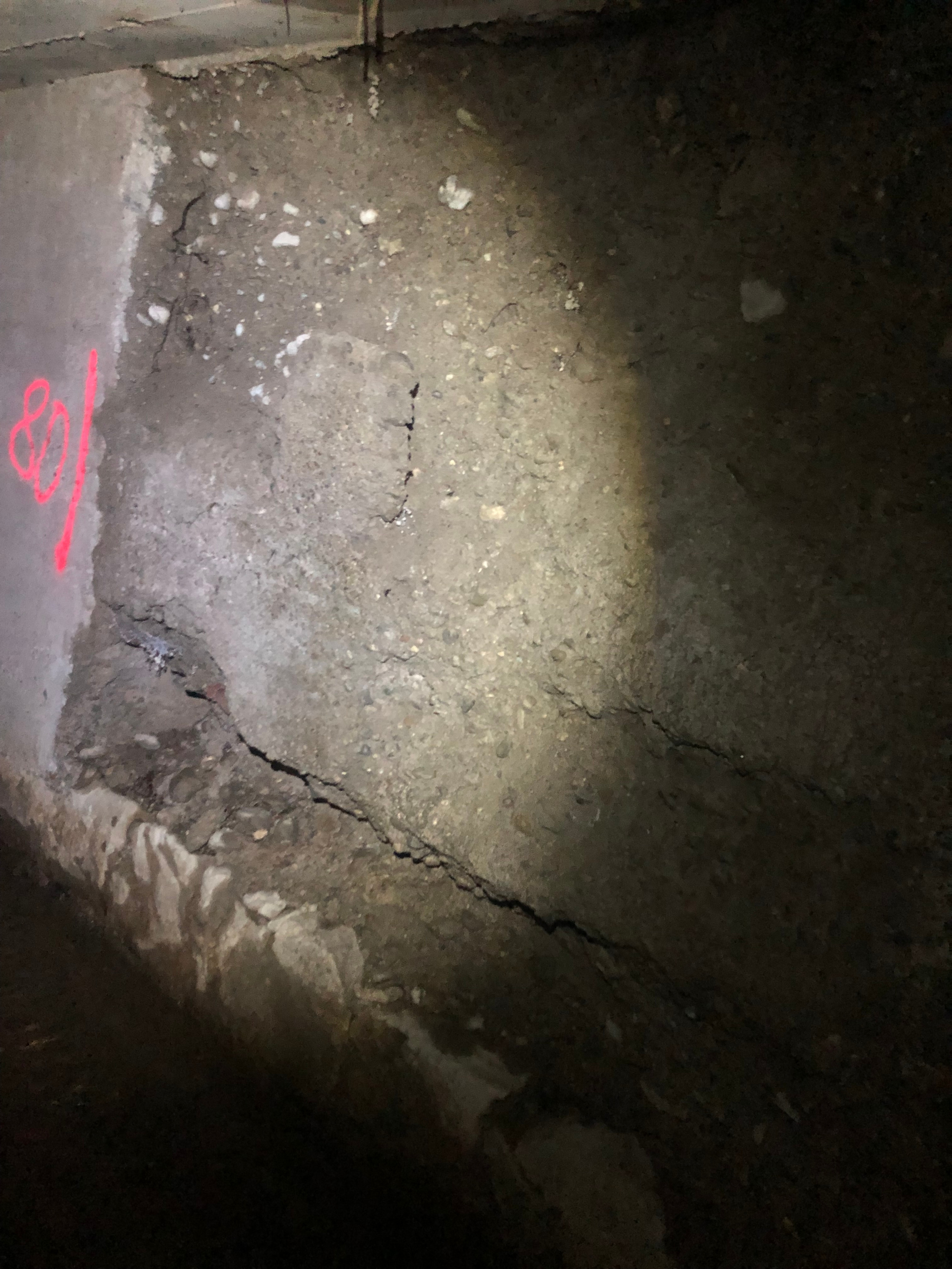
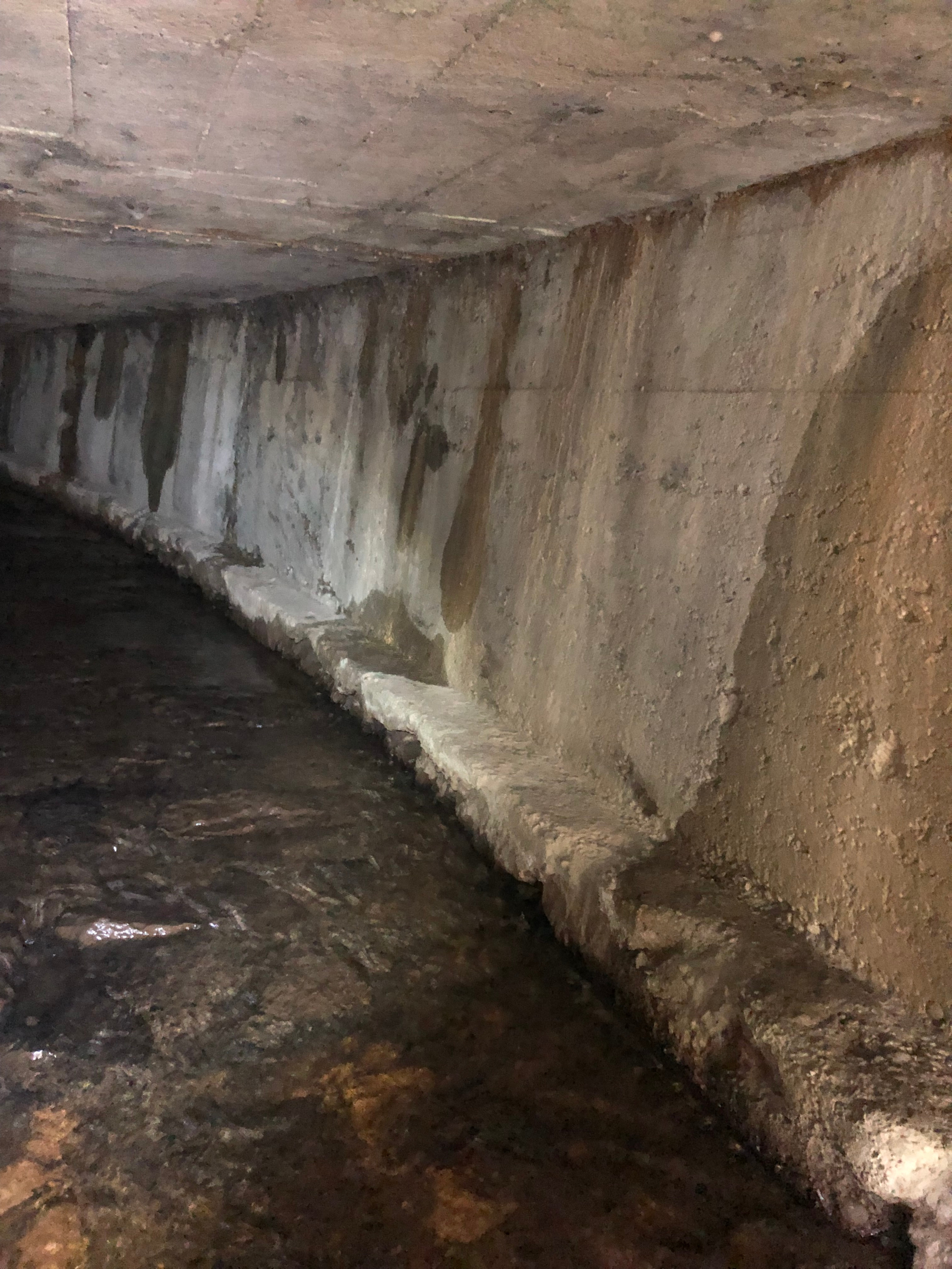
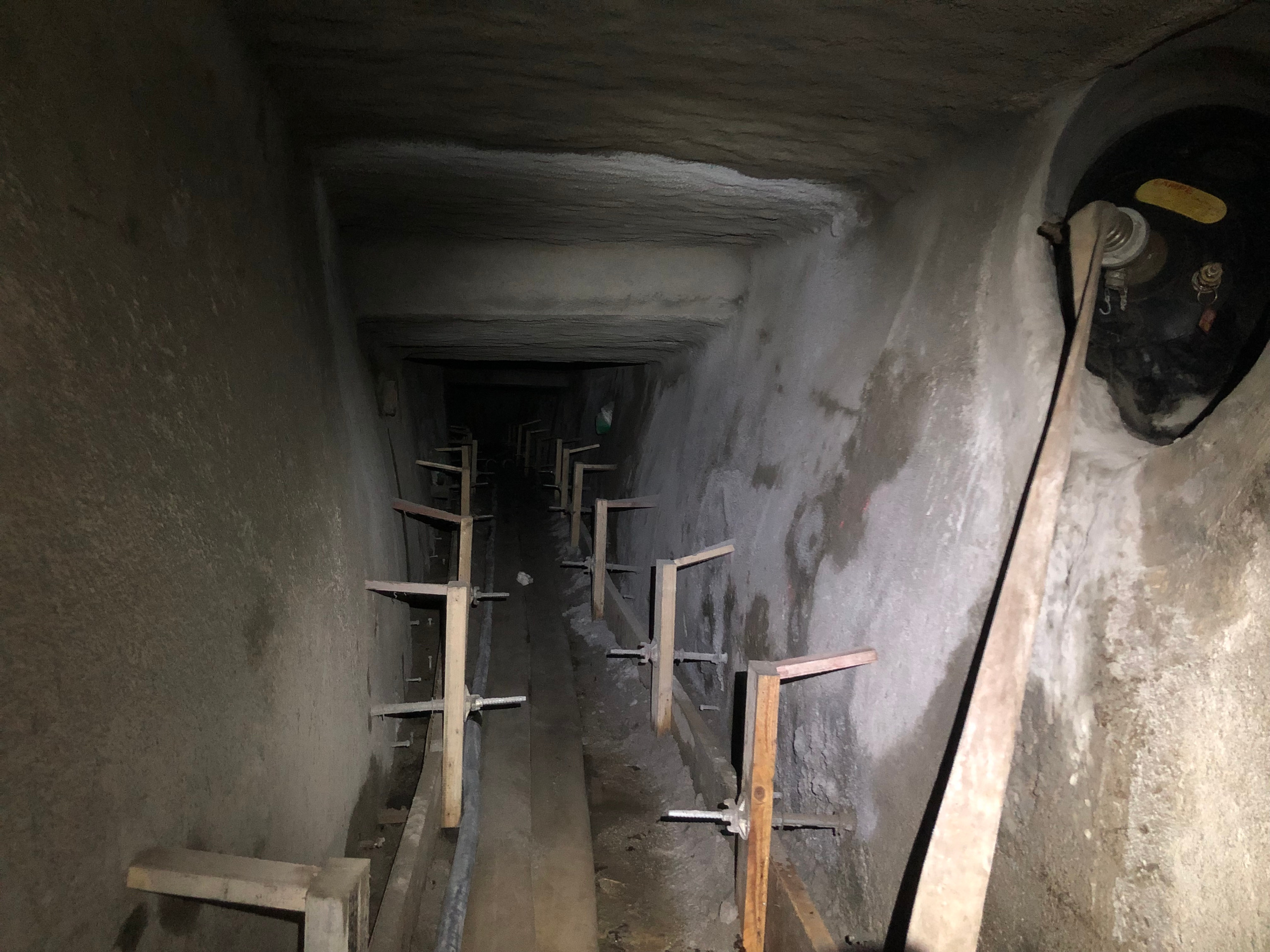
The Röthenbach flows through the town center of Oberaudorf as a typical upland stream. Due to the local building structure, the stream course in this area is completely culverted. The existing culvert has a predominantly rectangular cross-section with variable widths of approx. 1.50 to 2.50 m and heights of around 1.40 to 2.00 m. Based on inspections and structural diagnostic investigations by the engineering firm Stief+Kurz from Rosenheim, significant substantial damage to the concrete structure could be documented. The resulting rehabilitation concept was publicly tendered. Swietelsky-Faber was able to prevail over competitors in the award procedure and received the contract from the municipality of Oberaudorf to carry out the measure.
Construction logistics and preparation
At the start of the work, the affected section was completely drained by hydraulic diversion measures in order to exclude any impact on the water body and the environment from renovation residues such as demolition material or cement slurry.
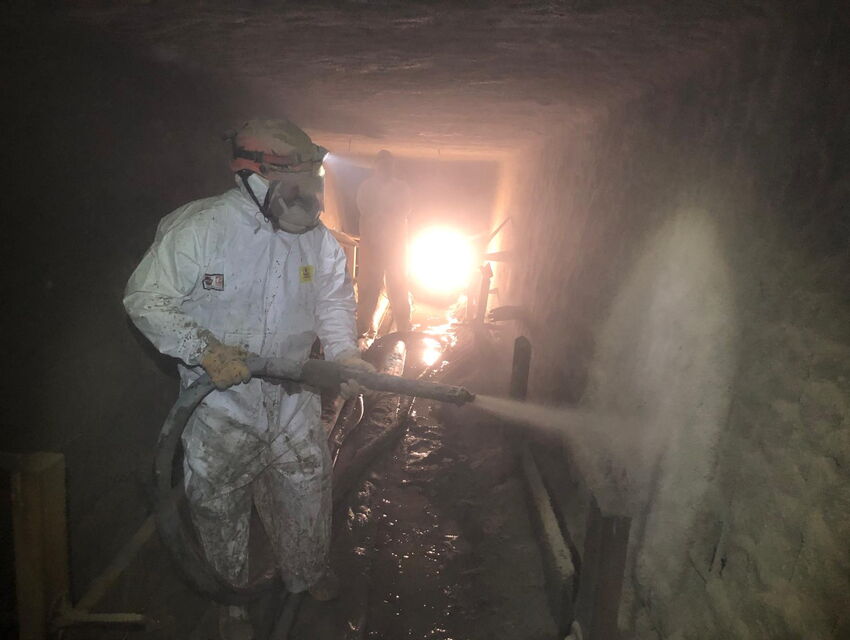
The works were divided into three main phases: preliminary work, pre-repair, and restoration. As part of the substrate preparation, the ceiling surface and, in sections, the wall surfaces were treated using ultra-high-pressure water jets (UHPWJ). The aim was a defined removal depth of 0.5 to 1.0 cm and the exposure of corroded reinforcement with a cleaning grade of SA 2½. Supplementary test methods such as pull-off tests, sound testing (tapping), and compressive strength tests served to ensure the quality of the substrate.
Afterwards, a two-layer application of a mineral corrosion protection coating was carried out. In parallel, during the pre-rehabilitation, around 110 localized damaged areas (up to approx. 2 m²) as well as around 30 pipe penetrations were reprofiling using mineral repair systems from the company Remmers. In addition, approx. 80 m of joints and cracks were force-fit and form-fit injected using the drill-packer method with the injection resin MC-Injekt 2300 Flow from the company MC-Bauchemie and a 1K injection pump (MC-520).
Repair work with high logistical and technical effort
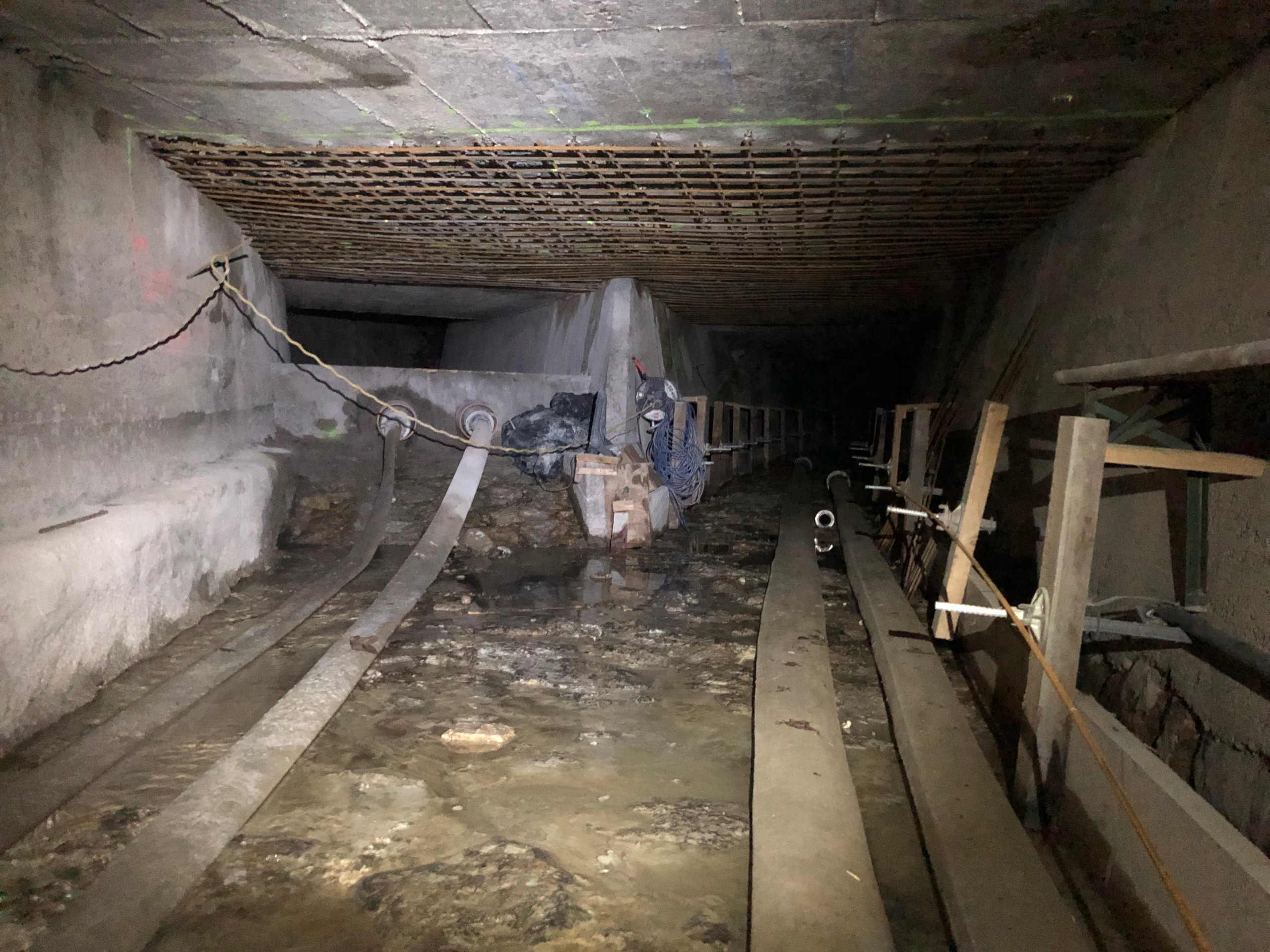
The extensive repair measures began with the installation of additional reinforcement. To strengthen the slab areas, a total of approx. 1.2 t of reinforcing steel BSt 500 S with headed stud dowels, bonded anchors and injection mortar were structurally bonded into place on two sections, each 10 m long. A larger damaged area in the wall was repaired by installing reinforcing steel meshes. For the execution of the timber lagging formwork, additional K-TEC anchors were installed as back anchors to transfer flow forces.
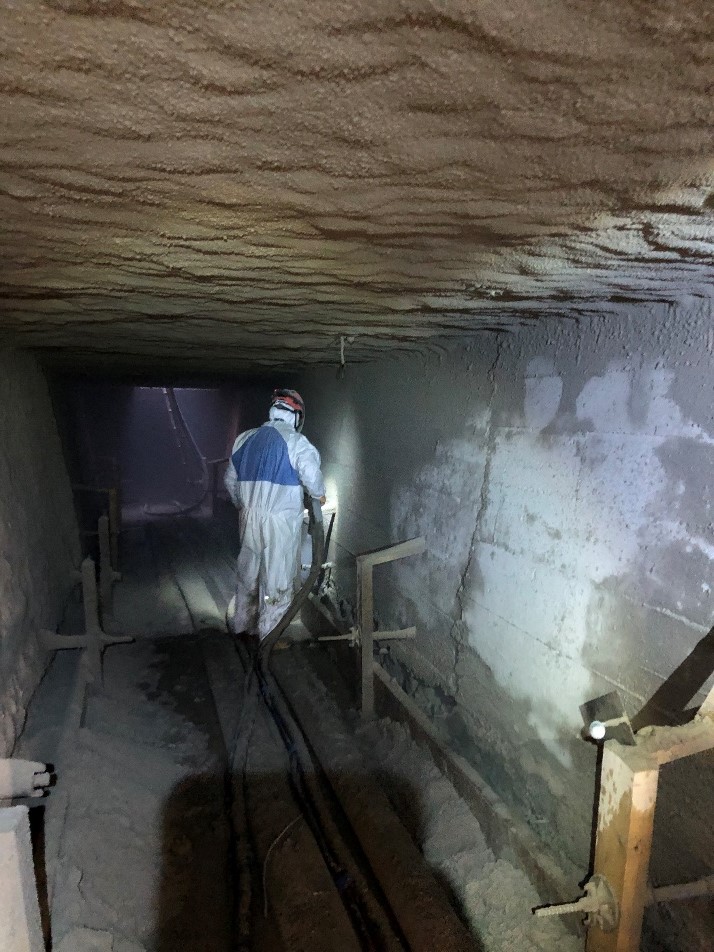
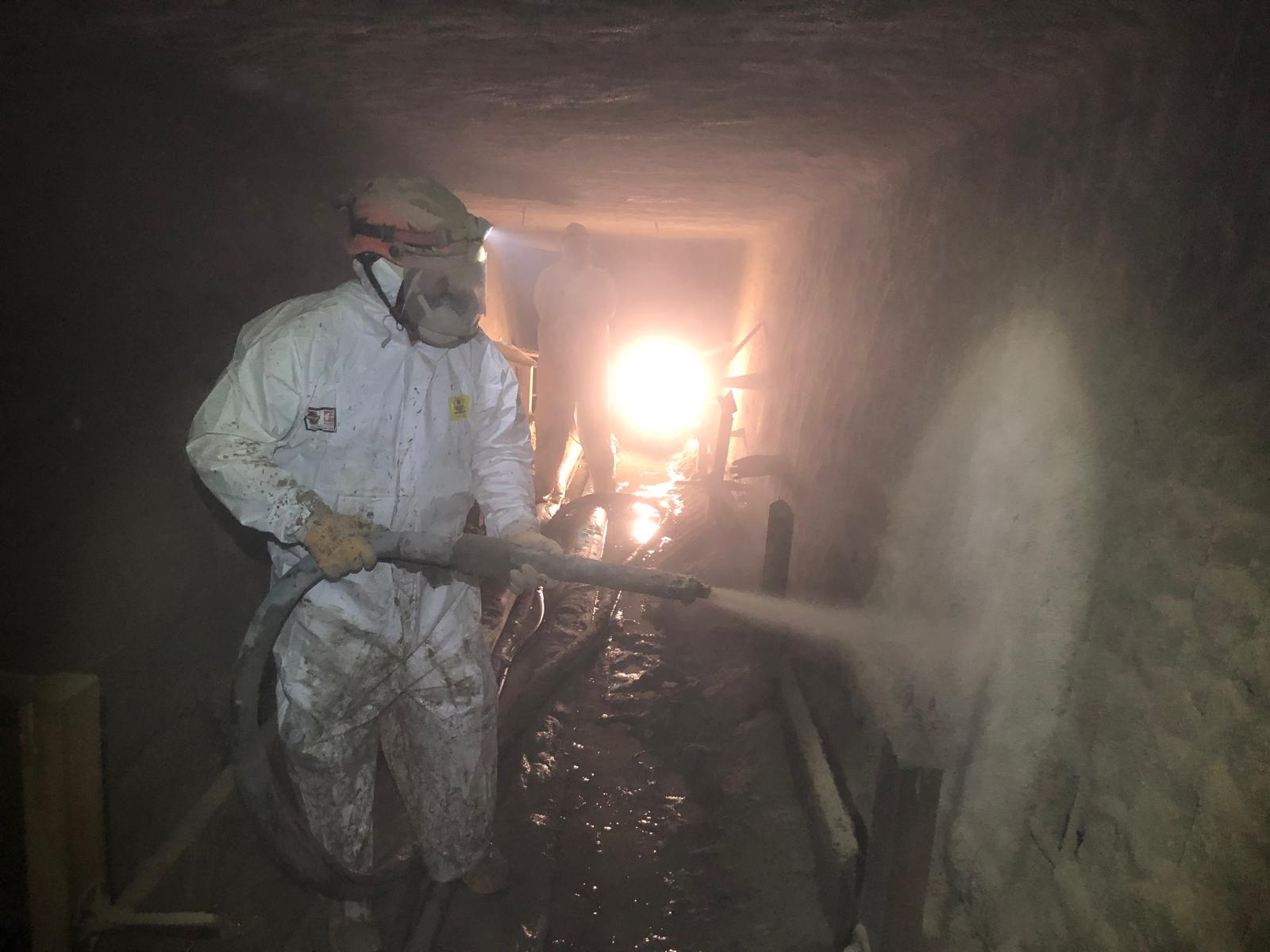
Following this, the shotcrete was applied using the dry-mix spraying method. Due to the required pumping lengths of up to 70 m, this technology was selected. The application thicknesses varied depending on the area between 2 and 4 cm, and in the area of newly installed reinforcement up to 10 cm. In total, approx. 63 tonnes of dry-mix shotcrete mortar were used – spread over a period of three weeks.
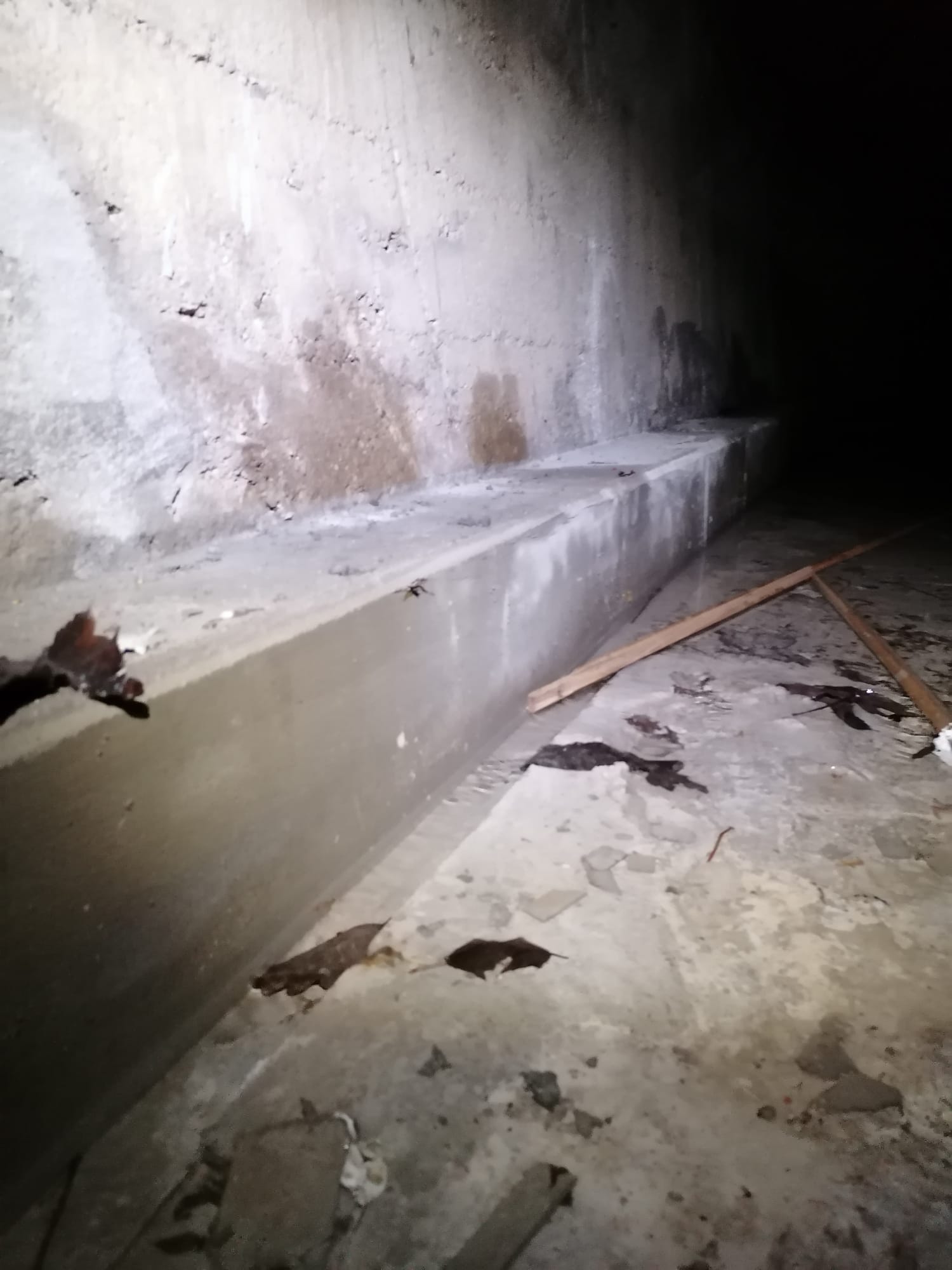
A special technical highlight was the construction of the scour protection in the bed. Over a distance of 70 meters, a volume of 16 tons was placed within a four-hour work window using pumpable concrete. After the concrete had reached its final strength (28 days), a final quality inspection was carried out by means of repeated pull-off and compressive strength tests.
Project conclusion and appreciation
“The challenge in projects of this kind lies in the strict coordination of processes and the daily delivery of high service volumes while complying with all quality-relevant parameters,” says site manager Johann Tiefenthaler. “Such a project can only be realised with a highly qualified team. Particularly noteworthy is the trained specialist staff with a valid SIVV certificate as well as spray nozzle operator’s license, which generated decisive added value in the project.”
Swietelsky-Faber GmbH expressly thanks the Municipality of Oberaudorf for the professional, respectful, and cooperative collaboration.
More projects
-
Leipzig / Stuttgart
-
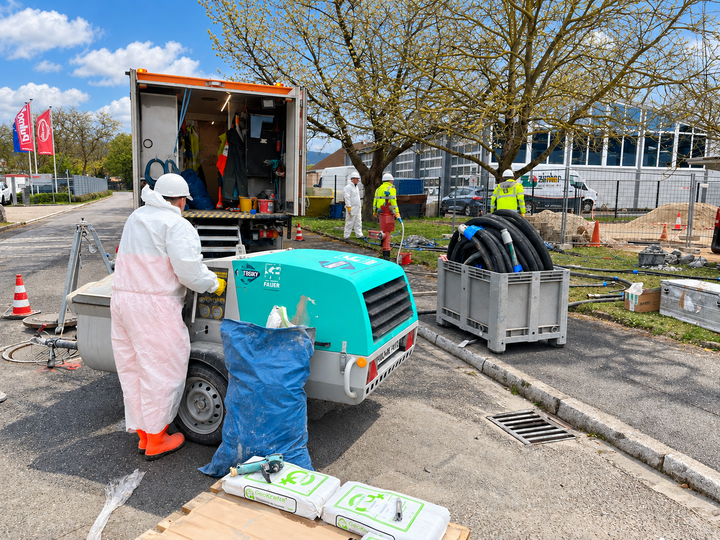
Mülheim: Sustainable large-profile rehabilitation with GeoKrete®
Freilassing
-
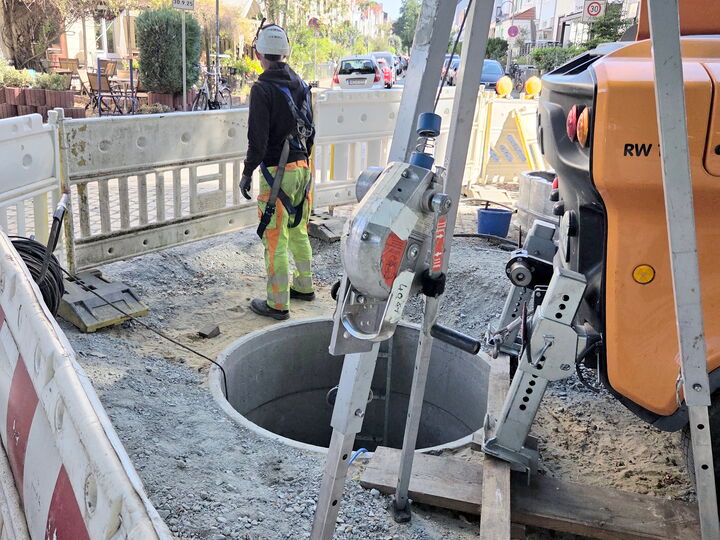
Bremen: Combined sewer in egg-profile renovated with UV liner
Blomberg / Hamburg / Hamburg Head Office
-
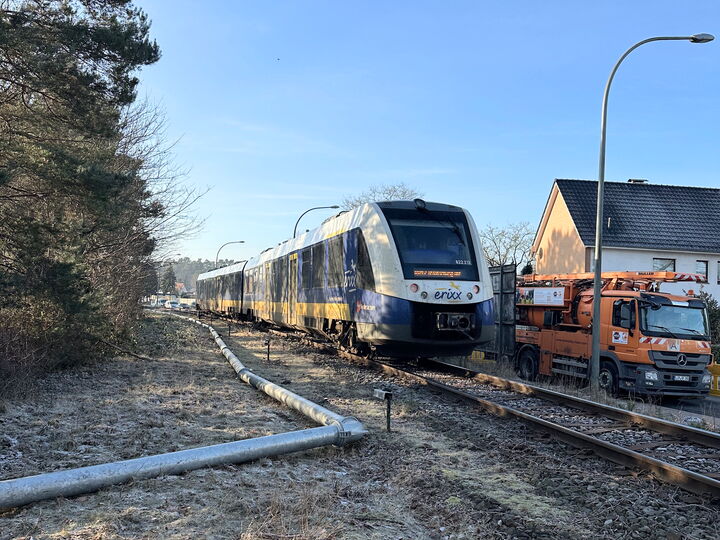
Gifhorn: Premiere in the railway environment of Deutsche Bahn
Blomberg
-
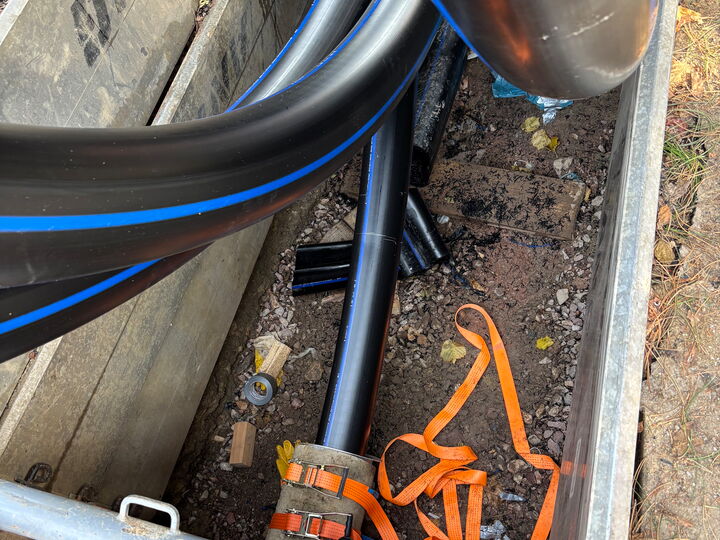
Bodenheim: Close-fit method secures drinking water transport pipeline
Alzey / Hörsching
-
Staßfurt: Sustainable coating of a brine tank
Nuremberg
-
Oberaudorf: Concrete rehabilitation of the Röthenbach stream culvert
Freilassing
-
Tegernsee Brewery: Trenchless manhole rehabilitation with polyurea
Freilassing / Nuremberg
-
Power plant pipelines: Tailor-made solutions
Hörsching
-
Germering: Sustainable pipe rehabilitation reduces energy demand in wastewater treatment plants
Freilassing
-
Herrenmühle Aulendorf: Pressure pipeline sustainably rehabilitated
Hörsching / Landsberg
-
Altrip: Trenchless rehabilitation secures flood protection at the pumping station
Alzey
-
Flensburg: Wound pipe technology in use beneath a former landfill
Hamburg / Leipzig
-
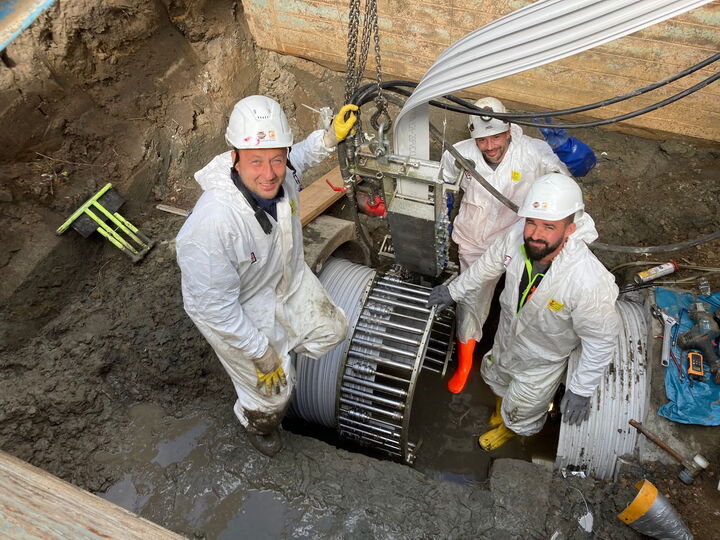
Wermelskirchen: Liner pipe technology shows strengths in combined rehabilitation
Alzey / Leipzig
-
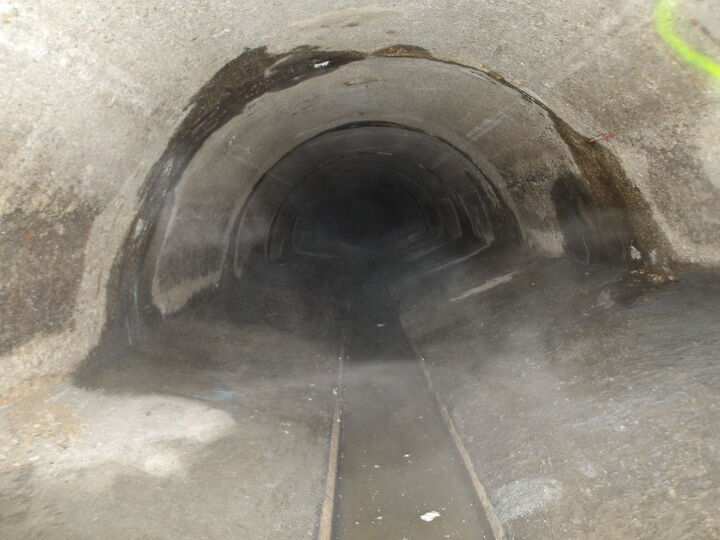
RHV Mittleres Rodltal: Mouth profile rehabilitated with UV pipe liner
Hörsching
-
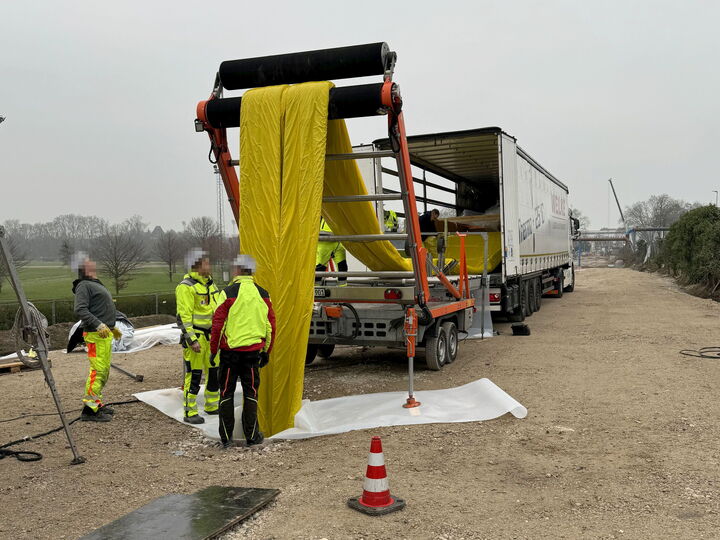
Neuss: Sewer rehabilitation in large dimensions DN 1200–1500
Blomberg
-
Freyburg relies on SPR-EX wound pipe technology
Hamburg / Leipzig