Freilassing
Building rehabilitation
170 Meter storage channel in Mülheim trenchlessly and permanently protected against corrosion
Author: Dipl.-Ing. (FH) Johann Tiefenthaler, construction manager of Swietelsky Faber GmbH (GB South)
Sewer storage channels are an important component of a high-performance and resilient wastewater infrastructure. During heavy rainfall events, they collect stormwater and mixed wastewater, thereby relieving sewer networks and enabling controlled onward conveyance for treatment. In this way, they help reduce untreated discharges into bodies of water, avoid overloading, and ensure the safe operation of wastewater infrastructure even in the face of increasing weather extremes.
In view of climate change and the increasing frequency of extreme weather events – from drought to heavy rainfall – such retention spaces are becoming even more important. At the same time, the long-term preservation of existing storage sewers is an important task: tight, load-bearing structures protected against chemical exposure not only contribute to water protection, but also to the protection of soil and groundwater. Trenchless rehabilitation methods offer the opportunity to specifically upgrade existing infrastructure and sustainably extend its service life.
How such a rehabilitation can be carried out on a heavily damaged large-profile section is shown by a project in Müllheim in the Markgräflerland region.
Storage channels as the key to resilient wastewater infrastructure
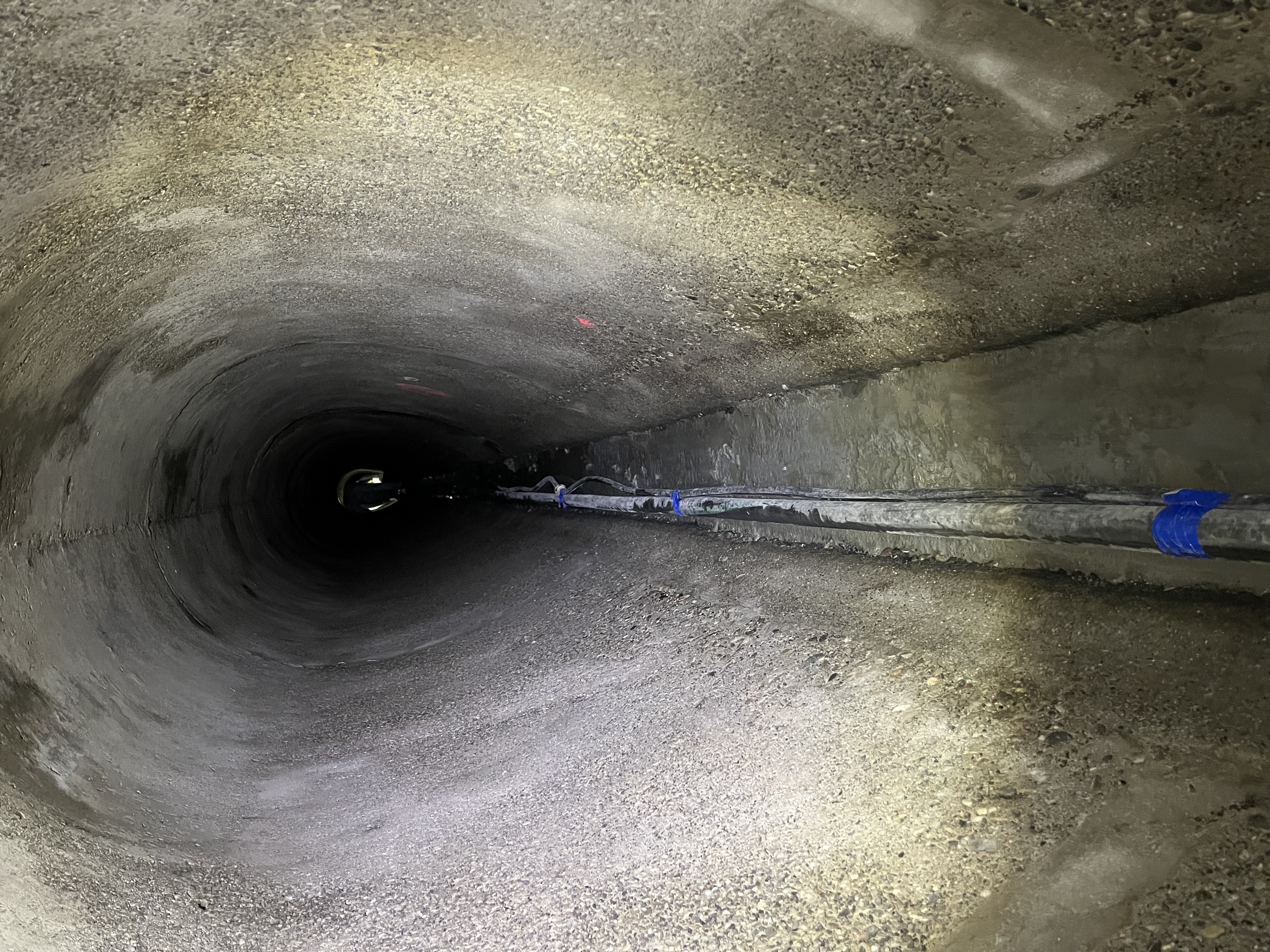
With the rehabilitation of two sections of a DN 900/1350 storage channel, a project in Müllheim in the Markgräflerland shows how severely damaged large-diameter profiles can be permanently rehabilitated with a modern geopolymer. Over around 170 meters, the missing pipe invert was reconstructed with Quad-Flow and the pipe wall was then coated with GeoKrete®. In addition to restoring watertightness, the focus was particularly on the long-term protection of the existing structure against biogenic sulfuric acid corrosion (BSK).
The town of Müllheim in the Markgräflerland is known not only for its scenically attractive location between the Upper Rhine and the Black Forest. At the same time, the town has a significant industrial area with numerous resident companies. Accordingly, the underground infrastructure must also be efficient and durable.
During a TV inspection of a combined sewer in Renkenrunsstraße, significant damage was found in two pipe runs. The subsequent rehabilitation was commissioned by the City of Mülheim and was planned and technically supervised by the engineering office a2Plan Ingenieure GmbH from Westhausen. The work was commissioned to Swietelsky-Faber GmbH. After the order was placed at the beginning of February 2026, the work began at the beginning of March due to the high urgency of the damage.
Missing invert and severe corrosion
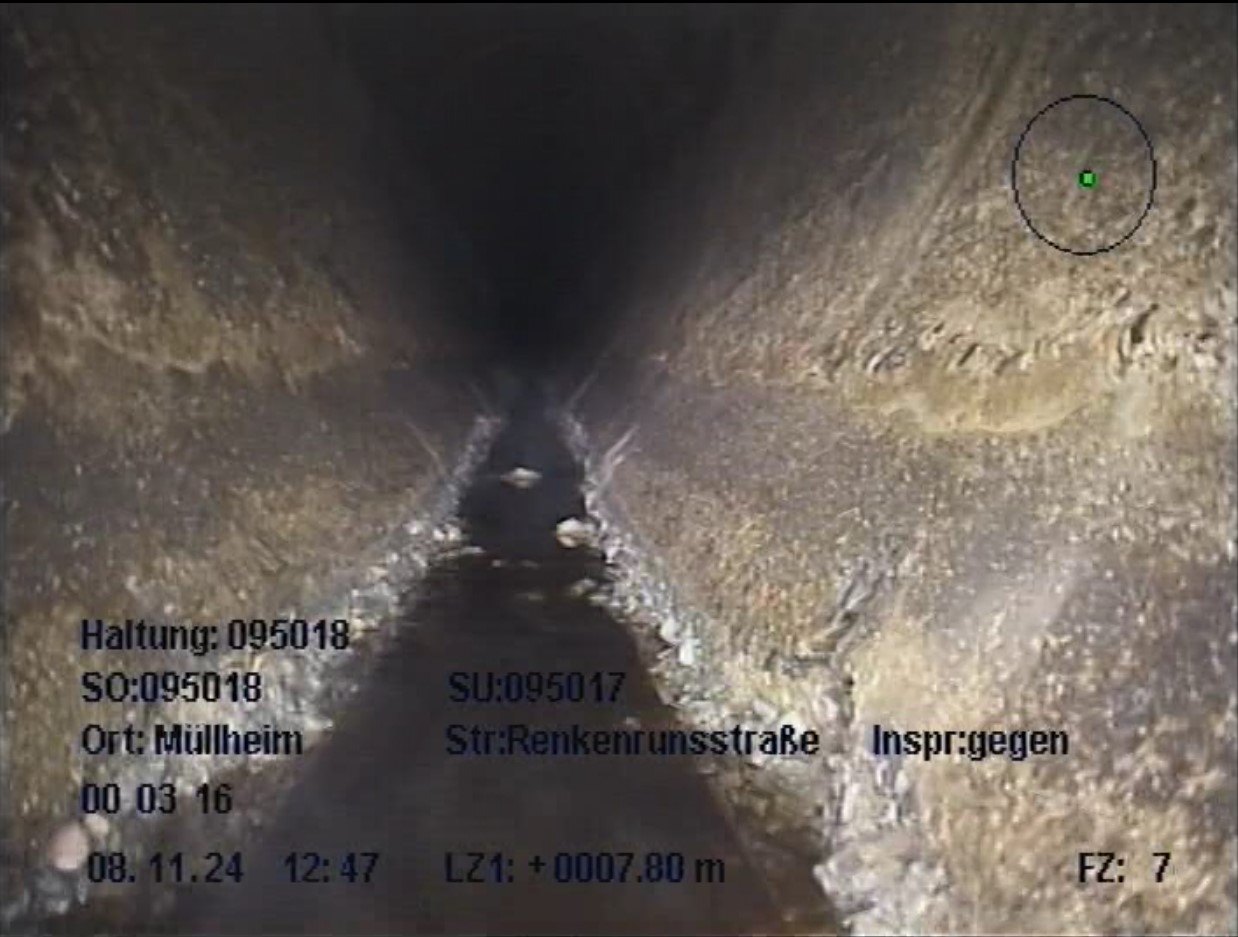
The damage pattern was clear: over the entire rehabilitation section, which was around 170 meters long, the original pipe invert was no longer present. At the same time, the lower half of the egg-shaped profile was already affected by pronounced biogenic sulfuric acid corrosion.
There was therefore not only a problem with watertightness. The wastewater escaping through the damaged areas could enter the surrounding soil unhindered. At the same time, the load-bearing capacity of the existing concrete profile was jeopardized in the long term by the progressive loss of material.
As possible causes of the extraordinary stress on the structure, sewage temperatures of up to 80 °C as well as a high chemical load in the wastewater were identified, among other factors. These special boundary conditions had to be taken into account accordingly when selecting the rehabilitation method.
It was therefore clear to the engineering office a2Plan at an early stage that conventional concrete repair should not be the preferred solution. Instead, the decision was made to carry out refurbishment using geopolymers. For the execution, Swietelsky-Faber offered the GeoKrete geopolymer from Vortex Europe GmbH.
Geopolymer instead of classic cement mortar
Geopolymers differ fundamentally in their chemical mode of action from classic cement-based mortars. While cement mortar hardens through hydration, GeoKrete forms a mineral material with high early and long-term strength through an alkali-activated polycondensation. The material is based on reactive aluminosilicates and industrial by-products and is activated only with water as a factory-prepared premixed single-component system.
Especially for the rehabilitation of wastewater structures, this material approach offers significant advantages. GeoKrete is designed for corrosive environments, has a high resistance to biogenic sulfuric acid corrosion, and can be used both to restore structural integrity and as permanent corrosion protection. For the German market, GeoKrete has had DIBt approval for the rehabilitation of wastewater structures since 2025.
From an ecological perspective, the material is also interesting. For GeoKrete, SCS Global Services has already certified a CO₂ footprint reduced compared with Portland and calcium aluminate cements. The life cycle assessment shows a reduction of 51 to 59 percent compared with the examined cementitious comparison systems.
In addition, there is the comparatively low water requirement on the material side: GeoKrete is processed as a dry one-component system and activated by water. The manufacturer specifies a water content of a maximum of 12.5 percent for mixing and pumping. This means that the system differs significantly from classic cementitious mortars, in which water is part of the hydration process.
For a sustainable renovation, this combination is particularly relevant: the existing sewer remains in place instead of being extensively expanded and replaced by a new structure. At the same time, a corrosion-resistant material can significantly extend the service life of the existing structure.
Careful preparation as a foundation
Before the actual refurbishment, thorough preparation of the existing structure was carried out. First, the entire surface was blasted with high-pressure water. This removed loose and non-load-bearing components and exposed the surface texture required for adhesion.
Following this, existing offset positions were adjusted, groundwater ingress points were pre-sealed, and all lateral connections were linked. Particular attention was paid to the quality and load-bearing capacity of the existing subsoil.
For quality assurance purposes, a total of five surface tensile strength tests were carried out. None of the tests produced a value below 1.5 N/mm². In addition, the surface was examined for possible voids; relevant cavities could be ruled out. This created the conditions for the subsequent material application.
170 Meter new invert with Quad-Flow
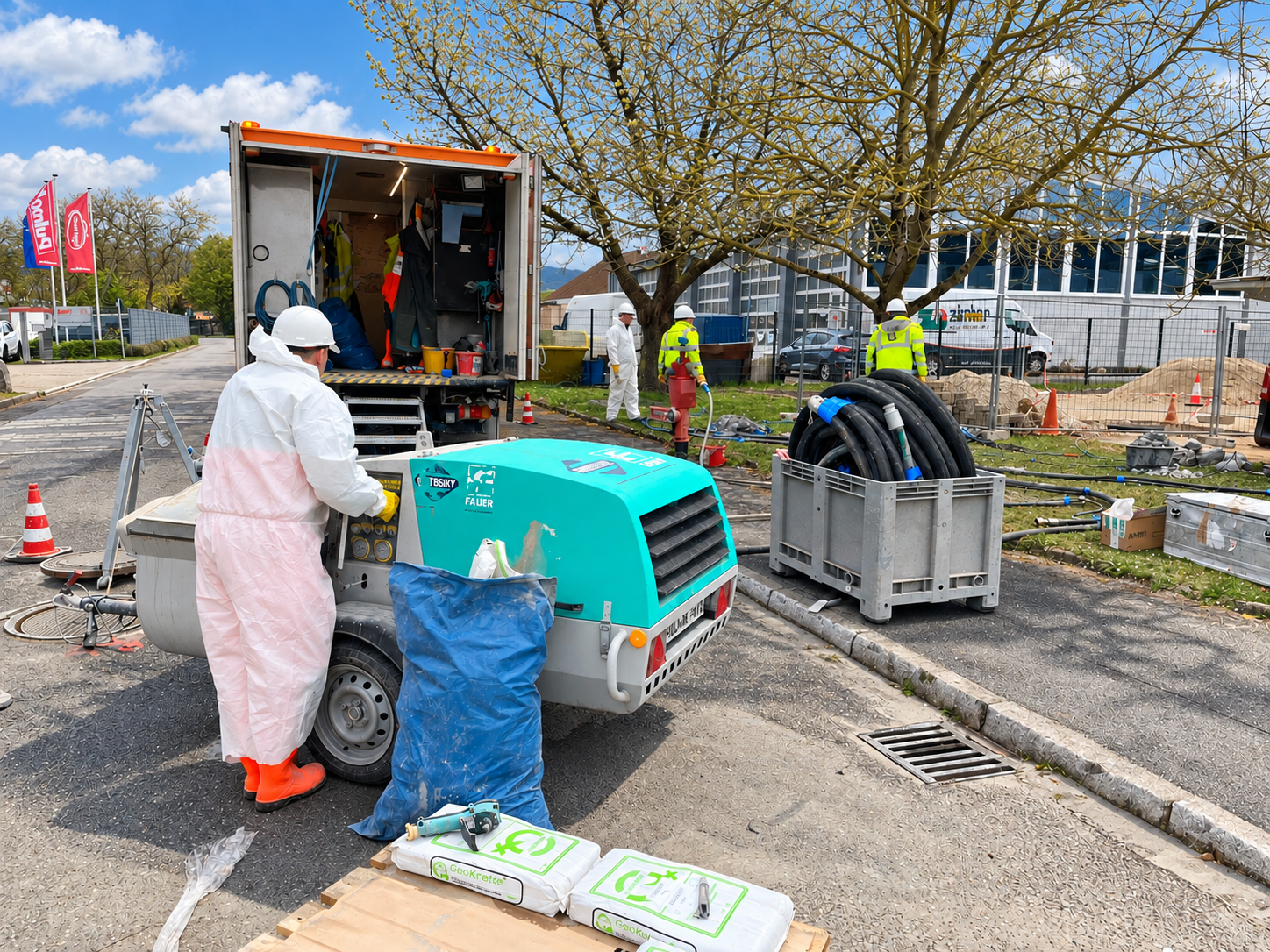
Before the actual coating of the pipe wall could be carried out, the no longer existing pipe invert had to be completely reconstructed. For this purpose, Quad-Flow, a material from the Vortex portfolio specially developed for the rehabilitation of pipe inverts, was also used.
Quad-Flow is a high-strength, rapidly setting, and flowable repair material that was specially developed to restore damaged or missing pipe inverts. Due to its high flowability, the material can be pumped into the pipe sections to be rehabilitated in order to fill cavities and restore the original geometry of the invert. At the same time, the cured material offers high resistance to abrasion and corrosion.
The properties of the material were of particular importance for the project in Mülheim. The approximately 170-meter-long bed could be reconstructed within just two working days with a total of eight tons of Quad-Flow.
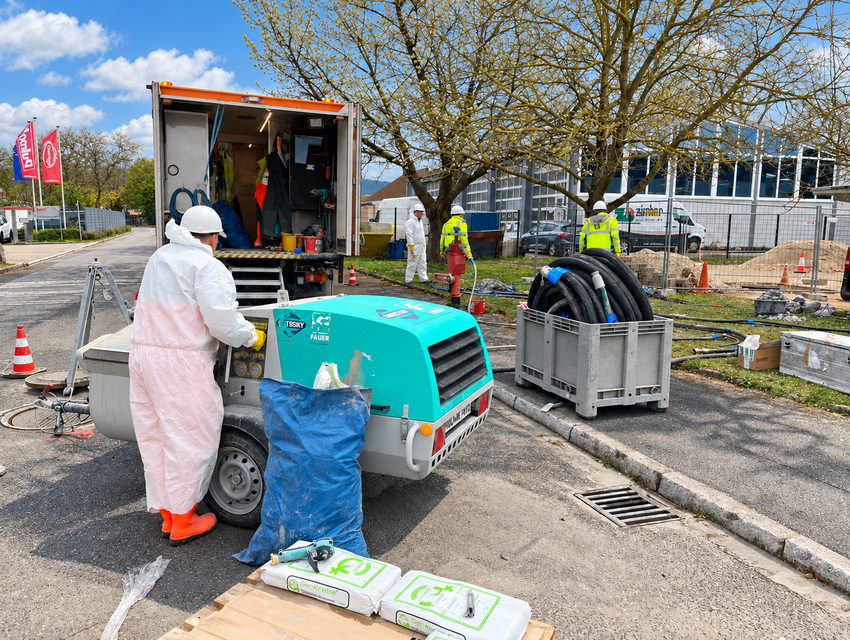
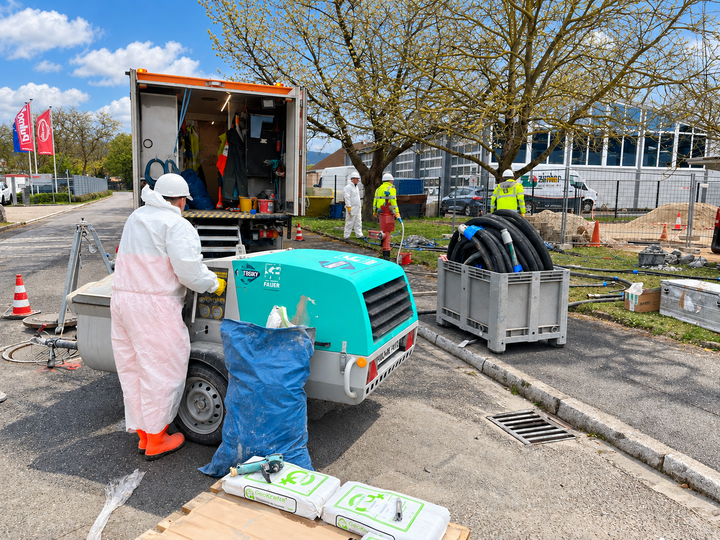
A Prestige 300 was used for processing. The machine, specially designed for GeoKrete and Quad-Flow, combines mixing, pumping, and conveying in a single work process. This allowed the material flow to take place continuously and to be adapted to the respective installation conditions.
The high flowability of Quad-Flow made it possible to service both positions from the upper shaft. Elaborate intermediate access points were therefore not required. After the rapid restoration of the pipe invert, the next rehabilitation step could begin immediately.
GeoKrete in the wet-spraying process
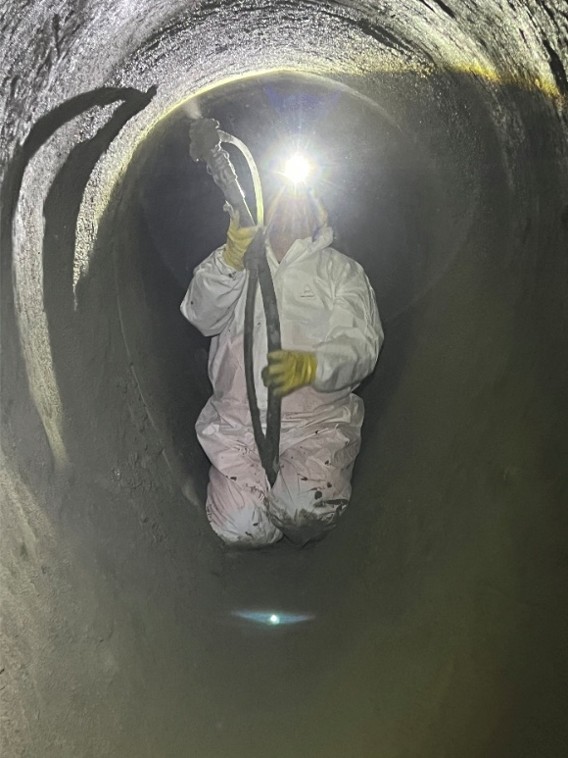
After the reprofiling of the invert, the actual protective and structural coating of the existing profile followed. The GeoKrete was applied to the prepared pipe wall using the Prestige 300 in the wet-spraying process.
The intended layer thickness was 15 millimeters. The particular geometric and logistical boundary conditions of the project had to be mastered. The individual pours were each around 100 meters long; for material delivery, pumping distances of up to 55 meters were required.
A decisive role was therefore played by the exact coordination of mixing performance, material consistency, and conveying pressure. Only when these parameters were continuously matched to one another could the material be transported reliably and evenly to the spray head over the long conveying distances.
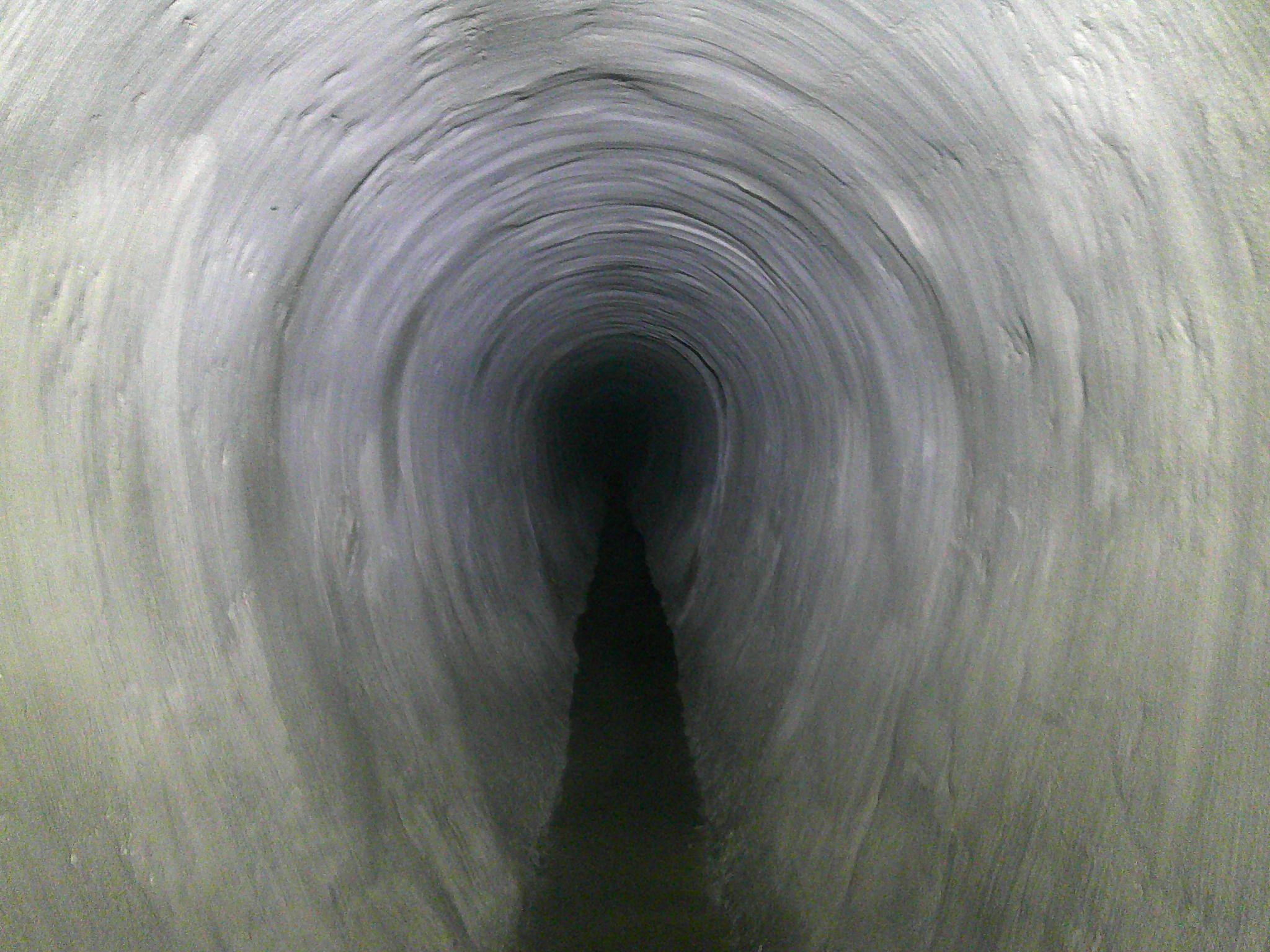
The wet spray process enabled continuous application to the complex geometry of the egg profile. Layer by layer, a homogeneous mineral protective layer was created, which interlocks with the prepared substrate and protects the existing concrete structure from further chemical attack. GeoKrete is designed for mechanical spraying and different application methods and can also be used on non-circular geometries.
Despite the demanding pumping distances, daily outputs of up to 25 metres of lined pipeline in the DN 900/1350 profile could be achieved.
Sealed, load-bearing, and permanently protected
With the completion of the work, the rehabilitation objective was achieved on several levels. On the one hand, the watertightness of the storage sewer could be restored, thereby preventing the uncontrolled leakage of wastewater into the ground. On the other hand, the existing concrete structure was permanently protected against further corrosive attack by the GeoKrete coating.
Especially in the case of large profiles that are already severely damaged, this combination is crucial. The renovation is not limited to restoring a functional surface; rather, it helps to preserve the existing building fabric as a valuable resource in the long term.
This shows that the project in Mülheim also demonstrates a major advantage of trenchless rehabilitation methods: Existing infrastructure can be specifically upgraded without having to excavate and rebuild the entire route. This reduces interventions in the ground, lowers construction-site effort, and preserves the existing structures and their infrastructure value.
Precision determines success
“The challenge in this project certainly also lay in the technically possible pumping distances of the wet spraying process and in the smooth interaction of all project participants,” summarizes site manager Johann Tiefenthaler. “Crucial here was the precise coordination of material, equipment, and application. The company Vortex supported us with material, equipment technology, and an application technician on site, and thus made a significant contribution to implementing the measure successfully under the given boundary conditions. In addition, the high qualification of our staff, for example with SIVV or nozzle operator certification, also fully came into play.”
For Swietelsky-Faber, the project impressively demonstrates the potential that modern geopolymers offer for the rehabilitation of large and heavily stressed wastewater profiles. GeoKrete combines structural properties and high corrosion resistance with a certified reduced CO₂ footprint. Especially in accessible large-profile systems, special structures, and other geometrically demanding sewer structures, the technology can therefore represent an interesting alternative to conventional rehabilitation methods.
The measure in Mülheim, which lasts around five weeks, is therefore an example of how sustainable infrastructure development can be implemented in practice: The focus is not on replacing the existing structure, but on its targeted upgrading. This conserves resources, protects soil and groundwater, and at the same time extends the service life of essential underground infrastructure.
Swietelsky-Faber GmbH expressly thanks the city of Mülheim as well as the engineering office a2Plan Ingenieure GmbH for the professional, respectful, and cooperative collaboration. Special thanks also go to Vortex Europe GmbH for the technical support during the execution.
 Johann Tiefenthaler.jpg)
More projects
-
Leipzig / Stuttgart
-
Mülheim: Sustainable large-profile rehabilitation with GeoKrete®
Freilassing
-
Bremen: Combined sewer in egg-profile renovated with UV liner
Blomberg / Hamburg / Hamburg Head Office
-
Gifhorn: Premiere in the railway environment of Deutsche Bahn
Blomberg
-
Bodenheim: Close-fit method secures drinking water transport pipeline
Alzey / Hörsching
-
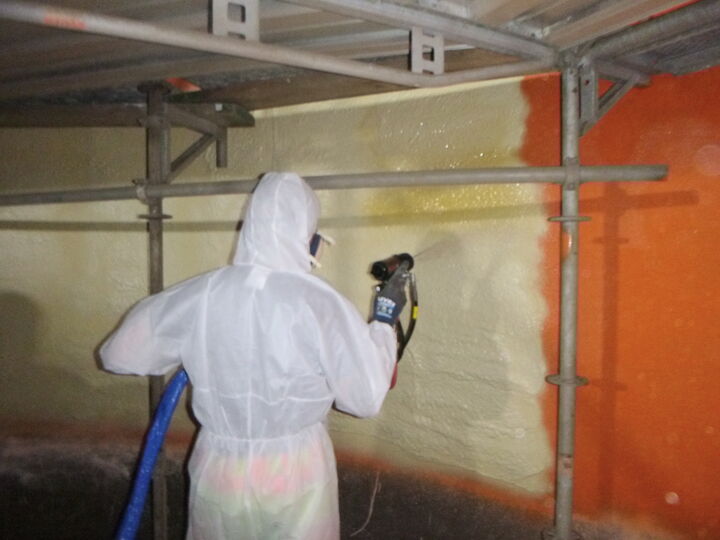
Staßfurt: Sustainable coating of a brine tank
Nuremberg
-
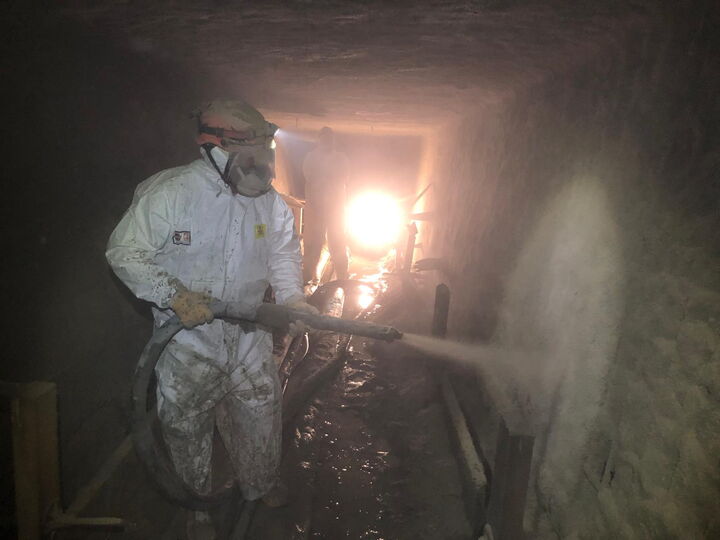
Oberaudorf: Concrete rehabilitation of the Röthenbach stream culvert
Freilassing
-
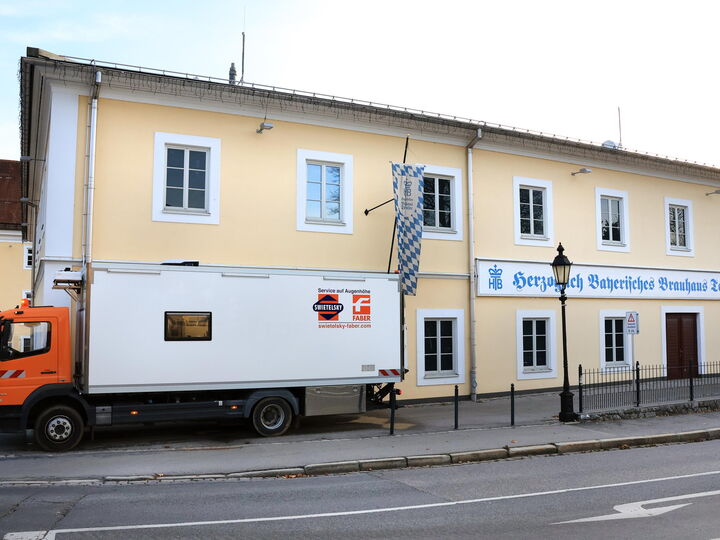
Tegernsee Brewery: Trenchless manhole rehabilitation with polyurea
Freilassing / Nuremberg
-
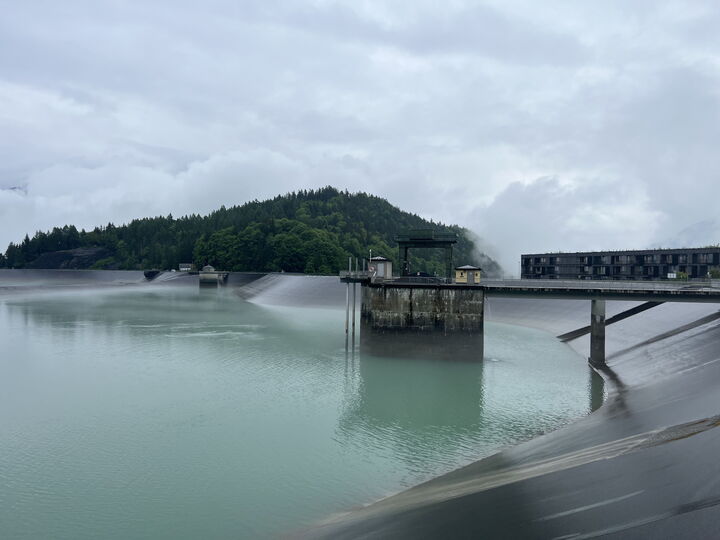
Power plant pipelines: Tailor-made solutions
Hörsching
-
Germering: Sustainable pipe rehabilitation reduces energy demand in wastewater treatment plants
Freilassing
-
Herrenmühle Aulendorf: Pressure pipeline sustainably rehabilitated
Hörsching / Landsberg
-
Altrip: Trenchless rehabilitation secures flood protection at the pumping station
Alzey
-
Flensburg: Wound pipe technology in use beneath a former landfill
Hamburg / Leipzig
-
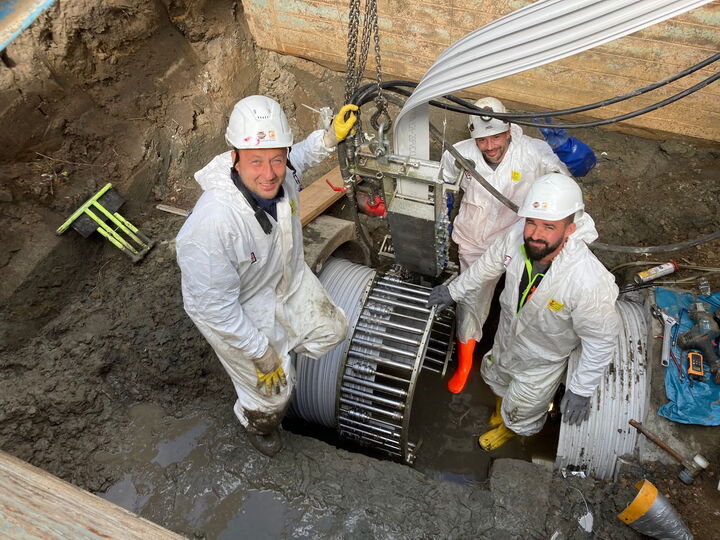
Wermelskirchen: Liner pipe technology shows strengths in combined rehabilitation
Alzey / Leipzig
-
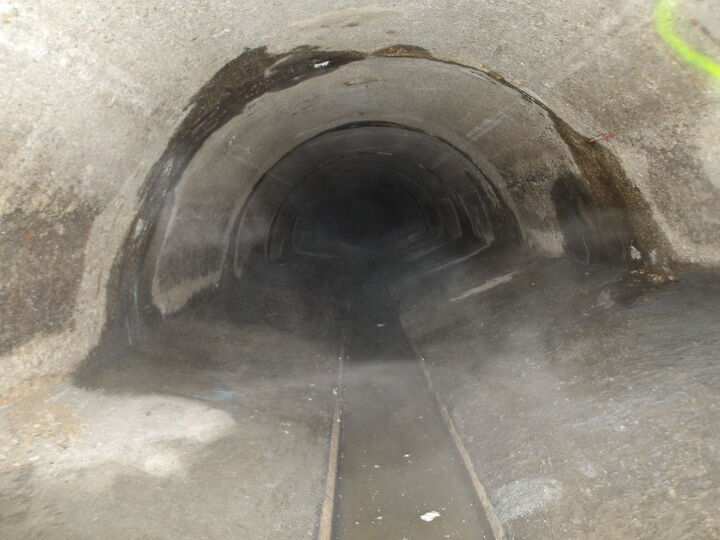
RHV Mittleres Rodltal: Mouth profile rehabilitated with UV pipe liner
Hörsching
-
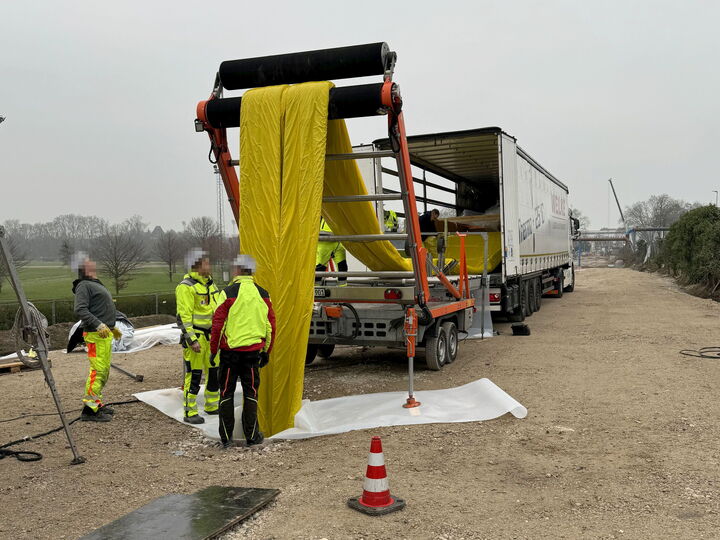
Neuss: Sewer rehabilitation in large dimensions DN 1200–1500
Blomberg
-
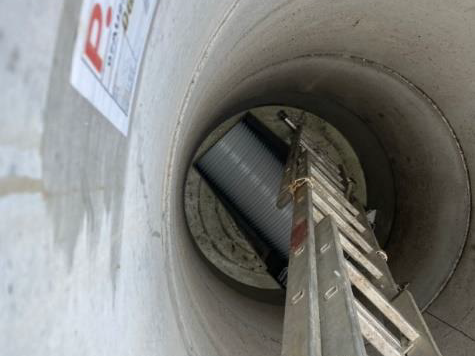
Freyburg relies on SPR-EX wound pipe technology
Hamburg / Leipzig