Alzey / Hörsching
Pipe inspection & testing technology
Trenchless rehabilitation of a drinking water transmission line in Bodenheim using the close-fit method
Author: Ing. Christian Hartl, Sales Industry and Energy of Swietelsky Faber GmbH
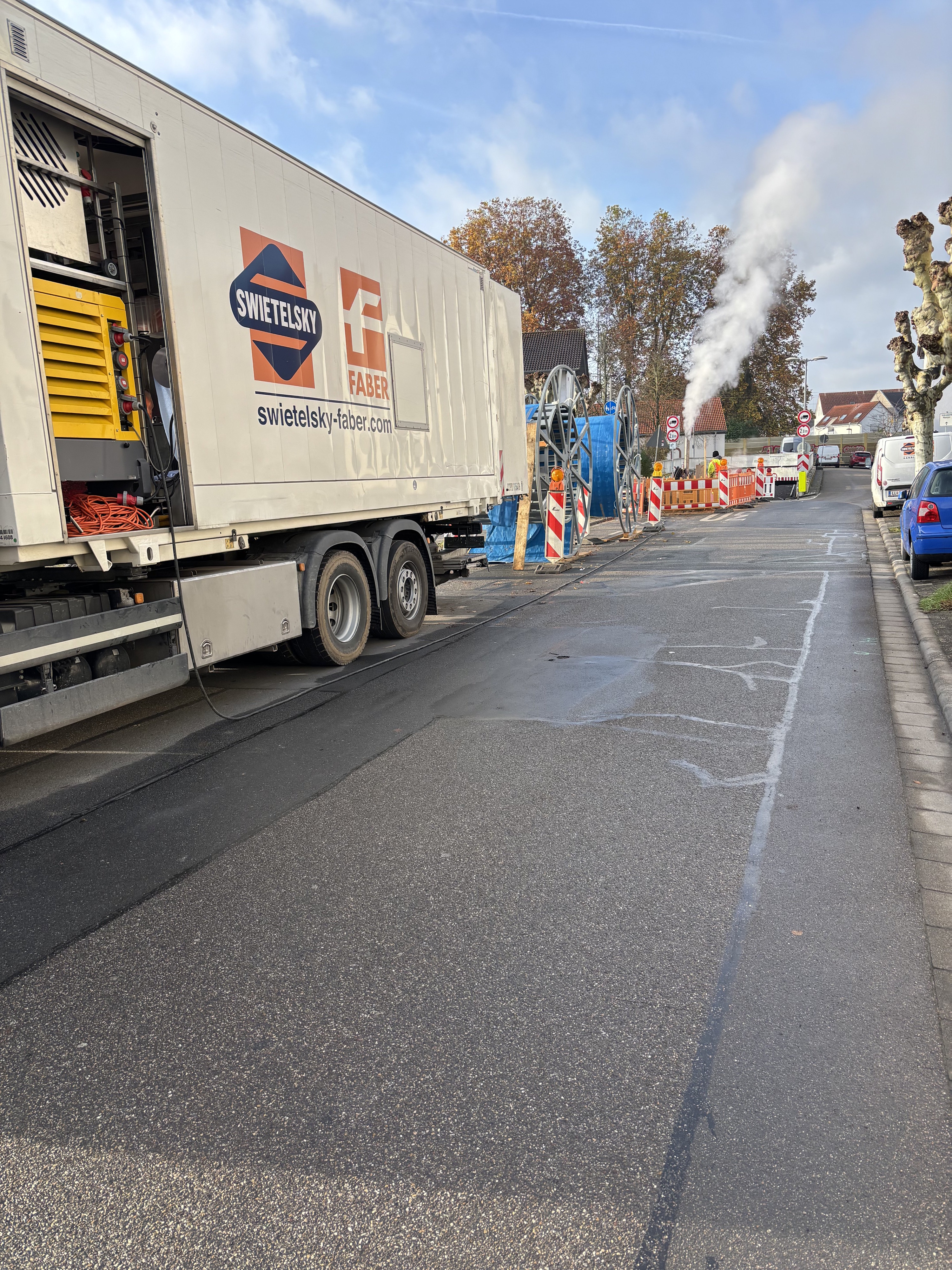
After several pipe ruptures, the transport line to the drinking water elevated reservoir in Bodenheim had to be renewed at short notice. Together, Wasserversorgung Rheinhessen-Pfalz GmbH (wvr) and Swietelsky-Faber GmbH opted for a modern rehabilitation technology. Using the so-called Close-Fit process, the line could be restored quickly, sustainably, and with minimal restrictions for residents, almost without excavation, for a service life of at least 50 years.
Important infrastructure for the drinking water supply
A reliable water supply is the basis for quality of life, health, and economic development. So that perfect drinking water comes from the tap around the clock, Wasserversorgung Rheinhessen-Pfalz GmbH (wvr) operates an extensive pipeline network with pumping stations, elevated tanks, and transport pipelines.
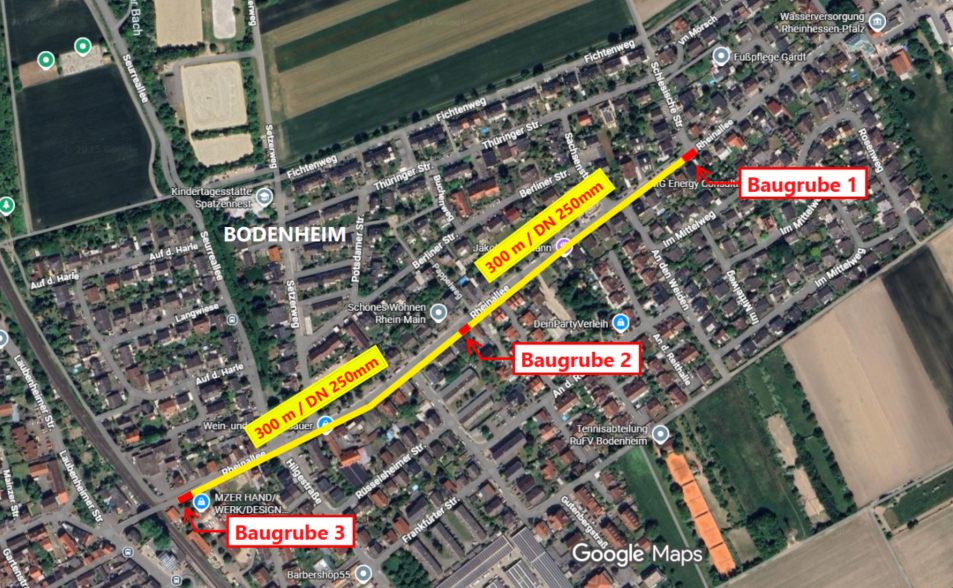
In Rheinallee in Bodenheim, one of these transport lines was of particular importance: It supplies the local elevated drinking water reservoir. After the line's long-term operation showed an increasing need for rehabilitation, repairing the line became necessary in order to ensure long-term supply security.
Trenchless rehabilitation instead of an open construction site
Swietelsky-Faber GmbH was commissioned to implement the measure. The work was carried out in close cooperation between the local branch and a highly specialised team for the drinking water sector of the Austria branch.
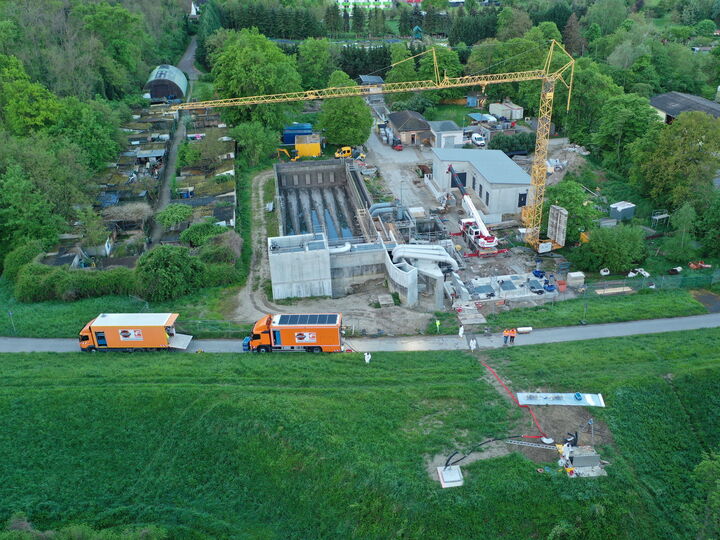
To keep the disruption to local residents and traffic as low as possible, the decision was deliberately made in favor of a trenchless method. Compared with a conventional open construction method, only a few excavation pits were required. As a result, surfaces, traffic routes, and adjacent properties could largely be preserved, while the construction time was also significantly shortened.
The Close-Fit Process
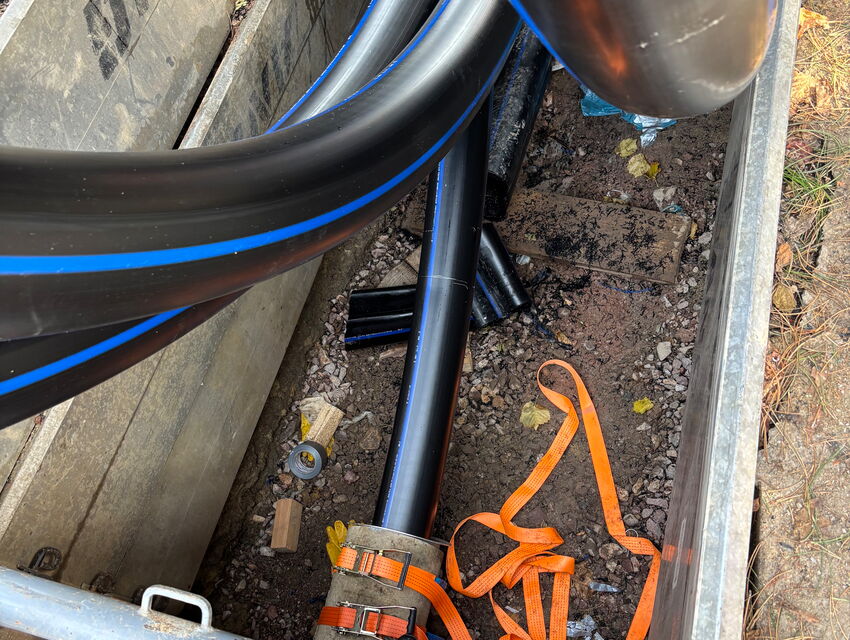
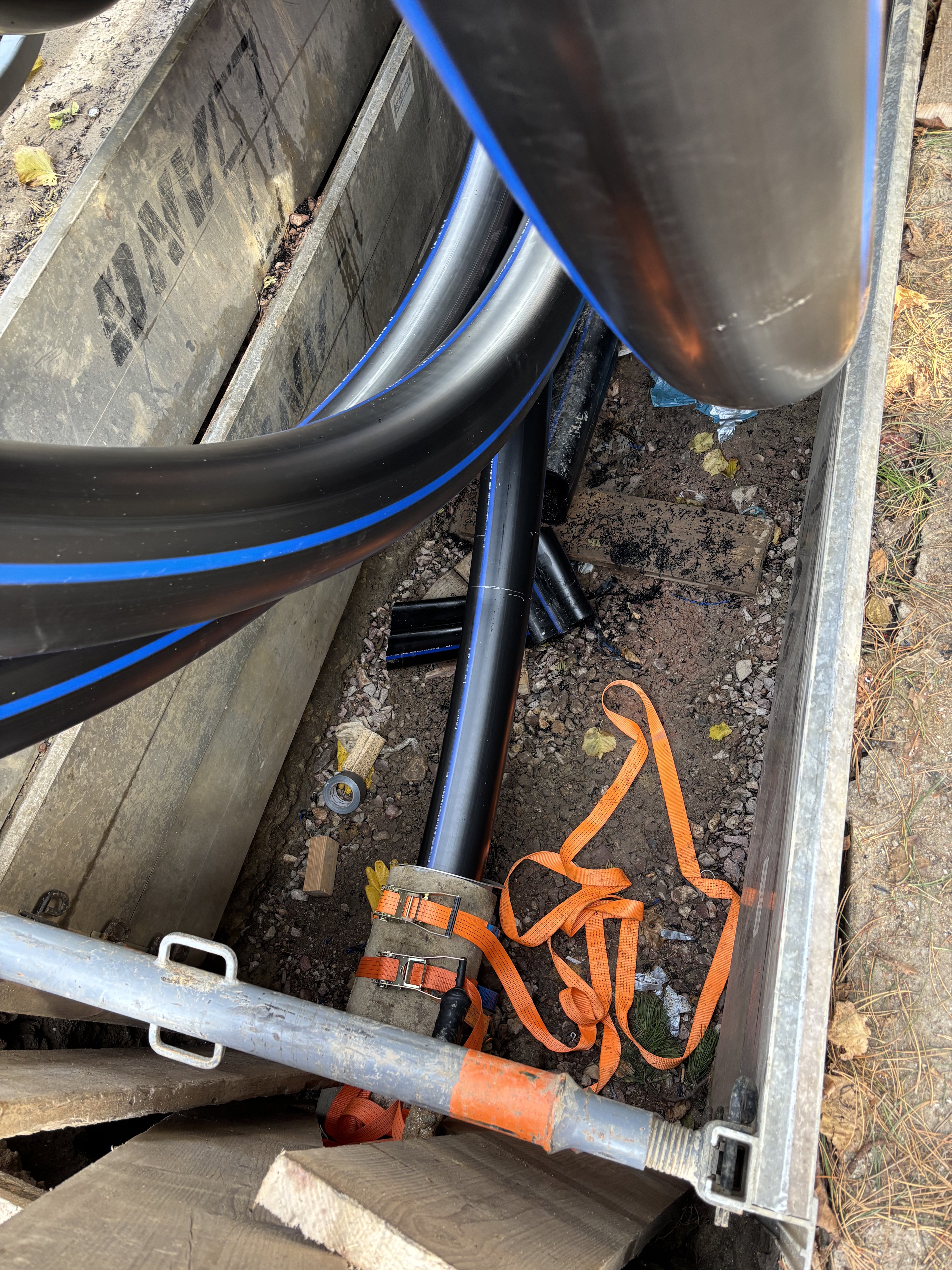
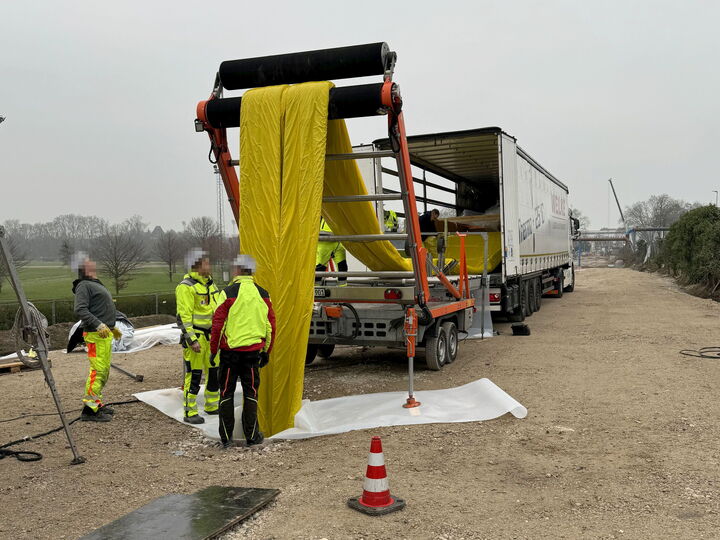
The so-called Close-Fit process according to ISO 11300-2 was used, a high-quality technology for the rehabilitation of drinking water, gas, industrial, and wastewater pipelines. The material basis is a factory pre-deformed HDPE pipe from the manufacturer AGRU Kunststofftechnik GmbH.
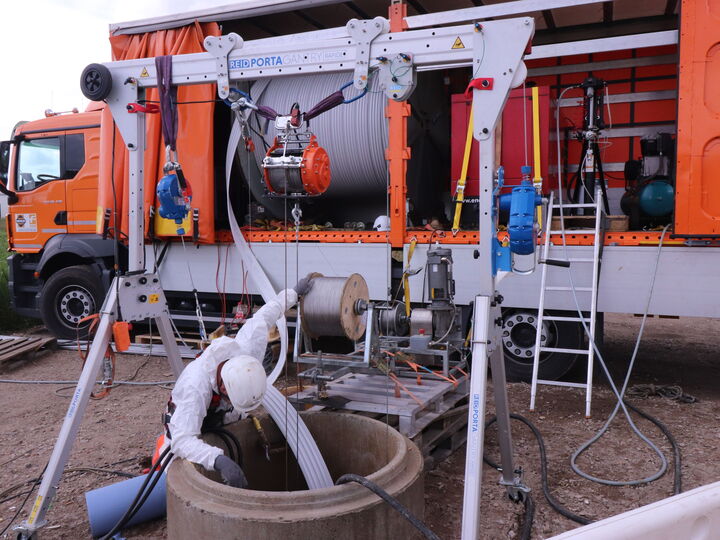
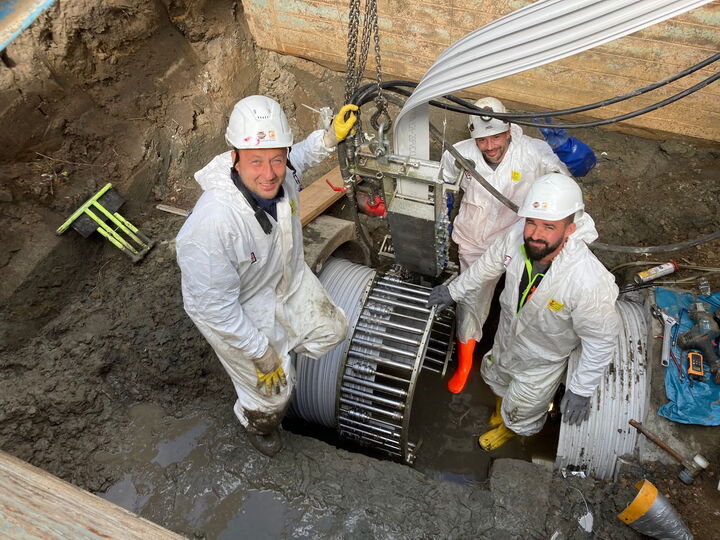
As a result of this pre-deformation, the pipe diameter is initially reduced by about 25 to 30 percent. This allows the pipe string to be pulled into the existing old pipeline using a winch with comparatively low tensile forces. After installation, the pipe is heated by pressure and hot steam and re-formed. It regains its round shape and fits closely – “close fit” – against the inner wall of the existing pipe.
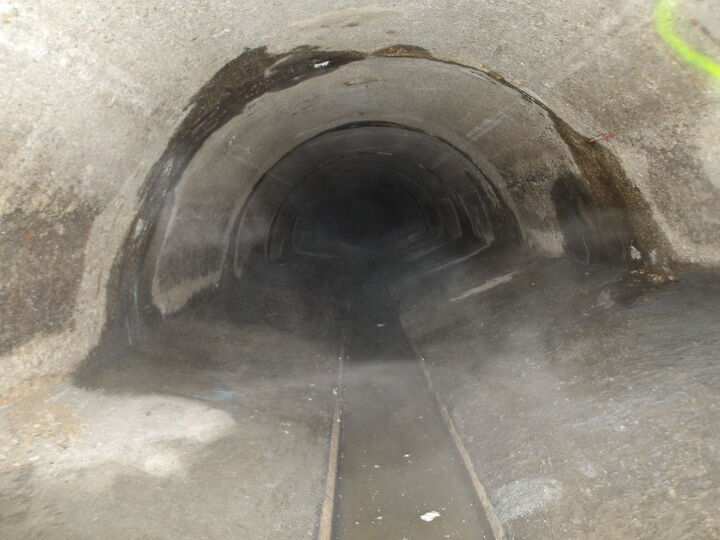
In this way, a new, permanently leak-tight drinking water pipe is created inside the old pipe. With this method, rehabilitation sections of several hundred meters can be realised in a short time, while only a few interventions at the surface are necessary at the same time.
Specialist in pressure pipelines too
Swietelsky-Faber has more than 25 years of experience in the rehabilitation of pipelines and containers of various kinds. The company was long known primarily for trenchless sewer rehabilitation. In recent years, however, the rehabilitation of pressure pipelines - for example for drinking water - has developed into an important service area.
Straight pressure pipelines place particularly high demands on material, workmanship and quality assurance, as they are exposed to dynamic pressure loads and are of central importance for supplying the population.
Teamwork and Coordination as the Key to Success
An essential factor for the successful project process was the close coordination of all teams involved. Clearly structured work processes enabled efficient implementation under high quality requirements.
The overall coordination of the work was handled by Ing. Christian Hartl, who coordinated the organizational processes between the teams and acted as the central point of contact. With his many years of experience in the execution of pressure pipeline projects – particularly in the field of drinking water and industrial plants – Ing. Hartl has also been contributing his professional expertise to his sales activities for industry and energy at Swietelsky-Faber for several years.
This project in Bodenheim illustrates – as one of many – how, through the use of modern trenchless technologies, coordinated teamwork, and structured coordination, infrastructural measures can be implemented efficiently and sustainably.
More projects
-
Leipzig / Stuttgart
-
Mülheim: Sustainable large-profile rehabilitation with GeoKrete®
Freilassing
-
Bremen: Combined sewer in egg-profile renovated with UV liner
Blomberg / Hamburg / Hamburg Head Office
-
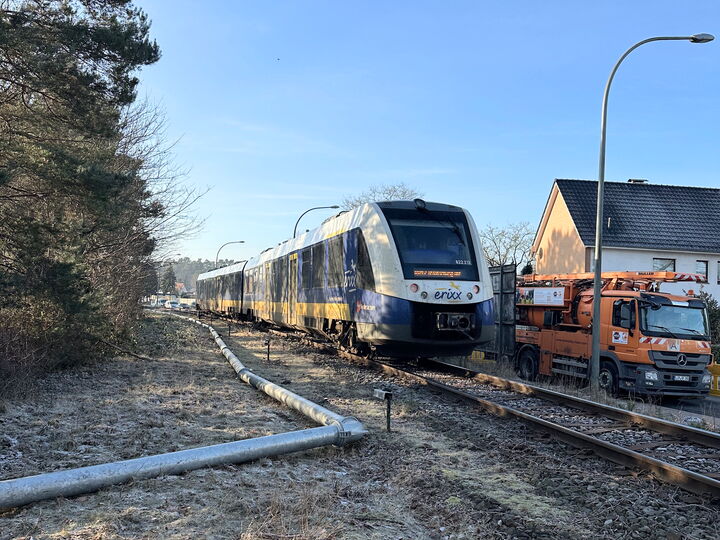
Gifhorn: Premiere in the railway environment of Deutsche Bahn
Blomberg
-
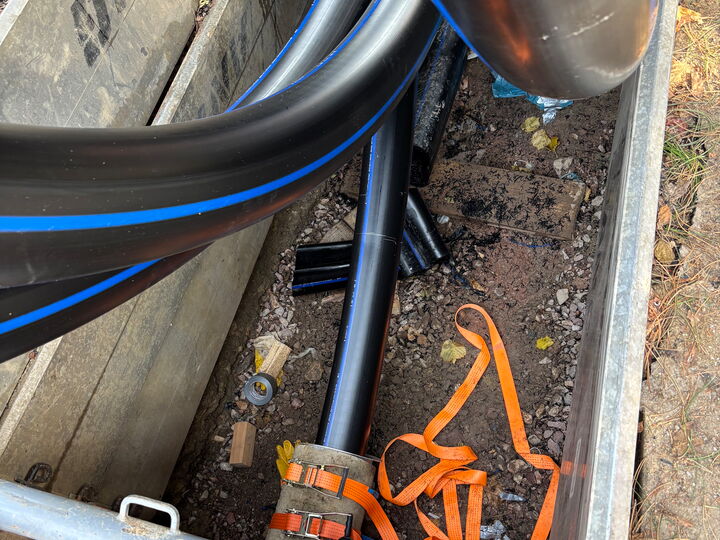
Bodenheim: Close-fit method secures drinking water transport pipeline
Alzey / Hörsching
-
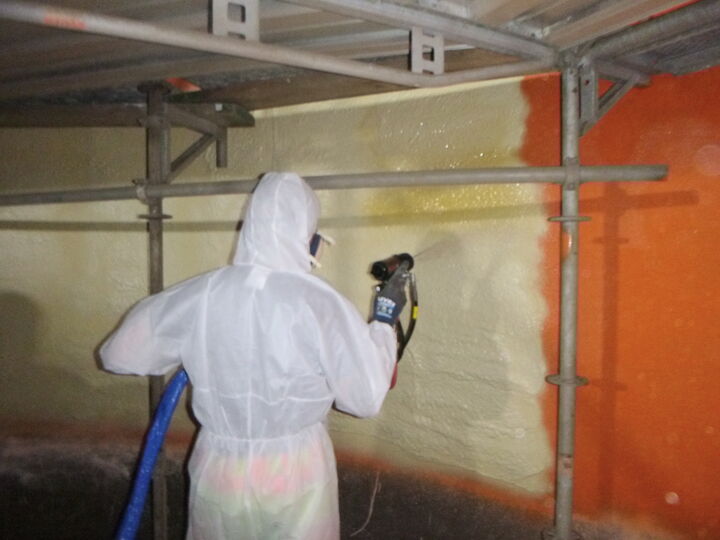
Staßfurt: Sustainable coating of a brine tank
Nuremberg
-
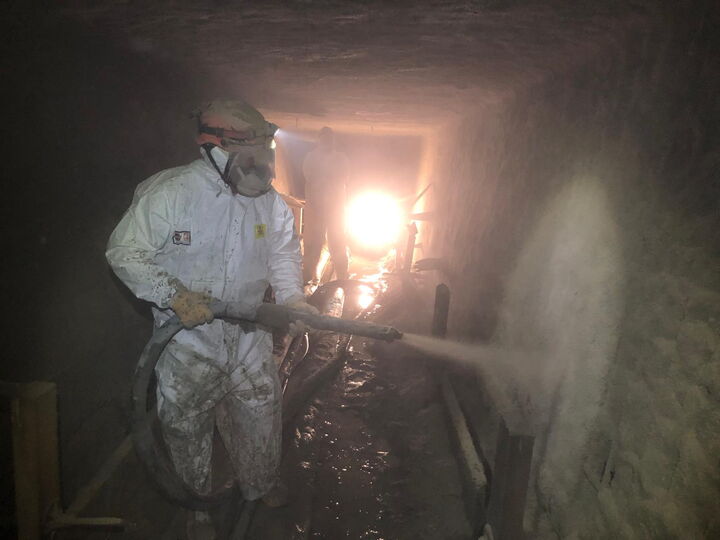
Oberaudorf: Concrete rehabilitation of the Röthenbach stream culvert
Freilassing
-
Tegernsee Brewery: Trenchless manhole rehabilitation with polyurea
Freilassing / Nuremberg
-
Power plant pipelines: Tailor-made solutions
Hörsching
-
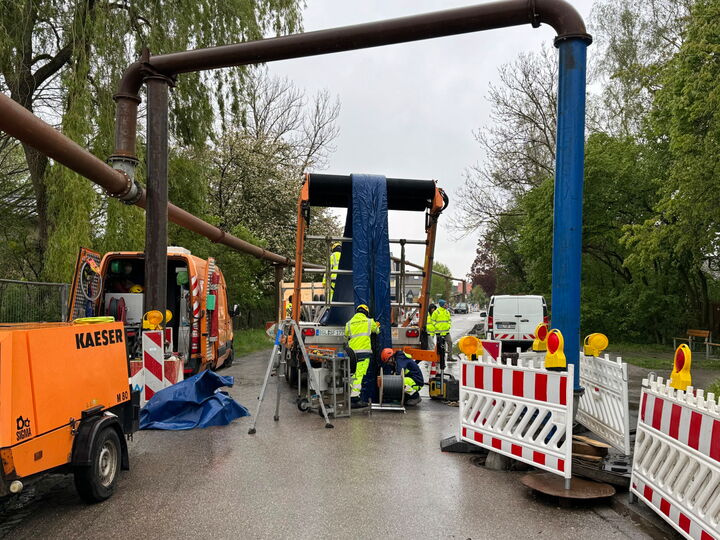
Germering: Sustainable pipe rehabilitation reduces energy demand in wastewater treatment plants
Freilassing
-
Herrenmühle Aulendorf: Pressure pipeline sustainably rehabilitated
Hörsching / Landsberg
-
Altrip: Trenchless rehabilitation secures flood protection at the pumping station
Alzey
-
Flensburg: Wound pipe technology in use beneath a former landfill
Hamburg / Leipzig
-
Wermelskirchen: Liner pipe technology shows strengths in combined rehabilitation
Alzey / Leipzig
-
RHV Mittleres Rodltal: Mouth profile rehabilitated with UV pipe liner
Hörsching
-
Neuss: Sewer rehabilitation in large dimensions DN 1200–1500
Blomberg
-
Freyburg relies on SPR-EX wound pipe technology
Hamburg / Leipzig